Study unit 2
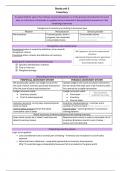
Inventory
An asset held for sale in the ordinary course of business, or in the process of production for such
sale, or in the form of materials or supplies to be consumed in the production process or in the
rendering of services
Categories of inventory according to business-type
Retailer Manufacturer Service provider
Merchandise Finished goods; work in Consumable stores
progress; raw materials; (used in manufacturing/to
consumable stores provide a service)
Recognition and classification
Recognised when it meets the definition of an asset &
recognition criteria IAS 2 applies to, but not for measurement
purposes:
Classified when it meets the definition of inventory
-Agricultural & forest products, agricultural
products after harvest, minerals
Subsequent measurement (cost formula)
-Commodity broker traders
Specific identification method
First-in-first-out
Weighted average
Recording inventory movements (inventory systems)
PERPETUAL INVENTORY SYSTEM PERIODIC INVENTORY SYSTEM
We perpetually update our ledger account for Update ledgers with each purchase transaction,
the cost of each inventory purchase transaction but we record the total cost of all inventory sales
& for the cost of each sale transaction for a period as a single transaction
Ledger accounts used: Ledger accounts used:
Temp. account to be
Inventory (asset) Purchases transferred to cost of sales
Cost of sales (expense) Inventory
Cost of sales
Inventory account, on any day, shows physical Inventory closing balance = cost per unit x
stock on hand number of units on hand (physical stock count)
Cost of sales account shows the latest Cost of sales = opening balance + purchases –
cumulative cost of sales closing balance
Stock accounts, inventory balances and missing inventory
Uses stock counts as a ‘check’, and thus can Requires stock count in order to calculate c/b of
detect inventory losses inventory & balance back to cost of sales
losses can’t be detected
Presenting inventory losses
Logic to be applied:
Loss considered to be a normal part of trading – inventory loss included in cost of sales
expense
Abnormal loss (robberies) – separately presented as inventory loss expense
Why? It could damage comparability because CoS is included in the gross profit
Inventory
An asset held for sale in the ordinary course of business, or in the process of production for such
sale, or in the form of materials or supplies to be consumed in the production process or in the
rendering of services
Categories of inventory according to business-type
Retailer Manufacturer Service provider
Merchandise Finished goods; work in Consumable stores
progress; raw materials; (used in manufacturing/to
consumable stores provide a service)
Recognition and classification
Recognised when it meets the definition of an asset &
recognition criteria IAS 2 applies to, but not for measurement
purposes:
Classified when it meets the definition of inventory
-Agricultural & forest products, agricultural
products after harvest, minerals
Subsequent measurement (cost formula)
-Commodity broker traders
Specific identification method
First-in-first-out
Weighted average
Recording inventory movements (inventory systems)
PERPETUAL INVENTORY SYSTEM PERIODIC INVENTORY SYSTEM
We perpetually update our ledger account for Update ledgers with each purchase transaction,
the cost of each inventory purchase transaction but we record the total cost of all inventory sales
& for the cost of each sale transaction for a period as a single transaction
Ledger accounts used: Ledger accounts used:
Temp. account to be
Inventory (asset) Purchases transferred to cost of sales
Cost of sales (expense) Inventory
Cost of sales
Inventory account, on any day, shows physical Inventory closing balance = cost per unit x
stock on hand number of units on hand (physical stock count)
Cost of sales account shows the latest Cost of sales = opening balance + purchases –
cumulative cost of sales closing balance
Stock accounts, inventory balances and missing inventory
Uses stock counts as a ‘check’, and thus can Requires stock count in order to calculate c/b of
detect inventory losses inventory & balance back to cost of sales
losses can’t be detected
Presenting inventory losses
Logic to be applied:
Loss considered to be a normal part of trading – inventory loss included in cost of sales
expense
Abnormal loss (robberies) – separately presented as inventory loss expense
Why? It could damage comparability because CoS is included in the gross profit