Summary Research Methods For Business 8th summary Uma Sekaran 9781119663706
Summary book - All 17 chapters
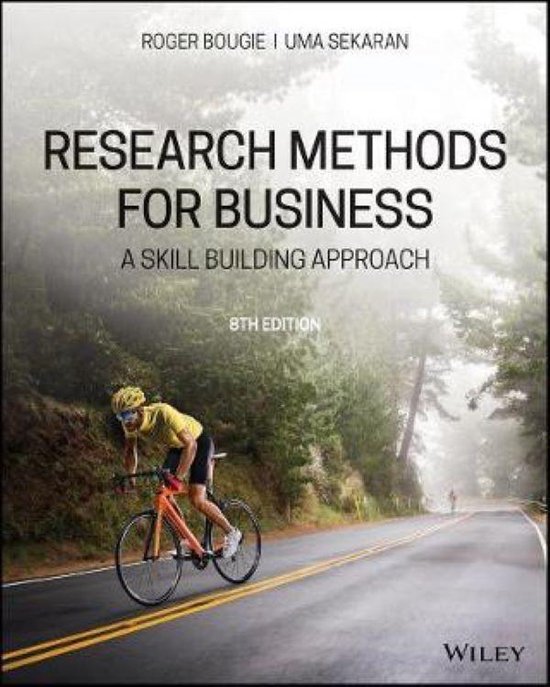
Research Methods For Business 8th - A Skill Building Approach
Uma Sekaran
8th edition
9781119663706
John Wiley & Sons Inc
Pages book: 432
This summary: 40
Reading time: 100 minutes
This summary also comes in a bundle with test questions!
, Summary Research Methods For Business 8th summary Uma Sekaran 9781119663706
Contents
CHAPTER ONE What is research................................................................................................................3
Internal vs external consultants / researchers......................................................................................4
CHAPTER TWO The scientific approach and alternative approaches to investigation..............................6
Scientific research.................................................................................................................................6
The hypothetico-deductive method......................................................................................................7
The seven-step process in the hypothetico-deductive method............................................................7
Alternative approaches to research......................................................................................................8
CHAPTER THREE The broad problem area..............................................................................................10
Preliminary information gathering......................................................................................................10
CHAPTER FOUR The critical literature review.........................................................................................12
How to approach the literature review...............................................................................................12
CHAPTER FIVE Theoretical framework and hypothesis development.....................................................15
The need for a theoretical framework................................................................................................15
Statements of hypotheses: formats....................................................................................................17
The research design............................................................................................................................18
CHAPTER SEVEN Sources of data............................................................................................................21
Interviewing........................................................................................................................................22
Questioning technique........................................................................................................................22
Face-to-face and telephone interviews...............................................................................................22
CHAPTER EIGHT Observation..................................................................................................................24
Four key dimensions...........................................................................................................................24
Participant observation.......................................................................................................................24
Structured observation.......................................................................................................................25
CHAPTER NINE Questionnaires...............................................................................................................25
Principle of wording............................................................................................................................26
Ethics and the researcher....................................................................................................................28
CHAPTER TEN Experimental designs.......................................................................................................29
The lab experiment.............................................................................................................................29
The field experiment...........................................................................................................................29
Internal validity in case studies...........................................................................................................31
Types of experimental design and validity..........................................................................................31
Simulation...........................................................................................................................................32
CHAPTER ELEVEN Measurement of variables: operational definition.....................................................33
Operational definition.........................................................................................................................33
CHAPTER TWELVE Measurement: scaling, reliability, validity.................................................................34
Four types of scales.............................................................................................................................34
Rating scales........................................................................................................................................34
Correlational analysis..........................................................................................................................36
CHAPTER THIRTEEN Population..............................................................................................................37
, Summary Research Methods For Business 8th summary Uma Sekaran 9781119663706
Reasons for sampling..........................................................................................................................37
CHAPTER FOURTEEN Quantitative data analysis.....................................................................................42
CHAPTER SIXTEEN Qualitative data analysis...........................................................................................45
Other methods of gathering and analyzing qualitative data...............................................................46
CHAPTER SEVENTEEN The research report.............................................................................................47
Integral parts of the report.................................................................................................................47
CHAPTER ONE What is research
• What is research? Research is the process of finding solutions to a problem after a thorough
study and analysis of the situational factors. Managers in organizations constantly engage in
some form of research activity as they engage themselves in studying and analyzing issues
and make decisions at the workplace. The difference between good and bad decisions is
how they go about the decision-making process, this is the essence of research and it is
important to know how to go about making the right decisions by being knowledgeable about
the various steps involved in finding solutions to problematic issues.
• Business research: it can be described as a systematic and organized effort to investigate a
specific problem encountered in the work setting, which needs a solution. The first step is to
know where the problem areas exist and to identify as clearly as possible the problems that
need to be studied and resolved. Once the problem is defined, steps can be taken to
determine the factors associated with the problem, gather information and analyze the data
and then solve it. This entire process is called research; it encompasses the processes of
inquiry, investigation, examination and experimentation. The processes have to be carried
out systematically, diligently, critically, objectively and logically. The definition of business
research is: an organized, systematic, data-based, critical, objective, inquiry or investigation
into a specific problem, undertaken with the purpose of finding answers or solutions to it. In
essence, research provides the necessary information that guides managers to make
informed decisions to carefully deal with problems. The information provided could be the
result of an analysis of data that can be either quantitative or qualitative.
• Research and the manager: an experience common to all organizations is that the
managers thereof encounter problems, big and small, on a daily basis, which they have to
solve by making the right decisions. Depending on the field the research is conducted in, the
issues and the way of conducting the research vary.
• Types of business research: applied and basic: research can be undertaken for two
different purposes, one is to solve a current problem faced by the manager in the work
setting, demanding a timely solution. This is called applied research. The other is to generate
a body of knowledge by trying to comprehend how certain problems that occur in
organizations can be solved; this is called basic, fundamental or pure research. It is done
chiefly to make a contribution to existing knowledge, they contribute to the building of
knowledge in the various functional areas of business.
• Managers and research: managers with knowledge of research have an advantage over
those without, they have to understand, predict and control events that are dysfunctional
within the organization. Being able to sense, spot and deal with problems before they get out
of hand is very helpful. Although minor problems can be fixed by the manager, major
problems warrant the hiring of outside researchers or consultants. The manager who is
knowledgeable about research can interact effectively with them and the manager will
, Summary Research Methods For Business 8th summary Uma Sekaran 9781119663706
become more discriminating while sifting through the information disseminated in business
journals. Other reasons while managers should be knowledgeable about research, are that it
sharpens the sensitivity of managers to variables operating in a situation, second, when
managers understand the research reports handed to them by professionals, they are
equipped to take intelligent and educated risks with known probabilities attached to the
success or failure of their decisions. Third, if managers become knowledgeable about
scientific investigations, vested interest inside or outside the organization will not prevail.
The manager and the consultant-researcher: managers often need to engage a
consultant to study some of the more complex, time-consuming problems that they
encounter. It is thus important to be knowledgeable about how to effectively interact with the
consultant, what the manager-researcher relationship should be, and the advantages and
disadvantages of internal vs external consultants.
o Manager-researcher relationship: during their careers, it often becomes necessary for
managers to deal with consultants. The manager must not only interact effectively with the
research team, but must also explicitly delineate the roles for the researchers and the
management. He has to inform that what information will and what will not be provided to the
research team. Relevant philosophies and value systems of the organization are clearly
stated and constraints, if any, are communicated. Furthermore, a good rapport is established
with the researchers, and between the researchers and the employees in the organization.
Internal vs external consultants / researchers
o Internal consultants / researchers: some organizations have their own consulting or
research department which serves as the internal consultant to subunits of the organization
that face certain problems and seek help. The advantages of this are that; the internal team
stands a better chance of being readily accepted by the employees in the subunit where
research needs to be done, the team requires much less time to understand the structure,
the philosophy and climate, and the functioning and work systems, they are available to
implement their recommendations after the research findings have been accepted. They are
also available to evaluate the effectiveness of the changes. Furthermore, the internal team
might cost considerably less than an external team. The disadvantages are that the
internal team might fall into a stereotyped way of looking at the organization and its
problems, there is scope for certain powerful coalitions in the organization to influence the
internal team to conceal, distort or misrepresent certain facts, there is also a possibility
that the research team is not perceived as ‘experts’ by the staff and management and
certain organizational biases of the internal research team might make the findings less
objective and less scientific.
o External consultants / researchers: the advantages are that they can draw on a wealth of
experience from having worked with different types of organization and the external teams
might have more knowledge of current sophisticated problem-solving models through their
periodic training programs. The disadvantages are that it is very costly, it takes time to be
understand the organization, the team might not be readily accepted by employees and
they may even charge additional fees for their assistance in the implementation and
evaluation phases.
o Knowledge about research and managerial effectiveness: managers are responsible for
the final outcome by making the right decisions at work which is greatly facilitated by
research knowledge. Knowledge of research heightens the sensitivity of managers to the
Summary book - All 17 chapters
Research Methods For Business 8th - A Skill Building Approach
Uma Sekaran
8th edition
9781119663706
John Wiley & Sons Inc
Pages book: 432
This summary: 40
Reading time: 100 minutes
This summary also comes in a bundle with test questions!
, Summary Research Methods For Business 8th summary Uma Sekaran 9781119663706
Contents
CHAPTER ONE What is research................................................................................................................3
Internal vs external consultants / researchers......................................................................................4
CHAPTER TWO The scientific approach and alternative approaches to investigation..............................6
Scientific research.................................................................................................................................6
The hypothetico-deductive method......................................................................................................7
The seven-step process in the hypothetico-deductive method............................................................7
Alternative approaches to research......................................................................................................8
CHAPTER THREE The broad problem area..............................................................................................10
Preliminary information gathering......................................................................................................10
CHAPTER FOUR The critical literature review.........................................................................................12
How to approach the literature review...............................................................................................12
CHAPTER FIVE Theoretical framework and hypothesis development.....................................................15
The need for a theoretical framework................................................................................................15
Statements of hypotheses: formats....................................................................................................17
The research design............................................................................................................................18
CHAPTER SEVEN Sources of data............................................................................................................21
Interviewing........................................................................................................................................22
Questioning technique........................................................................................................................22
Face-to-face and telephone interviews...............................................................................................22
CHAPTER EIGHT Observation..................................................................................................................24
Four key dimensions...........................................................................................................................24
Participant observation.......................................................................................................................24
Structured observation.......................................................................................................................25
CHAPTER NINE Questionnaires...............................................................................................................25
Principle of wording............................................................................................................................26
Ethics and the researcher....................................................................................................................28
CHAPTER TEN Experimental designs.......................................................................................................29
The lab experiment.............................................................................................................................29
The field experiment...........................................................................................................................29
Internal validity in case studies...........................................................................................................31
Types of experimental design and validity..........................................................................................31
Simulation...........................................................................................................................................32
CHAPTER ELEVEN Measurement of variables: operational definition.....................................................33
Operational definition.........................................................................................................................33
CHAPTER TWELVE Measurement: scaling, reliability, validity.................................................................34
Four types of scales.............................................................................................................................34
Rating scales........................................................................................................................................34
Correlational analysis..........................................................................................................................36
CHAPTER THIRTEEN Population..............................................................................................................37
, Summary Research Methods For Business 8th summary Uma Sekaran 9781119663706
Reasons for sampling..........................................................................................................................37
CHAPTER FOURTEEN Quantitative data analysis.....................................................................................42
CHAPTER SIXTEEN Qualitative data analysis...........................................................................................45
Other methods of gathering and analyzing qualitative data...............................................................46
CHAPTER SEVENTEEN The research report.............................................................................................47
Integral parts of the report.................................................................................................................47
CHAPTER ONE What is research
• What is research? Research is the process of finding solutions to a problem after a thorough
study and analysis of the situational factors. Managers in organizations constantly engage in
some form of research activity as they engage themselves in studying and analyzing issues
and make decisions at the workplace. The difference between good and bad decisions is
how they go about the decision-making process, this is the essence of research and it is
important to know how to go about making the right decisions by being knowledgeable about
the various steps involved in finding solutions to problematic issues.
• Business research: it can be described as a systematic and organized effort to investigate a
specific problem encountered in the work setting, which needs a solution. The first step is to
know where the problem areas exist and to identify as clearly as possible the problems that
need to be studied and resolved. Once the problem is defined, steps can be taken to
determine the factors associated with the problem, gather information and analyze the data
and then solve it. This entire process is called research; it encompasses the processes of
inquiry, investigation, examination and experimentation. The processes have to be carried
out systematically, diligently, critically, objectively and logically. The definition of business
research is: an organized, systematic, data-based, critical, objective, inquiry or investigation
into a specific problem, undertaken with the purpose of finding answers or solutions to it. In
essence, research provides the necessary information that guides managers to make
informed decisions to carefully deal with problems. The information provided could be the
result of an analysis of data that can be either quantitative or qualitative.
• Research and the manager: an experience common to all organizations is that the
managers thereof encounter problems, big and small, on a daily basis, which they have to
solve by making the right decisions. Depending on the field the research is conducted in, the
issues and the way of conducting the research vary.
• Types of business research: applied and basic: research can be undertaken for two
different purposes, one is to solve a current problem faced by the manager in the work
setting, demanding a timely solution. This is called applied research. The other is to generate
a body of knowledge by trying to comprehend how certain problems that occur in
organizations can be solved; this is called basic, fundamental or pure research. It is done
chiefly to make a contribution to existing knowledge, they contribute to the building of
knowledge in the various functional areas of business.
• Managers and research: managers with knowledge of research have an advantage over
those without, they have to understand, predict and control events that are dysfunctional
within the organization. Being able to sense, spot and deal with problems before they get out
of hand is very helpful. Although minor problems can be fixed by the manager, major
problems warrant the hiring of outside researchers or consultants. The manager who is
knowledgeable about research can interact effectively with them and the manager will
, Summary Research Methods For Business 8th summary Uma Sekaran 9781119663706
become more discriminating while sifting through the information disseminated in business
journals. Other reasons while managers should be knowledgeable about research, are that it
sharpens the sensitivity of managers to variables operating in a situation, second, when
managers understand the research reports handed to them by professionals, they are
equipped to take intelligent and educated risks with known probabilities attached to the
success or failure of their decisions. Third, if managers become knowledgeable about
scientific investigations, vested interest inside or outside the organization will not prevail.
The manager and the consultant-researcher: managers often need to engage a
consultant to study some of the more complex, time-consuming problems that they
encounter. It is thus important to be knowledgeable about how to effectively interact with the
consultant, what the manager-researcher relationship should be, and the advantages and
disadvantages of internal vs external consultants.
o Manager-researcher relationship: during their careers, it often becomes necessary for
managers to deal with consultants. The manager must not only interact effectively with the
research team, but must also explicitly delineate the roles for the researchers and the
management. He has to inform that what information will and what will not be provided to the
research team. Relevant philosophies and value systems of the organization are clearly
stated and constraints, if any, are communicated. Furthermore, a good rapport is established
with the researchers, and between the researchers and the employees in the organization.
Internal vs external consultants / researchers
o Internal consultants / researchers: some organizations have their own consulting or
research department which serves as the internal consultant to subunits of the organization
that face certain problems and seek help. The advantages of this are that; the internal team
stands a better chance of being readily accepted by the employees in the subunit where
research needs to be done, the team requires much less time to understand the structure,
the philosophy and climate, and the functioning and work systems, they are available to
implement their recommendations after the research findings have been accepted. They are
also available to evaluate the effectiveness of the changes. Furthermore, the internal team
might cost considerably less than an external team. The disadvantages are that the
internal team might fall into a stereotyped way of looking at the organization and its
problems, there is scope for certain powerful coalitions in the organization to influence the
internal team to conceal, distort or misrepresent certain facts, there is also a possibility
that the research team is not perceived as ‘experts’ by the staff and management and
certain organizational biases of the internal research team might make the findings less
objective and less scientific.
o External consultants / researchers: the advantages are that they can draw on a wealth of
experience from having worked with different types of organization and the external teams
might have more knowledge of current sophisticated problem-solving models through their
periodic training programs. The disadvantages are that it is very costly, it takes time to be
understand the organization, the team might not be readily accepted by employees and
they may even charge additional fees for their assistance in the implementation and
evaluation phases.
o Knowledge about research and managerial effectiveness: managers are responsible for
the final outcome by making the right decisions at work which is greatly facilitated by
research knowledge. Knowledge of research heightens the sensitivity of managers to the