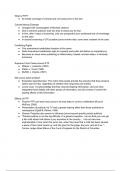
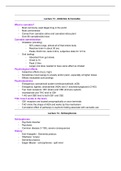
What is PTP?
● All media coverage of criminal and civil cases prior to the trial
Conrad Murray Example
● Charged with manslaughter of Michael Jackson
● Due to extreme publicity, took two tries to select jury for trial
● In first, after 3 days of screening, only one prospective juror professed lack of knowledge
on the case
● In second screening of 370 possible jurors months later, none were unaware of the case
Conflicting Rights
● First amendment establishes freedom of the press
● Sixth Amendment establishes right to a speedy and public trial before an impartial jury
● Becomes an issue when publishing is inflammatory, biased, emotion-laden, or factually
erroneous
Supreme Court Cases around PTP
● Rideau v. Louisiana (1963)
● Patton v. Yount (1984)
● Mu'Min v. Virginia (1991)
Will Jurors Admit to Bias?
● Evaluation Apprehension: The notion that people provide the answers that they perceive
others want to hear, regardless of whether their responses are truthful
● Jurors must: (1) acknowledge that they received biasing information, (2) know they
integrated those details with other pieces of information, and (3) reverse of control the
biasing effects of this information
Effects of PTP
● Positive PTP can lead mock jurors to be less likely to convict a defendant (Ruva &
McEvoy, 2008)
● Presentation of publicity via TV had a greater biasing effect than those published in
newspapers (Ogloff & Vidmar, 1994)
● Generic Prejudice also seems to influence jurors beyond specific pretrial publicity
● "Pretrial publicity is not the big difficulty. It is generic prejudice. I do not think you can get
a fair child abuse trial before a jury anywhere in the country… I do not care how
sophisticated or how smart the jurors are, when they hear that a child has been abused,
a piece of their mind closes up, and this goes for the judge, the juror, and all of us." -
Former Judge Abner Mikva of the Court of Appeals for the District of Columbia
● All media coverage of criminal and civil cases prior to the trial
Conrad Murray Example
● Charged with manslaughter of Michael Jackson
● Due to extreme publicity, took two tries to select jury for trial
● In first, after 3 days of screening, only one prospective juror professed lack of knowledge
on the case
● In second screening of 370 possible jurors months later, none were unaware of the case
Conflicting Rights
● First amendment establishes freedom of the press
● Sixth Amendment establishes right to a speedy and public trial before an impartial jury
● Becomes an issue when publishing is inflammatory, biased, emotion-laden, or factually
erroneous
Supreme Court Cases around PTP
● Rideau v. Louisiana (1963)
● Patton v. Yount (1984)
● Mu'Min v. Virginia (1991)
Will Jurors Admit to Bias?
● Evaluation Apprehension: The notion that people provide the answers that they perceive
others want to hear, regardless of whether their responses are truthful
● Jurors must: (1) acknowledge that they received biasing information, (2) know they
integrated those details with other pieces of information, and (3) reverse of control the
biasing effects of this information
Effects of PTP
● Positive PTP can lead mock jurors to be less likely to convict a defendant (Ruva &
McEvoy, 2008)
● Presentation of publicity via TV had a greater biasing effect than those published in
newspapers (Ogloff & Vidmar, 1994)
● Generic Prejudice also seems to influence jurors beyond specific pretrial publicity
● "Pretrial publicity is not the big difficulty. It is generic prejudice. I do not think you can get
a fair child abuse trial before a jury anywhere in the country… I do not care how
sophisticated or how smart the jurors are, when they hear that a child has been abused,
a piece of their mind closes up, and this goes for the judge, the juror, and all of us." -
Former Judge Abner Mikva of the Court of Appeals for the District of Columbia