Lifespan and Development
PS1040
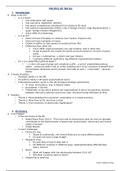
Cognitive Development: Piaget and Vygotsky
What is cognitive development?
How the cognitive processes develop through an individual’s lifespan
o Thinking
o Reasoning
o Learning
o Memory
o Attention
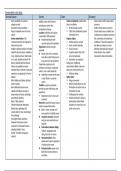
Piaget (1896 -1980) Vygotsky (1896 – 1934)
How children understand the physical and Focused on social interactions with more
social world (The Psychology of the Child) developed individuals, learning through
others’ experiences.
CONSTRUCTIVIST – child constructs SOCIO-CULTURAL THEORY – shared
knowledge by engaging with the world. learning becomes internalised.
Generating and testing theories.
Behaviourism, child passively soaks up Young children provide a running
information from their environment commentary to their own actions and
thoughts (PRIVATE SPEECH) that is vital in
driving development.
Allows children to reflect on their
processing. It is a foundation for all higher
cognitive processes.
KEY PRINCIPLES – KEY PRINCIPLES –
Maturation (unfolding of biological Mediators (psychological tools
changes that are genetically generated by the social and cultural
programmed) developmental context)
Activity (active learner) Elementary mental functions
Social Transition (Learning from (biological functions that emerge
others) spontaneously)
Equilibration (Assimilation and Higher mental functions.
Accommodation of schemas, (coordinate cognitive processes
adjusting knowledge) such as voluntary attention,
intentional remembering, abstract
thinking, problem solving)
Zone of Proximal Development
(how a child is allowed to reach
their potential if given the right
support. SOCIAL INTERATIONS ->
COGNITIVE DEVELOPMENT)
Make-Believe Play (crucial to
cognitive and social development.
PS1040
Cognitive Development: Piaget and Vygotsky
What is cognitive development?
How the cognitive processes develop through an individual’s lifespan
o Thinking
o Reasoning
o Learning
o Memory
o Attention
Piaget (1896 -1980) Vygotsky (1896 – 1934)
How children understand the physical and Focused on social interactions with more
social world (The Psychology of the Child) developed individuals, learning through
others’ experiences.
CONSTRUCTIVIST – child constructs SOCIO-CULTURAL THEORY – shared
knowledge by engaging with the world. learning becomes internalised.
Generating and testing theories.
Behaviourism, child passively soaks up Young children provide a running
information from their environment commentary to their own actions and
thoughts (PRIVATE SPEECH) that is vital in
driving development.
Allows children to reflect on their
processing. It is a foundation for all higher
cognitive processes.
KEY PRINCIPLES – KEY PRINCIPLES –
Maturation (unfolding of biological Mediators (psychological tools
changes that are genetically generated by the social and cultural
programmed) developmental context)
Activity (active learner) Elementary mental functions
Social Transition (Learning from (biological functions that emerge
others) spontaneously)
Equilibration (Assimilation and Higher mental functions.
Accommodation of schemas, (coordinate cognitive processes
adjusting knowledge) such as voluntary attention,
intentional remembering, abstract
thinking, problem solving)
Zone of Proximal Development
(how a child is allowed to reach
their potential if given the right
support. SOCIAL INTERATIONS ->
COGNITIVE DEVELOPMENT)
Make-Believe Play (crucial to
cognitive and social development.