©EMILLECT 2024/2025 ACADEMIC YEAR. ALL RIGHTS RESERVED
FIRST PUBLISH OCTOBER 2024
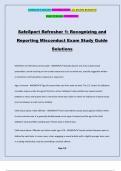
SafeSport Refresher 1: Recognizing and
Reporting Misconduct Exam Study Guide
Solutions
Definitions of child abuse vary by state - ANSWER✔✔-Sexually abusive acts may include sexual
penetration, sexual touching or non-contact sexual acts such as verbal acts, sexually suggestive written
or electronic communications, exposure or voyeurism.
Age of consent - ANSWER✔✔-Age of consent laws vary from state-to-state. The U.S. Center for SafeSport
considers anyone under the age of 18 to be a minor. SafeSport Code prohibits any sexual conduct
between a minor and anyone who is more than three-years older or where an imbalance of power exists
(such as between a coach and an athlete).
Child sexual abuse: Adult offender - ANSWER✔✔-Each state defines sexual abuse against children within
its own criminal code. It is generally divided based on the type of contact and the age of the child.
SafeSport Code prohibits violating any of these state or federal laws.
Child sexual abuse: Offender and victim under age of 18 - ANSWER✔✔-Sexual conduct between peers is
defined by each state. In some cases, a teen engaging in sexual activity with a slightly younger teen, even
in a dating relationship, may be committing a criminal offense.
Page 1/8
, ©EMILLECT 2024/2025 ACADEMIC YEAR. ALL RIGHTS RESERVED
FIRST PUBLISH OCTOBER 2024
Sexual conduct between young children and older children is very often criminal behavior particularly if
there is a significant age difference.
Bullying - ANSWER✔✔-Repeated and/or severe aggressive behavior directed at minors that is
Intended or likely to hurt, control or diminish another person emotionally, physically or sexually
Examples:
Ridiculing, taunting, name-calling or intimidating someone
Excluding or ignoring a member of the team
Cyberbullying: Using social or electronic media to harass, frighten, intimidate, or humiliate someone
Harassment - ANSWER✔✔-Definition:
Repeated and/or severe conduct that causes fear, humiliation or annoyance; offends or degrades;
creates a hostile environment; or reflects discriminatory bias
Attempts to establish dominance, superiority or power over another
Often occurs over issues of:
Race/ethnicity/culture
Page 2/8
FIRST PUBLISH OCTOBER 2024
SafeSport Refresher 1: Recognizing and
Reporting Misconduct Exam Study Guide
Solutions
Definitions of child abuse vary by state - ANSWER✔✔-Sexually abusive acts may include sexual
penetration, sexual touching or non-contact sexual acts such as verbal acts, sexually suggestive written
or electronic communications, exposure or voyeurism.
Age of consent - ANSWER✔✔-Age of consent laws vary from state-to-state. The U.S. Center for SafeSport
considers anyone under the age of 18 to be a minor. SafeSport Code prohibits any sexual conduct
between a minor and anyone who is more than three-years older or where an imbalance of power exists
(such as between a coach and an athlete).
Child sexual abuse: Adult offender - ANSWER✔✔-Each state defines sexual abuse against children within
its own criminal code. It is generally divided based on the type of contact and the age of the child.
SafeSport Code prohibits violating any of these state or federal laws.
Child sexual abuse: Offender and victim under age of 18 - ANSWER✔✔-Sexual conduct between peers is
defined by each state. In some cases, a teen engaging in sexual activity with a slightly younger teen, even
in a dating relationship, may be committing a criminal offense.
Page 1/8
, ©EMILLECT 2024/2025 ACADEMIC YEAR. ALL RIGHTS RESERVED
FIRST PUBLISH OCTOBER 2024
Sexual conduct between young children and older children is very often criminal behavior particularly if
there is a significant age difference.
Bullying - ANSWER✔✔-Repeated and/or severe aggressive behavior directed at minors that is
Intended or likely to hurt, control or diminish another person emotionally, physically or sexually
Examples:
Ridiculing, taunting, name-calling or intimidating someone
Excluding or ignoring a member of the team
Cyberbullying: Using social or electronic media to harass, frighten, intimidate, or humiliate someone
Harassment - ANSWER✔✔-Definition:
Repeated and/or severe conduct that causes fear, humiliation or annoyance; offends or degrades;
creates a hostile environment; or reflects discriminatory bias
Attempts to establish dominance, superiority or power over another
Often occurs over issues of:
Race/ethnicity/culture
Page 2/8