Learninggoals case 4
1. How does the cardiovascular system respond to exercise?
SOURCE: KENNEY
Although the heart initiates its own electrical impulses (intrinsic control), both the rate and force of
contraction can be altered. Under normal conditions, this is accomplished primarily through three
extrinsic systems:
- Parasympathetic nervous system dominates at rest, when heart rate is less than 100
beats/min. The nerve that reaches the hearth is the vagus nerve and has a depressant effect
on the heart, it decreases the heart rate and the force of cardiac muscle contraction.
- Sympathetic nervous system predominates during times of physical or emotional stress,
when the heart rate is greater than 100 beats/min. Increases the rate of depolarization,
conduction speed and heart rate. It also increases the force of contraction of the ventricles.
- Endocrine system influence via norepinephrine and epinephrine ( = catecholamines), they
stimulate the heart, increasing its rate and contractility. In fact, release of these hormones
from the adrenal medulla is triggered by sympathetic stimulation during times of stress, and
their actions prolong the sympathetic response.
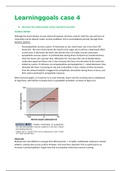
When exercise begins, or if exercise is at a low intensity, heart rate first increases due to withdrawal
of vagal tone, with further increases due to sympathetic activation, as shown in figure 6.6.
Heart rate
Resting heart rate (RHR) is in average 60 to 80 beats/min. s. In highly conditioned, endurance trained
athletes, resting rates as low as 28 to 40 beats/ min have been reported. This is mainly due to an
increase in parasympathetic (vagal) tone that accompanies endurance exercise training.
, Anticipatory response = just before the start of exercise, pre-exercise HR usually increases
above normal resting values, this is regulated through the sympathetic nervous system
response of (nor)epinephrine.
When exercise begins, HR increases directly in proportion to the increase in exercise intensity, until
near-maximal exercise is achieved. As maximal exercise intensity is approached, HR begins to plateau
even as the exercise workload continues to increase. This indicates that HR is approaching a maximal
value. The maximum heart rate (HRmax) is the highest HR value achieved in an all-out effort to the
point of volitional fatigue. Once accurately determined, HRmax is a highly reliable value that remains
constant from day to day. However, this value changes slightly from year to year due to a normal
age-related decline.
HR is often estimated based on age because there is a decrease of one heart beat per year beginning
at 10 to 15 years.
When the exercise intensity is held constant at any submaximal workload, HR increases fairly rapidly
until it reaches a plateau. This plateau is the steady-state heart rate, and it is the optimal HR for
meeting the circulatory demands at that specific rate of work. For each subsequent increase in
intensity, HR will reach a new steady-state value within 2 to 3 min. However, the more intense the
exercise, the longer it takes to achieve this steady-state value. The plateau may be caused by the
reduction of the diastolic filling time and so the EDV.
a lower steady-state HR at a fixed exercise intensity is a valid predictor of greater
cardiorespiratory fitness.
Stroke volume
Stroke volume = volume of blood pumped during one beat (contraction) during the systole.
1. How does the cardiovascular system respond to exercise?
SOURCE: KENNEY
Although the heart initiates its own electrical impulses (intrinsic control), both the rate and force of
contraction can be altered. Under normal conditions, this is accomplished primarily through three
extrinsic systems:
- Parasympathetic nervous system dominates at rest, when heart rate is less than 100
beats/min. The nerve that reaches the hearth is the vagus nerve and has a depressant effect
on the heart, it decreases the heart rate and the force of cardiac muscle contraction.
- Sympathetic nervous system predominates during times of physical or emotional stress,
when the heart rate is greater than 100 beats/min. Increases the rate of depolarization,
conduction speed and heart rate. It also increases the force of contraction of the ventricles.
- Endocrine system influence via norepinephrine and epinephrine ( = catecholamines), they
stimulate the heart, increasing its rate and contractility. In fact, release of these hormones
from the adrenal medulla is triggered by sympathetic stimulation during times of stress, and
their actions prolong the sympathetic response.
When exercise begins, or if exercise is at a low intensity, heart rate first increases due to withdrawal
of vagal tone, with further increases due to sympathetic activation, as shown in figure 6.6.
Heart rate
Resting heart rate (RHR) is in average 60 to 80 beats/min. s. In highly conditioned, endurance trained
athletes, resting rates as low as 28 to 40 beats/ min have been reported. This is mainly due to an
increase in parasympathetic (vagal) tone that accompanies endurance exercise training.
, Anticipatory response = just before the start of exercise, pre-exercise HR usually increases
above normal resting values, this is regulated through the sympathetic nervous system
response of (nor)epinephrine.
When exercise begins, HR increases directly in proportion to the increase in exercise intensity, until
near-maximal exercise is achieved. As maximal exercise intensity is approached, HR begins to plateau
even as the exercise workload continues to increase. This indicates that HR is approaching a maximal
value. The maximum heart rate (HRmax) is the highest HR value achieved in an all-out effort to the
point of volitional fatigue. Once accurately determined, HRmax is a highly reliable value that remains
constant from day to day. However, this value changes slightly from year to year due to a normal
age-related decline.
HR is often estimated based on age because there is a decrease of one heart beat per year beginning
at 10 to 15 years.
When the exercise intensity is held constant at any submaximal workload, HR increases fairly rapidly
until it reaches a plateau. This plateau is the steady-state heart rate, and it is the optimal HR for
meeting the circulatory demands at that specific rate of work. For each subsequent increase in
intensity, HR will reach a new steady-state value within 2 to 3 min. However, the more intense the
exercise, the longer it takes to achieve this steady-state value. The plateau may be caused by the
reduction of the diastolic filling time and so the EDV.
a lower steady-state HR at a fixed exercise intensity is a valid predictor of greater
cardiorespiratory fitness.
Stroke volume
Stroke volume = volume of blood pumped during one beat (contraction) during the systole.