lOMoAR cPSD| 47677026
, lOMoAR cPSD| 47677026
DEVELOPMENTAL PSYCHOLOGY (PYC4805)
SECTION A
ANSWER THREE OF THE FOLLOWING FOUR QUESTIONS:
QUESTION A1
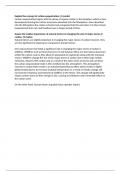
Evaluate the potential threats that occur during a sensitive period in human
development. Consider how these may impact the various competencies of a newborn
and infant. Refer to relevant research findings to validate your discussion. [20]
QUESTION A2
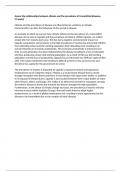
Write an essay about the influences on intelligence in middle childhood by referring to
Sternberg’s successful intelligence theory, the role of the home environment and the
school. Also, provide a clear conclusion to your argument and refer to relevant
research findings.
[20]
QUESTION A3
Discuss whether personality development continues across the lifespan by referring to
the views of theorists who support consistency in terms of dispositional traits and those
who favour personality change. Also, provide a clear conclusion to your argument and
substantiate your discussion by referring to relevant research findings.
[20]
, lOMoAR cPSD| 47677026
QUESTION A4
Address the concept of retirement by:
(a) indicating why it is essential to timeously prepare for retirement;
(b) how to adjust to it;
(c) discussing the effects thereof for a person’s self-concept, social cognition and
relationships with family and friends. [20]
Section A Total [60]
SECTION B
ANSWER ONE OF THE FOLLOWING TWO QUESTIONS:
QUESTION B1
Discuss Kohlberg’s views on moral development. Indicate why adolescents’ thinking
eminently allows adolescents to develop a moral stance that guides their behaviour
and include relevant research findings. [15]
, lOMoAR cPSD| 47677026
QUESTION B2
Criticise Piaget’s view that formal operational level of cognitive development reached
in adolescence is the final stage of cognitive development. Consider the relevant
research findings on post-formal thought and the factors that contribute to functioning
on a post-formal level. [15]
Section B Total [15]
[TOTAL: 75]
, lOMoAR cPSD| 47677026
DEVELOPMENTAL PSYCHOLOGY (PYC4805)
SECTION A
ANSWER THREE OF THE FOLLOWING FOUR QUESTIONS:
QUESTION A1
Evaluate the potential threats that occur during a sensitive period in human
development. Consider how these may impact the various competencies of a newborn
and infant. Refer to relevant research findings to validate your discussion. [20]
QUESTION A2
Write an essay about the influences on intelligence in middle childhood by referring to
Sternberg’s successful intelligence theory, the role of the home environment and the
school. Also, provide a clear conclusion to your argument and refer to relevant
research findings.
[20]
QUESTION A3
Discuss whether personality development continues across the lifespan by referring to
the views of theorists who support consistency in terms of dispositional traits and those
who favour personality change. Also, provide a clear conclusion to your argument and
substantiate your discussion by referring to relevant research findings.
[20]
, lOMoAR cPSD| 47677026
QUESTION A4
Address the concept of retirement by:
(a) indicating why it is essential to timeously prepare for retirement;
(b) how to adjust to it;
(c) discussing the effects thereof for a person’s self-concept, social cognition and
relationships with family and friends. [20]
Section A Total [60]
SECTION B
ANSWER ONE OF THE FOLLOWING TWO QUESTIONS:
QUESTION B1
Discuss Kohlberg’s views on moral development. Indicate why adolescents’ thinking
eminently allows adolescents to develop a moral stance that guides their behaviour
and include relevant research findings. [15]
, lOMoAR cPSD| 47677026
QUESTION B2
Criticise Piaget’s view that formal operational level of cognitive development reached
in adolescence is the final stage of cognitive development. Consider the relevant
research findings on post-formal thought and the factors that contribute to functioning
on a post-formal level. [15]
Section B Total [15]
[TOTAL: 75]