Learning Unit 7
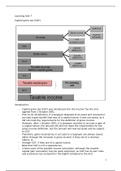
Capital gains tax (CGT)
Introduction:
- Capital gains tax (CGT) was introduced into the Income Tax Act and
applied from 1 October 2001.
- Prior to its introduction, if a taxpayer disposed of an asset and received or
accrued a gain (profit) that was of a capital nature, it was not taxed, as it
did not meet the requirements for the definition of gross income.
- However, after 1 October 2001, if a taxpayer receives or accrues a gain of
a capital nature, the amount will still not meet the requirements for the
gross income definition, but the amount will now be taxed and be subject
to CGT.
- Therefore, gains received by or accrued to a taxpayer are always taxed;
- either through the inclusion in gross income, if they are of a revenue
nature, or
- through CGT, if they are of a capital nature.
- Note that CGT is not a separate tax;
- it forms part of the taxable income calculation, although the taxable
capital gain calculation may be quite extensive, as CGT has its own rules
and provisions (as contained in the Eighth Schedule to the Act)
1
,7.1 Background:
CGT:
= is levied on the capital gains (profits) made on the disposal of certain assets,
- that is, on the increase in the value of certain assets from date of
acquisition (or 1 October 2001,
- for assets acquired before this date) to date of disposal.
- Therefore, when an asset is disposed of, you must determine whether the
gain is of a revenue nature or of a capital nature.
- In certain situations, the sale of an asset is not included in gross income,
as it is of a capital nature.
What test is applied by the courts to determine whether the amount is of a
capital nature?
- (If you are unsure of the answer to this, refer to learning unit 4.)
- If the disposal is of a capital nature, then CGT must be calculated.
- Once the taxable capital gain has been calculated, the amount will be
taxed by including it in the taxpayer's normal income tax calculation for
the relevant year of assessment.
- This learning unit will deal with disposals of a capital nature only.
2
, - The mechanisms of CGT will be discussed and, after mastering the
learning unit, you should be able to calculate a taxpayer's tax liability for
CGT purposes (in a simplified situation or a case study)
7.2 Identify whether CPT is applicable:
Taxpayers have to pay CGT when they dispose of an asset that is subject to the
CGT regulations.
- It is therefore necessary to know which taxpayers are liable for CGT.
Furthermore, before calculating CGT,
- one should first determine whether the transaction or event is indeed
subject to CGT.
- The first consideration is whether the amount should be fully included in
gross income or not.
- If it has to be included in gross income, it will not be subject to capital
gains.
- The next step is to determine whether the transaction is a disposal or is
deemed a disposal for CGT purposes. If the transaction is a disposal for tax
purposes,
- the next question is: When must the gain be recognised?
7.2.1 Who is liable for CGT:
Distinction made between residents of SA & non-residents:
Residents:
= CPT applies to any (capital) asset of a SA resident
- SA resident taxed on ‘capital gains’ made on a sale or disposal of assets
which he owns anywhere in world
Non-residents:
= sale or disposal of following assets is subject to CGT provisions, if assets are
capital in nature:
- Fixed (immovable) property situated in SA
- Any interest or right in immovable property situated in SA (incl. material
rights)
- Assets effectively connected to a SA permanent establishment
‘interest in immovable property situated in SA’:
3
Capital gains tax (CGT)
Introduction:
- Capital gains tax (CGT) was introduced into the Income Tax Act and
applied from 1 October 2001.
- Prior to its introduction, if a taxpayer disposed of an asset and received or
accrued a gain (profit) that was of a capital nature, it was not taxed, as it
did not meet the requirements for the definition of gross income.
- However, after 1 October 2001, if a taxpayer receives or accrues a gain of
a capital nature, the amount will still not meet the requirements for the
gross income definition, but the amount will now be taxed and be subject
to CGT.
- Therefore, gains received by or accrued to a taxpayer are always taxed;
- either through the inclusion in gross income, if they are of a revenue
nature, or
- through CGT, if they are of a capital nature.
- Note that CGT is not a separate tax;
- it forms part of the taxable income calculation, although the taxable
capital gain calculation may be quite extensive, as CGT has its own rules
and provisions (as contained in the Eighth Schedule to the Act)
1
,7.1 Background:
CGT:
= is levied on the capital gains (profits) made on the disposal of certain assets,
- that is, on the increase in the value of certain assets from date of
acquisition (or 1 October 2001,
- for assets acquired before this date) to date of disposal.
- Therefore, when an asset is disposed of, you must determine whether the
gain is of a revenue nature or of a capital nature.
- In certain situations, the sale of an asset is not included in gross income,
as it is of a capital nature.
What test is applied by the courts to determine whether the amount is of a
capital nature?
- (If you are unsure of the answer to this, refer to learning unit 4.)
- If the disposal is of a capital nature, then CGT must be calculated.
- Once the taxable capital gain has been calculated, the amount will be
taxed by including it in the taxpayer's normal income tax calculation for
the relevant year of assessment.
- This learning unit will deal with disposals of a capital nature only.
2
, - The mechanisms of CGT will be discussed and, after mastering the
learning unit, you should be able to calculate a taxpayer's tax liability for
CGT purposes (in a simplified situation or a case study)
7.2 Identify whether CPT is applicable:
Taxpayers have to pay CGT when they dispose of an asset that is subject to the
CGT regulations.
- It is therefore necessary to know which taxpayers are liable for CGT.
Furthermore, before calculating CGT,
- one should first determine whether the transaction or event is indeed
subject to CGT.
- The first consideration is whether the amount should be fully included in
gross income or not.
- If it has to be included in gross income, it will not be subject to capital
gains.
- The next step is to determine whether the transaction is a disposal or is
deemed a disposal for CGT purposes. If the transaction is a disposal for tax
purposes,
- the next question is: When must the gain be recognised?
7.2.1 Who is liable for CGT:
Distinction made between residents of SA & non-residents:
Residents:
= CPT applies to any (capital) asset of a SA resident
- SA resident taxed on ‘capital gains’ made on a sale or disposal of assets
which he owns anywhere in world
Non-residents:
= sale or disposal of following assets is subject to CGT provisions, if assets are
capital in nature:
- Fixed (immovable) property situated in SA
- Any interest or right in immovable property situated in SA (incl. material
rights)
- Assets effectively connected to a SA permanent establishment
‘interest in immovable property situated in SA’:
3