Hi!
Thanks dat je mijn samenvatting hebt gekocht! Ik hoop dat het je helpt
met leren.
Het is wel mijn interpretatie van de stof. Ik raad je zeker aan om alles zelf
te hebben gelezen, en dit te gebruiken als extra steuntje.
Laat vooral weten in de beoordeling wat je ervan vond! Tips zijn altijd
welkom.
Succes met leren!
1
,Inhoudsopgave
Titel bladzijde
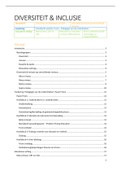
Disordered gambling: the evolving concept of behavioral addiction P. 3
A specific role for posterior dorsolateral striatum in human habit learning P. 7
A commentary on the association among ‘food addiction’, BED and obesity P. 10
Obesity and the brain: how convincing is the addiction model? P. 13
Brain dopamine and obesity P. 16
Eating disorders P. 17
Cognitive remediation therapy for eating disorders P. 20
E-health interventions for eating disorders P. 22
Targeting habits in anorexia nervosa P. 24
Braking habits with implementation intentions P. 26
Implementation intentions: can they be used to prevent and treat addiction? P. 29
Handbook angst- en dwangstoornissen P. 33
Enhanced avoidance habits in obsessive-compulsive disorder P. 37
Goal-directed learning and obsessive-compulsive disorder P. 39
2
,Disordered gambling: the evolving concept of behavioral addiction
Luke Clark
Introduction
In 2013, the release of the DSM-5 announced a major shift in the conceptualization of
addiction, with gambling disorder moved from its previous home in the Impulse Control
Disorders category of the DSM-III and DSM-IV, to a new location alongside the
substance use disorders in a category labeled Substance-Related and Addictive
Disorders. The important step here was in the formal ratification of behavioral addiction
as a clinical and neurobiological entity.
Neurotoxicity
The detrimental effects of various addictive drugs have been extensively documented.
Longitudinal neuroimaging studies have shown that alcohol dependence is
associated with progressive tissue shrinkage across multiple brain regions,
concentrated on frontal and cerebellar networks.
Postmortem studies in methamphetamine users identify histological markers of
cell death in the orbitofrontal cortex.
In experimental animals, short-term cocaine regimens induce persistent changes
in multiple facets of inhibitory control compared to animals treated with saline
injections. Such effects are often labeled neurotoxicity.
It is naïve to think that a behavioral addiction, such as gambling disorders should be
immune to such neuroplasticity, as this is thought to be the physiological hallmark of all
learning. Episodes of gambling are linked to activation of the sympathetic nervous
system and cortisol release, with associated changes, and gambling disorder is also
reasonably comorbid with substance use disorders. Impulsivity is a multifactorial trait
characterized by unplanned responding and hasty decision making that may be unduly
risky or neglect negative consequences.
Individuals with gambling disorder and nicotine dependence showed reduced recruitment
of the ventrolateral PFC by choice feedback on a reversal learning task and reduced
activation of the dorsomedial PFC during a response inhibition task. The pattern that
emerges from these studies is one of impulsivity as a shared marker that is therefore
proposed to reflect the predisposition to develop a range of addictive disorders, including
gambling disorder.
The related trait of sensation seeking was only present in the affected probands and may
thus be a determinant of initial recreational engagement with drugs. Changes in white
matter tracts and resting-state connectivity have also been reported in gambling
disorder. A reasonable conclusion at the current time is that signs of structural brain
changes can be detected in gambling disorder, but these changes appear minor in
comparison to most substance addictions.
Dopamine and the brain reward system
Some experiments point to hypoactivity within the striatum, medial PFC, amygdala and
insula, while others indicate hyperactivity of the same regions. The orbitofrontal cortex
in the patients with gambling disorders showed a stronger response to the monetary
outcomes, and also appeared to process these financial rewards as if they were primary
rewards. The important message from this paper is that addictions may be associated
3
, with an imbalance between different reward types, and that the compatibility of the task
reward with the abused commodity will critically determine changes in the brain reward
system.
The gamblers made more impulsive choices in the presence of the high-craving cues,
and these cues also reversed the usual pattern of subjective value coding in the midbrain
and ventral striatum. Four independent PET studies to date have failed to detect any
group differences in baseline dopamine D2 receptor availability in gambling disorders,
although individual differences were seen as functions of impulsivity markers and
symptom severity. In summary, the PET work in gambling disorder points to clear
perturbations in dopamine transmission, but this is one area where the emerging profile
in gambling disorder increasingly diverges from the established picture in drug addiction.
Relative potency of drug of abuse
In animal models of addiction, it is often asserted that drugs of abuse target the same
brain systems that mediate ordinary pleasures, but that they are considerably more
potent than natural rewards at doing so. This idea is implicit in the dogmatic view that
drugs of abuse hijack the ascending dopamine projection. The micro dialysis studies
collectively indicate greater evoked dopamine response by drugs of abuse compared to
natural rewards. Treatments for addiction need not necessarily induce reductions in
naturally rewarded behaviors.
Addictive ingredients
Redish proposed that, by exogenously stimulating the dopamine system, drugs of abuse
continually elicit a US response, giving rise to a kind of hyper-learning about associated
cues. This model is intuitively appealing, but also implies a unique capability of addictive
drugs, rather than natural behaviors, to create an addicted state. Redish et al. later
updated their model to explicitly consider the case of gambling addiction, with two
critical added features.
1. Acknowledgement of the “big win” hypothesis, that many people with gambling
disorder retrospectively describe receiving major payouts in the first few times
that they ever gambled.
2. The asymmetry in the temporal-difference learning model between appetitive and
aversive outcomes. Financial gains promote straightforward learning acquisition,
but financial losses do not trigger simple unlearning.
In summary, it is incontrovertible that drugs of abuse effectively stimulate the
mesolimbic dopamine system, and that this action is common to both natural rewards
and gambling outcomes as well. The modification of the Redish model to accommodate
gambling addiction gives two clues as to the nature of these ingredients. The first is
decision uncertainty, given that learning from prediction errors only occurs in uncertain
environments. The second is the potential for bivalent outcomes.
Gambling-related cognitive distortions
A standard definition of gambling refers to an individual risking something of value on
the uncertain prospect of a larger reward. Most environments in the natural world are
probabilistic. By contrast, gambling games are mostly entirely random or involve a
modest degree of skill.
Humans display a number of systematic errors in processing under conditions of chance,
which come to the fore in gambling games and are known as gambling-related cognitive
4
Thanks dat je mijn samenvatting hebt gekocht! Ik hoop dat het je helpt
met leren.
Het is wel mijn interpretatie van de stof. Ik raad je zeker aan om alles zelf
te hebben gelezen, en dit te gebruiken als extra steuntje.
Laat vooral weten in de beoordeling wat je ervan vond! Tips zijn altijd
welkom.
Succes met leren!
1
,Inhoudsopgave
Titel bladzijde
Disordered gambling: the evolving concept of behavioral addiction P. 3
A specific role for posterior dorsolateral striatum in human habit learning P. 7
A commentary on the association among ‘food addiction’, BED and obesity P. 10
Obesity and the brain: how convincing is the addiction model? P. 13
Brain dopamine and obesity P. 16
Eating disorders P. 17
Cognitive remediation therapy for eating disorders P. 20
E-health interventions for eating disorders P. 22
Targeting habits in anorexia nervosa P. 24
Braking habits with implementation intentions P. 26
Implementation intentions: can they be used to prevent and treat addiction? P. 29
Handbook angst- en dwangstoornissen P. 33
Enhanced avoidance habits in obsessive-compulsive disorder P. 37
Goal-directed learning and obsessive-compulsive disorder P. 39
2
,Disordered gambling: the evolving concept of behavioral addiction
Luke Clark
Introduction
In 2013, the release of the DSM-5 announced a major shift in the conceptualization of
addiction, with gambling disorder moved from its previous home in the Impulse Control
Disorders category of the DSM-III and DSM-IV, to a new location alongside the
substance use disorders in a category labeled Substance-Related and Addictive
Disorders. The important step here was in the formal ratification of behavioral addiction
as a clinical and neurobiological entity.
Neurotoxicity
The detrimental effects of various addictive drugs have been extensively documented.
Longitudinal neuroimaging studies have shown that alcohol dependence is
associated with progressive tissue shrinkage across multiple brain regions,
concentrated on frontal and cerebellar networks.
Postmortem studies in methamphetamine users identify histological markers of
cell death in the orbitofrontal cortex.
In experimental animals, short-term cocaine regimens induce persistent changes
in multiple facets of inhibitory control compared to animals treated with saline
injections. Such effects are often labeled neurotoxicity.
It is naïve to think that a behavioral addiction, such as gambling disorders should be
immune to such neuroplasticity, as this is thought to be the physiological hallmark of all
learning. Episodes of gambling are linked to activation of the sympathetic nervous
system and cortisol release, with associated changes, and gambling disorder is also
reasonably comorbid with substance use disorders. Impulsivity is a multifactorial trait
characterized by unplanned responding and hasty decision making that may be unduly
risky or neglect negative consequences.
Individuals with gambling disorder and nicotine dependence showed reduced recruitment
of the ventrolateral PFC by choice feedback on a reversal learning task and reduced
activation of the dorsomedial PFC during a response inhibition task. The pattern that
emerges from these studies is one of impulsivity as a shared marker that is therefore
proposed to reflect the predisposition to develop a range of addictive disorders, including
gambling disorder.
The related trait of sensation seeking was only present in the affected probands and may
thus be a determinant of initial recreational engagement with drugs. Changes in white
matter tracts and resting-state connectivity have also been reported in gambling
disorder. A reasonable conclusion at the current time is that signs of structural brain
changes can be detected in gambling disorder, but these changes appear minor in
comparison to most substance addictions.
Dopamine and the brain reward system
Some experiments point to hypoactivity within the striatum, medial PFC, amygdala and
insula, while others indicate hyperactivity of the same regions. The orbitofrontal cortex
in the patients with gambling disorders showed a stronger response to the monetary
outcomes, and also appeared to process these financial rewards as if they were primary
rewards. The important message from this paper is that addictions may be associated
3
, with an imbalance between different reward types, and that the compatibility of the task
reward with the abused commodity will critically determine changes in the brain reward
system.
The gamblers made more impulsive choices in the presence of the high-craving cues,
and these cues also reversed the usual pattern of subjective value coding in the midbrain
and ventral striatum. Four independent PET studies to date have failed to detect any
group differences in baseline dopamine D2 receptor availability in gambling disorders,
although individual differences were seen as functions of impulsivity markers and
symptom severity. In summary, the PET work in gambling disorder points to clear
perturbations in dopamine transmission, but this is one area where the emerging profile
in gambling disorder increasingly diverges from the established picture in drug addiction.
Relative potency of drug of abuse
In animal models of addiction, it is often asserted that drugs of abuse target the same
brain systems that mediate ordinary pleasures, but that they are considerably more
potent than natural rewards at doing so. This idea is implicit in the dogmatic view that
drugs of abuse hijack the ascending dopamine projection. The micro dialysis studies
collectively indicate greater evoked dopamine response by drugs of abuse compared to
natural rewards. Treatments for addiction need not necessarily induce reductions in
naturally rewarded behaviors.
Addictive ingredients
Redish proposed that, by exogenously stimulating the dopamine system, drugs of abuse
continually elicit a US response, giving rise to a kind of hyper-learning about associated
cues. This model is intuitively appealing, but also implies a unique capability of addictive
drugs, rather than natural behaviors, to create an addicted state. Redish et al. later
updated their model to explicitly consider the case of gambling addiction, with two
critical added features.
1. Acknowledgement of the “big win” hypothesis, that many people with gambling
disorder retrospectively describe receiving major payouts in the first few times
that they ever gambled.
2. The asymmetry in the temporal-difference learning model between appetitive and
aversive outcomes. Financial gains promote straightforward learning acquisition,
but financial losses do not trigger simple unlearning.
In summary, it is incontrovertible that drugs of abuse effectively stimulate the
mesolimbic dopamine system, and that this action is common to both natural rewards
and gambling outcomes as well. The modification of the Redish model to accommodate
gambling addiction gives two clues as to the nature of these ingredients. The first is
decision uncertainty, given that learning from prediction errors only occurs in uncertain
environments. The second is the potential for bivalent outcomes.
Gambling-related cognitive distortions
A standard definition of gambling refers to an individual risking something of value on
the uncertain prospect of a larger reward. Most environments in the natural world are
probabilistic. By contrast, gambling games are mostly entirely random or involve a
modest degree of skill.
Humans display a number of systematic errors in processing under conditions of chance,
which come to the fore in gambling games and are known as gambling-related cognitive
4