Chapter 3 Hematopoietic Function
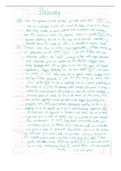
1. With the exception of the first two steps, what is required in all steps of the
clotting process?
A) Calcium
B) Prothrombin
C) Tissue factor
D) Plasminogen
2. The first step of hemostasis occurs as a:
A) fibrin clot.
B) platelet plug.
C) clot retraction.
D) vessel spasm.
3. To form a platelet plug, platelets are attracted to the damaged vessel, and
then platelet occurs.
A) adhesion
B) fibrinolysis
C) thrombosis
D) thromboxane A2
4. Blood coagulation is initiated by either of two pathways. The intrinsic
pathway requires circulating to begin the step-wise coagulation
cascade.
A) protein C
B) thrombin
C) factor XII
D) tissue factor
5. Increased platelet function, and consequent hypercoagulability, can be
caused by:
, A) factor V mutation.
B) platelet insensitivity.
C) vascular wall damage.
D) decreased platelet numbers.
6. Immune thrombocytopenia purpura (ITP) is a/an disorder that
destroys .
1. With the exception of the first two steps, what is required in all steps of the
clotting process?
A) Calcium
B) Prothrombin
C) Tissue factor
D) Plasminogen
2. The first step of hemostasis occurs as a:
A) fibrin clot.
B) platelet plug.
C) clot retraction.
D) vessel spasm.
3. To form a platelet plug, platelets are attracted to the damaged vessel, and
then platelet occurs.
A) adhesion
B) fibrinolysis
C) thrombosis
D) thromboxane A2
4. Blood coagulation is initiated by either of two pathways. The intrinsic
pathway requires circulating to begin the step-wise coagulation
cascade.
A) protein C
B) thrombin
C) factor XII
D) tissue factor
5. Increased platelet function, and consequent hypercoagulability, can be
caused by:
, A) factor V mutation.
B) platelet insensitivity.
C) vascular wall damage.
D) decreased platelet numbers.
6. Immune thrombocytopenia purpura (ITP) is a/an disorder that
destroys .