Assignment 7: Greetings and interpersonal relationships
Date: 29 September 2017
Name
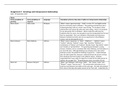
Terms of address in Terms of address in Language Translation of terms; How does it reflect on interpersonal relationships
greeting response
Môre Johan! Hallo Lindie Afrikaans “Môre” means “good morning”. “Hallo” or even “Hi” are English words
but are commonly used in Afrikaans. The greeting recorded here was a
husband greeting a wife at a home I was visiting. The husband, Johan,
entered the room where the wife and I were sitting. There is no protocol
to say who greets first in Afrikaans. When Lindie (the wife) saw her
husband enter the room, she was glad to see him and greeted him fist and
then he responded. This is an indication of familiarity and closesness
between husband and wife, who are on equal terms in the Afrikaans
culture, and not disrespectful at all.
Molo Andiswa! Molo Makhulu isiXhosa “Molo” means “good day” or “hallo”. “Makhulu” – “uMama” means
“mother” whereas “kakhulu” means “big”, therefore “Makhulu”, a
combination of “Mama” and “kakhulu” literally means “big mother” which
we translate as “grandmother”. This greeting was between a young
woman, Andiswa, and an unrelated older lady, Nokhaya, and took place at
our local OK store. Although Nokhaya was already at the store when
Andiswa arrived, she waited for Nokhaya to greet her. I asked Andiswa
why she didn’t greet first, because I understood that the person arriving
first should be the first to greet in the isiXhosa culture. Andiswa
responded that it was a sign of respect for to wait for the older person to
address the younger first. The greeting was warm, but rather formal.
Molo Sisi! Molweni! Ninjani? isiXhosa “Molo” and “Molweni” both mean “hallo”. “Sisi” means “sister” and
“Ninjani?” means “how are you?”. The conversation took place at our
local taxi rank between two ladies of the same age. The lady who greeted
first came to the lady who spoke second, at her fruit stall. I asked why the
1
Date: 29 September 2017
Name
Terms of address in Terms of address in Language Translation of terms; How does it reflect on interpersonal relationships
greeting response
Môre Johan! Hallo Lindie Afrikaans “Môre” means “good morning”. “Hallo” or even “Hi” are English words
but are commonly used in Afrikaans. The greeting recorded here was a
husband greeting a wife at a home I was visiting. The husband, Johan,
entered the room where the wife and I were sitting. There is no protocol
to say who greets first in Afrikaans. When Lindie (the wife) saw her
husband enter the room, she was glad to see him and greeted him fist and
then he responded. This is an indication of familiarity and closesness
between husband and wife, who are on equal terms in the Afrikaans
culture, and not disrespectful at all.
Molo Andiswa! Molo Makhulu isiXhosa “Molo” means “good day” or “hallo”. “Makhulu” – “uMama” means
“mother” whereas “kakhulu” means “big”, therefore “Makhulu”, a
combination of “Mama” and “kakhulu” literally means “big mother” which
we translate as “grandmother”. This greeting was between a young
woman, Andiswa, and an unrelated older lady, Nokhaya, and took place at
our local OK store. Although Nokhaya was already at the store when
Andiswa arrived, she waited for Nokhaya to greet her. I asked Andiswa
why she didn’t greet first, because I understood that the person arriving
first should be the first to greet in the isiXhosa culture. Andiswa
responded that it was a sign of respect for to wait for the older person to
address the younger first. The greeting was warm, but rather formal.
Molo Sisi! Molweni! Ninjani? isiXhosa “Molo” and “Molweni” both mean “hallo”. “Sisi” means “sister” and
“Ninjani?” means “how are you?”. The conversation took place at our
local taxi rank between two ladies of the same age. The lady who greeted
first came to the lady who spoke second, at her fruit stall. I asked why the
1