Mariska Bester 2019 ©
General Linguistics: Semiotics & Communication
Table of Contents
General Linguistics: Semiotics & Communication .................................................................... 1
Roles: .................................................................................................................................................................. 2
Receivers: ........................................................................................................................................................... 2
Ethnography .................................................................................................................................3
Types of context: ................................................................................................................................................ 3
Communication: different theories about how it takes place ........................................................................... 5
Multi-modal approach ..................................................................................................................7
Semiotics ......................................................................................................................................8
Saussure ............................................................................................................................................................. 8
Piece’s 3-Part Typology .................................................................................................................................... 10
, Mariska Bester 2019 ©
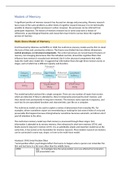
• Erving Goffman (1960s/1970s) proposed different roles for senders +
receivers
Roles:
1. Author: one who decides what will be said + selects appropriate
words
2. Principal: person / institution whose position is established by words
spoken / originator of this position/ set of ideas
3. Animator: one who actually speaks (the “talking machine”)
4. Audience: large group of receivers who are generally not in position
to engage the speaker through dialogue / interaction
Can be live (theatre) or distant in time + place (mass media)
Receivers:
1. Ratified: intended / legal
Either intentionally addressed or unaddressed
- addressed receivers = recipients to whom sender directs their
message intentionally (lecturer addressing class)
- unaddressed receivers are listeners who receive message at same
time as the sender is speaking to addressed receiver (lecturer
answering specific student while class listens)
2. Not ratified: illegal
Where sender is not aware of presence of the receiver
• Thus: studying communication in context means taking note of:
- What is communicated
- Who communicates with whom
- In which setting
- For what purpose
- According to which norms / social conventions
2
General Linguistics: Semiotics & Communication
Table of Contents
General Linguistics: Semiotics & Communication .................................................................... 1
Roles: .................................................................................................................................................................. 2
Receivers: ........................................................................................................................................................... 2
Ethnography .................................................................................................................................3
Types of context: ................................................................................................................................................ 3
Communication: different theories about how it takes place ........................................................................... 5
Multi-modal approach ..................................................................................................................7
Semiotics ......................................................................................................................................8
Saussure ............................................................................................................................................................. 8
Piece’s 3-Part Typology .................................................................................................................................... 10
, Mariska Bester 2019 ©
• Erving Goffman (1960s/1970s) proposed different roles for senders +
receivers
Roles:
1. Author: one who decides what will be said + selects appropriate
words
2. Principal: person / institution whose position is established by words
spoken / originator of this position/ set of ideas
3. Animator: one who actually speaks (the “talking machine”)
4. Audience: large group of receivers who are generally not in position
to engage the speaker through dialogue / interaction
Can be live (theatre) or distant in time + place (mass media)
Receivers:
1. Ratified: intended / legal
Either intentionally addressed or unaddressed
- addressed receivers = recipients to whom sender directs their
message intentionally (lecturer addressing class)
- unaddressed receivers are listeners who receive message at same
time as the sender is speaking to addressed receiver (lecturer
answering specific student while class listens)
2. Not ratified: illegal
Where sender is not aware of presence of the receiver
• Thus: studying communication in context means taking note of:
- What is communicated
- Who communicates with whom
- In which setting
- For what purpose
- According to which norms / social conventions
2