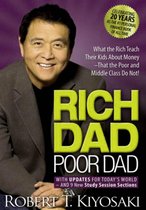
RICH DAD POOR
DAD
KEY POINTS AND
SUMMARY
, ALL THE LESSONS FROM
THE BEST BOOK ON
PERSONAL FINANCE
Lesson 1: The Poor and Middle-Class Work for Money
The Rich makes Money work for Him
Lesson 1.1: People’s lives are forever controlled by two
emotions: fear and greed.
o Fear keeps people trapped by working hard and earning
little money
o People let emotions decide, they do not use their brains.
It would help if you chose what you think, not what you
Feel
o You need to learn to control fear and desire (greed) about
money first, although even if you earn lots of money, you
remain a highly-paid slave
o A Job does not make you secure, it's a short-term solution
for a long-term problem (money)
o Ignorance about money lets fear and greed mechanism
grow, Schools teach skills, not how money works, and for
that, you need a brain controlling your emotions and self-
studying
o Money is an illusion, just fake material things, they've got
no real power
Lesson 2: It’s not how much money you make.
,It’s how much money you keep
To be rich you first need to be financially literate
Lesson 2.1: Rich people acquire assets. The poor and middle
class acquire liabilities that they think are assets
o You must know the difference between an asset and a
liability, and buy assets
o An asset puts money in my pocket. A liability takes money
out of my pocket
o An Income Statement measures income and expenses
(money-in, money-out)
o A Balance Sheet balances assets against liabilities
o Cash flow tells the story of how a person handles money
Lesson 2.2: There are Three Main Powers: Military, Money, and
Self-Knowledge, the Rich also use the Last
o A person can be highly educated, professionally
successful, and financially illiterate.
o When you want to buy a liability, you should first buy
Assets that generate the cash flow to pay that liability
o The Rich get richer as they have a higher income than
expenses, which means more assets to buy which means
higher income
Lesson 3: Mind Your Own Business
o The rich focus on their asset columns while everyone else
focuses on their income statements
o Business is NOT Profession, you can be a Chef working for
others' business. But it would help if you had another
business, your own One
, o Financial struggle is often the result of people working all
their lives for someone else.
o List of Real Assets:
Businesses that do not require my presence I own
them, but they are managed or run by other people.
If I have to work there, it’s not a business. It has
become my job.
Stocks
Bonds
Income-generating real estate
Notes (IOUs)
Royalties from intellectual property such as music,
scripts, and patents
Anything else that has value, produces income or
appreciates, and has a ready market
Lesson 3.1: Start minding your own business. Keep your
daytime job, but start buying real assets, not liabilities
o Rich people buy luxuries last, while the poor and middle
class tend to buy luxuries first
Lesson 4: My rich dad just played the game smart, and he did
it through corporations and tax evasion (🤨😱), the biggest
secret of the rich
o Capitalism makes more sense than Socialism, as the rich
always find a legal way to evade disadvantages
o Taxes were made to punish the rich but they ended up
being paid by the middle and poor class
o Corporations are rich biggest secret, as they delay taxes to
a smaller quantitative of money
, o A corporation earns, and spends everything it can, and is
taxed on anything that is left
Lesson 4.1: If you work for money, you give the power to your
employer. If money works for you, you keep the power and
control it
o Knowledge is power, the power makes you able to keep
money and make it multiply when the world tries to push
you around
o Be smart and you won’t be pushed around as much
Lesson 4.2: Financial IQ is made up of knowledge from four
broad areas of expertise:
o Accounting, it's financial literacy or the ability to read
numbers. This is a vital skill if you want to build an
empire. The more money you are responsible for, the
more accuracy is required, or the house comes tumbling
down. This is the left-brain side or the details. Financial
literacy is the ability to read and understand financial
statements which allows you to identify the strengths and
weaknesses of any business.
o Investing, it's is the science of “money making money.”
This involves strategies and formulas which use the
creative right-brain side.
o Understanding markets, it's the science of supply and
demand. You need to know the technical aspects of the
market, which are emotion-driven, in addition to the
fundamental or economic aspects of an investment. Does
an investment make sense or does it not make sense
based on current market conditions?
DAD
KEY POINTS AND
SUMMARY
, ALL THE LESSONS FROM
THE BEST BOOK ON
PERSONAL FINANCE
Lesson 1: The Poor and Middle-Class Work for Money
The Rich makes Money work for Him
Lesson 1.1: People’s lives are forever controlled by two
emotions: fear and greed.
o Fear keeps people trapped by working hard and earning
little money
o People let emotions decide, they do not use their brains.
It would help if you chose what you think, not what you
Feel
o You need to learn to control fear and desire (greed) about
money first, although even if you earn lots of money, you
remain a highly-paid slave
o A Job does not make you secure, it's a short-term solution
for a long-term problem (money)
o Ignorance about money lets fear and greed mechanism
grow, Schools teach skills, not how money works, and for
that, you need a brain controlling your emotions and self-
studying
o Money is an illusion, just fake material things, they've got
no real power
Lesson 2: It’s not how much money you make.
,It’s how much money you keep
To be rich you first need to be financially literate
Lesson 2.1: Rich people acquire assets. The poor and middle
class acquire liabilities that they think are assets
o You must know the difference between an asset and a
liability, and buy assets
o An asset puts money in my pocket. A liability takes money
out of my pocket
o An Income Statement measures income and expenses
(money-in, money-out)
o A Balance Sheet balances assets against liabilities
o Cash flow tells the story of how a person handles money
Lesson 2.2: There are Three Main Powers: Military, Money, and
Self-Knowledge, the Rich also use the Last
o A person can be highly educated, professionally
successful, and financially illiterate.
o When you want to buy a liability, you should first buy
Assets that generate the cash flow to pay that liability
o The Rich get richer as they have a higher income than
expenses, which means more assets to buy which means
higher income
Lesson 3: Mind Your Own Business
o The rich focus on their asset columns while everyone else
focuses on their income statements
o Business is NOT Profession, you can be a Chef working for
others' business. But it would help if you had another
business, your own One
, o Financial struggle is often the result of people working all
their lives for someone else.
o List of Real Assets:
Businesses that do not require my presence I own
them, but they are managed or run by other people.
If I have to work there, it’s not a business. It has
become my job.
Stocks
Bonds
Income-generating real estate
Notes (IOUs)
Royalties from intellectual property such as music,
scripts, and patents
Anything else that has value, produces income or
appreciates, and has a ready market
Lesson 3.1: Start minding your own business. Keep your
daytime job, but start buying real assets, not liabilities
o Rich people buy luxuries last, while the poor and middle
class tend to buy luxuries first
Lesson 4: My rich dad just played the game smart, and he did
it through corporations and tax evasion (🤨😱), the biggest
secret of the rich
o Capitalism makes more sense than Socialism, as the rich
always find a legal way to evade disadvantages
o Taxes were made to punish the rich but they ended up
being paid by the middle and poor class
o Corporations are rich biggest secret, as they delay taxes to
a smaller quantitative of money
, o A corporation earns, and spends everything it can, and is
taxed on anything that is left
Lesson 4.1: If you work for money, you give the power to your
employer. If money works for you, you keep the power and
control it
o Knowledge is power, the power makes you able to keep
money and make it multiply when the world tries to push
you around
o Be smart and you won’t be pushed around as much
Lesson 4.2: Financial IQ is made up of knowledge from four
broad areas of expertise:
o Accounting, it's financial literacy or the ability to read
numbers. This is a vital skill if you want to build an
empire. The more money you are responsible for, the
more accuracy is required, or the house comes tumbling
down. This is the left-brain side or the details. Financial
literacy is the ability to read and understand financial
statements which allows you to identify the strengths and
weaknesses of any business.
o Investing, it's is the science of “money making money.”
This involves strategies and formulas which use the
creative right-brain side.
o Understanding markets, it's the science of supply and
demand. You need to know the technical aspects of the
market, which are emotion-driven, in addition to the
fundamental or economic aspects of an investment. Does
an investment make sense or does it not make sense
based on current market conditions?