Chapter 3
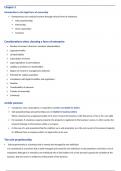
Introduction to the legal form of ownership
Entrepreneurs can conduct business through various forms of enterprise.
Sole proprietorship
Partnership
Close corporation
Company
Considerations when choosing a form of enterprise
Number of owners/ directors/ members (shareholders)
Legal personality
Limited liability
Subscription of shares
Legal regulations or prescriptions
Liability to members or shareholders
Degree of control or management authority
Potential for capital acquisition
Compliance with legal formalities and regulations
Taxation
Transferability of interests
Transfer of ownership
Continuity
Juristic persons:
Companies, close corporations, co-operative societies (not liable for debts)
Sole proprietorships and partnerships are not (liable for business debts)
When a business has a legal personality of its own it means the business is like the person in his or her own right
For example, if a business acquire property, the property is registered in the business’ names. In other words, the
property belongs to the business entity or company
In the case of a sole proprietorship the creditors sue a sole proprietor as is the only owner in his personal capacity.
It’s different from a company which is a legal entity on its own
The sole proprietorship
Sole proprietorship is a business that is owned and managed by one individual
It is considered as a business that is both managed and owned by one individual. A sole proprietor could have a lot of
employees although it is owned by one individual who is fully liable in his or her personal capacity for all debts of the
business. But the owner is entitled to all the profits of the business
Introduction to the legal form of ownership
Entrepreneurs can conduct business through various forms of enterprise.
Sole proprietorship
Partnership
Close corporation
Company
Considerations when choosing a form of enterprise
Number of owners/ directors/ members (shareholders)
Legal personality
Limited liability
Subscription of shares
Legal regulations or prescriptions
Liability to members or shareholders
Degree of control or management authority
Potential for capital acquisition
Compliance with legal formalities and regulations
Taxation
Transferability of interests
Transfer of ownership
Continuity
Juristic persons:
Companies, close corporations, co-operative societies (not liable for debts)
Sole proprietorships and partnerships are not (liable for business debts)
When a business has a legal personality of its own it means the business is like the person in his or her own right
For example, if a business acquire property, the property is registered in the business’ names. In other words, the
property belongs to the business entity or company
In the case of a sole proprietorship the creditors sue a sole proprietor as is the only owner in his personal capacity.
It’s different from a company which is a legal entity on its own
The sole proprietorship
Sole proprietorship is a business that is owned and managed by one individual
It is considered as a business that is both managed and owned by one individual. A sole proprietor could have a lot of
employees although it is owned by one individual who is fully liable in his or her personal capacity for all debts of the
business. But the owner is entitled to all the profits of the business