PREVIEW
QUESTION 1
1.1.1. Pedagogy : Pedagogy refers to the art
and science of teaching and education. It
encompasses the methods, strategies, and
approaches teachers use to facilitate
learning in students.
1.1.2. Pedagogical Content Knowledge :
Pedagogical Content Knowledge (PCK) is
the blend of content and pedagogy that
makes teaching effective. It involves
knowing how to present subject matter to
students in a way that makes it
understandable and relevant, integrating
knowledge of content, teaching strategies,
and student learning.
1.1.3. Epistemologies : Epistemologies are
the theories and philosophies concerning
BTE2601
the nature and scope of knowledge. They
address questions about how knowledge is
acquired, what counts as knowledge, and
how we can know what we know.
NATALIE FOXX
ASSIGNMENT 2 2024
, QUESTION 1
1.1.1. Pedagogy : Pedagogy refers to the art and science of teaching and
education. It encompasses the methods, strategies, and approaches teachers
use to facilitate learning in students.
1.1.2. Pedagogical Content Knowledge : Pedagogical Content Knowledge
(PCK) is the blend of content and pedagogy that makes teaching effective. It
involves knowing how to present subject matter to students in a way that makes
it understandable and relevant, integrating knowledge of content, teaching
strategies, and student learning.
1.1.3. Epistemologies : Epistemologies are the theories and philosophies
concerning the nature and scope of knowledge. They address questions about
how knowledge is acquired, what counts as knowledge, and how we can know
what we know.
1.1.4. Rote Learning : Rote learning is a memorization technique based on
repetition. The learner memorizes information through repeated exposure
without necessarily understanding the underlying meaning or context.
1.1.5. Indigenous Knowledge Systems : Indigenous Knowledge Systems refer
to the complex set of knowledge, skills, and philosophies developed by
indigenous communities over time. These systems are deeply rooted in the
culture and experiences of indigenous peoples and are used to maintain their
way of life and manage their environment.
QUESTION 2
2.1. Advantages of Critical Education Theory
a) Promotes Critical Thinking:
Critical education theory encourages students to question and analyze the
world around them. This leads to the development of critical thinking skills,
enabling students to challenge existing power structures and societal norms.
Students learn to think independently, assess various perspectives, and make
informed decisions, which is essential for personal and societal growth.
b) Fosters Social Justice:
The theory advocates for education as a tool for social change, addressing
inequalities and empowering marginalized groups. By highlighting issues of
equity and justice, it aims to create a more inclusive and fair society.
Educators and students become more aware of social injustices and are
motivated to take action to create positive change within their communities.
c) Encourages Active Participation:
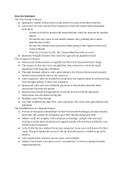
QUESTION 1
1.1.1. Pedagogy : Pedagogy refers to the art
and science of teaching and education. It
encompasses the methods, strategies, and
approaches teachers use to facilitate
learning in students.
1.1.2. Pedagogical Content Knowledge :
Pedagogical Content Knowledge (PCK) is
the blend of content and pedagogy that
makes teaching effective. It involves
knowing how to present subject matter to
students in a way that makes it
understandable and relevant, integrating
knowledge of content, teaching strategies,
and student learning.
1.1.3. Epistemologies : Epistemologies are
the theories and philosophies concerning
BTE2601
the nature and scope of knowledge. They
address questions about how knowledge is
acquired, what counts as knowledge, and
how we can know what we know.
NATALIE FOXX
ASSIGNMENT 2 2024
, QUESTION 1
1.1.1. Pedagogy : Pedagogy refers to the art and science of teaching and
education. It encompasses the methods, strategies, and approaches teachers
use to facilitate learning in students.
1.1.2. Pedagogical Content Knowledge : Pedagogical Content Knowledge
(PCK) is the blend of content and pedagogy that makes teaching effective. It
involves knowing how to present subject matter to students in a way that makes
it understandable and relevant, integrating knowledge of content, teaching
strategies, and student learning.
1.1.3. Epistemologies : Epistemologies are the theories and philosophies
concerning the nature and scope of knowledge. They address questions about
how knowledge is acquired, what counts as knowledge, and how we can know
what we know.
1.1.4. Rote Learning : Rote learning is a memorization technique based on
repetition. The learner memorizes information through repeated exposure
without necessarily understanding the underlying meaning or context.
1.1.5. Indigenous Knowledge Systems : Indigenous Knowledge Systems refer
to the complex set of knowledge, skills, and philosophies developed by
indigenous communities over time. These systems are deeply rooted in the
culture and experiences of indigenous peoples and are used to maintain their
way of life and manage their environment.
QUESTION 2
2.1. Advantages of Critical Education Theory
a) Promotes Critical Thinking:
Critical education theory encourages students to question and analyze the
world around them. This leads to the development of critical thinking skills,
enabling students to challenge existing power structures and societal norms.
Students learn to think independently, assess various perspectives, and make
informed decisions, which is essential for personal and societal growth.
b) Fosters Social Justice:
The theory advocates for education as a tool for social change, addressing
inequalities and empowering marginalized groups. By highlighting issues of
equity and justice, it aims to create a more inclusive and fair society.
Educators and students become more aware of social injustices and are
motivated to take action to create positive change within their communities.
c) Encourages Active Participation: