PREVIEW
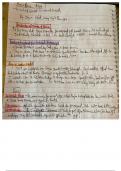
Essay: Analyzing a Social
Persuasive Text
The social persuasive text under
scrutiny sheds light on the dire
situation faced by many schools in
South Africa, where pit toilets are
still in use despite the country's
development status. The target
audience is likely the general
public, policymakers, and
stakeholders in education. The
persuasive purpose is to evoke a
sense of urgency and shame
regarding the sub-standard
facilities in schools, aiming to
mobilize action towards improving
them.
The text employs several
persuasive strategies to convey its
ENG2602
message and engage the
audience. The use of ethos is
evident through the inclusion of
James Komape's tragic story,
appealing to the credibility of a
firsthand witness and victim of the
issue.
ASSIGNMENT 2 2024
NATALIE FOXX
, ASSIGNMENT: 02
THIS ASSIGNMENT IS COMPULSORY
ASSIGNMENT WEIGHT: 35%
ASSIGNMENT DUE DATE: 1 JULY 2024
Answer ONE of the following two questions.
QUESTION 1: SOCIAL PERSUASION
Read the following social persuasive text closely and answer the question that follows.
In South Africa, pupils in more than 3 000 schools still use pit toilets
At a high school in rural northern South Africa, more than 300 students and their
teachers share three toilets, and that woefully lopsided figure is not the worst problem.
The three toilets are pit latrines, effectively three-metre holes in the ground, which
students line up during a lunch break to use.
The pit toilets at Seipone Secondary School in the village of Ga-Mashashane,
Limpopo, are at least covered by white toilet seats and enclosed by brick structures.
Some of the pit toilets, still used at more than 3 300 schools in poor, mostly rural areas
across South Africa, are not.
It is a shameful situation for a country referred to as the most developed in Africa, and
an indicator of its profound problems with poverty and inequality, say human rights
groups, who are pushing the South African government to do away with the sub-
standard facilities in schools.
Unhygienic, the latrines present a much more direct danger.
In January 2014, James Komape, at the nearby Chebeng village, received a phone
call asking him to rush to his five-year-old son's pre-school.
The little boy, Michael, was found dead, drowned at the bottom of a pit latrine.
Michael's body had not even been removed from the pool of water mixed with faeces
and urine at the bottom of the pit he fell into when his father got there.
Essay: Analyzing a Social
Persuasive Text
The social persuasive text under
scrutiny sheds light on the dire
situation faced by many schools in
South Africa, where pit toilets are
still in use despite the country's
development status. The target
audience is likely the general
public, policymakers, and
stakeholders in education. The
persuasive purpose is to evoke a
sense of urgency and shame
regarding the sub-standard
facilities in schools, aiming to
mobilize action towards improving
them.
The text employs several
persuasive strategies to convey its
ENG2602
message and engage the
audience. The use of ethos is
evident through the inclusion of
James Komape's tragic story,
appealing to the credibility of a
firsthand witness and victim of the
issue.
ASSIGNMENT 2 2024
NATALIE FOXX
, ASSIGNMENT: 02
THIS ASSIGNMENT IS COMPULSORY
ASSIGNMENT WEIGHT: 35%
ASSIGNMENT DUE DATE: 1 JULY 2024
Answer ONE of the following two questions.
QUESTION 1: SOCIAL PERSUASION
Read the following social persuasive text closely and answer the question that follows.
In South Africa, pupils in more than 3 000 schools still use pit toilets
At a high school in rural northern South Africa, more than 300 students and their
teachers share three toilets, and that woefully lopsided figure is not the worst problem.
The three toilets are pit latrines, effectively three-metre holes in the ground, which
students line up during a lunch break to use.
The pit toilets at Seipone Secondary School in the village of Ga-Mashashane,
Limpopo, are at least covered by white toilet seats and enclosed by brick structures.
Some of the pit toilets, still used at more than 3 300 schools in poor, mostly rural areas
across South Africa, are not.
It is a shameful situation for a country referred to as the most developed in Africa, and
an indicator of its profound problems with poverty and inequality, say human rights
groups, who are pushing the South African government to do away with the sub-
standard facilities in schools.
Unhygienic, the latrines present a much more direct danger.
In January 2014, James Komape, at the nearby Chebeng village, received a phone
call asking him to rush to his five-year-old son's pre-school.
The little boy, Michael, was found dead, drowned at the bottom of a pit latrine.
Michael's body had not even been removed from the pool of water mixed with faeces
and urine at the bottom of the pit he fell into when his father got there.