SPEC MODULE 4
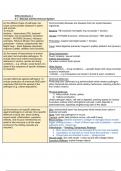
4.1 - Disease and the Immune System
(a) the different types of pathogen can Communicable diseases are diseases that can spread between
cause communicable diseases in plants organisms
and animals.
To include Bacteria: TB/ bacterial meningitis/ ring rot (potato + tomato)
bacteria – tuberculosis (TB), bacterial
meningitis, ring rot (potatoes, tomatoes) Viruses: HIV/AIDS (humans) / influenza (animals) / TMV (plants)
viruses – HIV/AIDS (human), influenza
(animals), Tobacco Mosaic Virus (plants) Protoctista: malaria/ late blight (potato + tomato)
protoctista – malaria, potato/tomato late
Blight fungi – black Sigatoka (bananas), Fungi: black Sigatoka (banana)/ ringworm (cattle)/ athlete's foot (human)
ringworm (cattle), athlete’s foot (humans).
(b) the means of transmission of animal Direct transmission:
and plant communicable pathogens. To Touch/ droplets / sexual contact
include direct and indirect transmission, Indirect transmission:
reference to vectors, spores and living Via water/ vectors/ food/ spores
conditions – e.g. climate, social factors (no
detail of the symptoms of specific diseases Other factors:
is required). - Social factors → living conditions → spreads faster with close proximity/
access to healthcare
- Climate → e.g mosquitoes can breed in humid & warm conditions
(c) plant defences against pathogens. To Chemical Defences:
include production of chemicals AND plant Producing toxic chemicals (e.g antimicrobials which destroy pathogen/
responses that limit the spread of the other chemicals like tannins which destroy herbivores, reducing infection
pathogen (e.g. callose deposition). from insect vectors)
Physical Defences:
1) Waxy cuticle, thorns, spikes
2) Callose production -
Under pathogen attack, cell wall is digested, sending signals to nucleus
to produce callose which strengthens cell wall. It also deposits in
plasmodesmata, signalling neighbouring cells of the attack
(d) the primary non-specific defences Skin: antimicrobial layer/ has lysozymes which break down carbs in
against pathogens in animals. Non-specific bacterial cell walls
defences include skin, blood clotting, Nose: hairs trap pathogens in mucus
wound repair, inflammation, expulsive Trachea: goblet cells produce mucus, cilia waft it away
reflexes, and mucous membranes (no Blood clotting: platelets exposed to collagen in damaged blood vessels
detail of skin structure or all the steps trigger clotting process → mesh of fibres traps cells & platelets → prevent
involved in the clotting cascade are pathogen entry + blood loss
required). Inflammation →Swelling/ Tenderness/ Redness:
● More tissue fluid forms [as damaged BVs are more permeable]
● Vasodilation of arterioles so more blood flow (redness + warm)
● Phagocytes are attracted to area → phagocytosis
Wound repair: skin cells divide + close wound with collagen fibres
Expulsive Reflexes: expels foreign objects
, (e) (i) the structure and mode of action of i) Phagocyte - type of WBC that engulfs pathogens
phagocytes. 1) Phagocyte recognises antigens on pathogen
2) Phagocyte engulfs (its cytoplasm surrounds it)
(ii) examination and drawing of cells 3) Pathogen contained in a phagosome (vesicle)
observed in blood smears. To include 4) Lysosome fuses with phagosome + breaks it down
neutrophils and antigen-presenting cells 5) Antigens stick onto phagocyte to form an antigen-presenting cell
AND the roles of cytokines, opsonins, (APC)
phagosomes, and lysosomes. 6) APC triggers other immune cells
Role of cytokinins and opsonin (2) Cytokines: molecule at site of wound + signals to neutrophils (type of P)
● Cytokinins attract phagocytes (1) Opsonins: bind to foreign antigen/ help it bind to P
● Opsonin binds to antigens and
helps it bind to the phagocyte (1) ii) RBCs - red, no nucleus | neutrophils - multi-lobed nucleus
Monocyte - biggest WBC + kidney shaped nucleus
Lymphocyte - smaller than a neutrophil + nucleus takes up most of cell
(f) the structure, different roles and modes T lymphocytes activation
of action of B and T lymphocytes in the 1) Receptors on T lymphocyte binds to antigens on APC
specific immune response. To include the 2) Clonal selection - antigen on APC binds to the complementary
significance of cell signalling (reference to receptor on T lymphocyte, activating it
interleukins), clonal selection and clonal 3) This triggers clonal expansion - T lymphocytes divide by mitosis
expansion, plasma cells, T helper cells, T Types of activated T lymphocytes:
killer cells and T regulator cells. ● T helper cells: release interleukins (cytokinins) which activate B
lymphocytes + T killer cells
● T killer cells: kills infected cells (virus)
B lymphocytes and T lymphocytes are ● T regulatory cells: suppresses immune system → to stop
types of WBCs attacking the host’s body cells
● T memory cells
B lymphocyte Activation
B lymphocytes have antibodies on the surface
1) Clonal selection - Antigen binds to the complementary antibody
→ forming an antigen-antibody complex (activated)
2) Clonal expansion - activated B lymphocytes divide by mitosis
into plasma cells and memory cell
3) These clones produce the more identical antibodies to form more
antigen-antibody complexes to signal + destroy
(g) the primary and secondary immune Primary response - B & T lymphocytes activated
responses. To include T memory cells and ● Slow as need to produce enough B lymphocytes to produce the
B memory cells. correct antibodies → T & B lymphocytes produce memory cells,
which remain in blood
● T memory cells remember the antigens + will recognise it 2nd
Primary response time
● Slow because of clonal selection ● B memory cells remember the specific antibody produced
and expansion and production of
antibodies (1)
Secondary response Secondary response - B & T memory cells activated
● Memory cells remain in blood (1) ● Faster as clonal selection is faster
● Clonal selection is faster (1) ● T memory cells kills cells carrying antigen
4.1 - Disease and the Immune System
(a) the different types of pathogen can Communicable diseases are diseases that can spread between
cause communicable diseases in plants organisms
and animals.
To include Bacteria: TB/ bacterial meningitis/ ring rot (potato + tomato)
bacteria – tuberculosis (TB), bacterial
meningitis, ring rot (potatoes, tomatoes) Viruses: HIV/AIDS (humans) / influenza (animals) / TMV (plants)
viruses – HIV/AIDS (human), influenza
(animals), Tobacco Mosaic Virus (plants) Protoctista: malaria/ late blight (potato + tomato)
protoctista – malaria, potato/tomato late
Blight fungi – black Sigatoka (bananas), Fungi: black Sigatoka (banana)/ ringworm (cattle)/ athlete's foot (human)
ringworm (cattle), athlete’s foot (humans).
(b) the means of transmission of animal Direct transmission:
and plant communicable pathogens. To Touch/ droplets / sexual contact
include direct and indirect transmission, Indirect transmission:
reference to vectors, spores and living Via water/ vectors/ food/ spores
conditions – e.g. climate, social factors (no
detail of the symptoms of specific diseases Other factors:
is required). - Social factors → living conditions → spreads faster with close proximity/
access to healthcare
- Climate → e.g mosquitoes can breed in humid & warm conditions
(c) plant defences against pathogens. To Chemical Defences:
include production of chemicals AND plant Producing toxic chemicals (e.g antimicrobials which destroy pathogen/
responses that limit the spread of the other chemicals like tannins which destroy herbivores, reducing infection
pathogen (e.g. callose deposition). from insect vectors)
Physical Defences:
1) Waxy cuticle, thorns, spikes
2) Callose production -
Under pathogen attack, cell wall is digested, sending signals to nucleus
to produce callose which strengthens cell wall. It also deposits in
plasmodesmata, signalling neighbouring cells of the attack
(d) the primary non-specific defences Skin: antimicrobial layer/ has lysozymes which break down carbs in
against pathogens in animals. Non-specific bacterial cell walls
defences include skin, blood clotting, Nose: hairs trap pathogens in mucus
wound repair, inflammation, expulsive Trachea: goblet cells produce mucus, cilia waft it away
reflexes, and mucous membranes (no Blood clotting: platelets exposed to collagen in damaged blood vessels
detail of skin structure or all the steps trigger clotting process → mesh of fibres traps cells & platelets → prevent
involved in the clotting cascade are pathogen entry + blood loss
required). Inflammation →Swelling/ Tenderness/ Redness:
● More tissue fluid forms [as damaged BVs are more permeable]
● Vasodilation of arterioles so more blood flow (redness + warm)
● Phagocytes are attracted to area → phagocytosis
Wound repair: skin cells divide + close wound with collagen fibres
Expulsive Reflexes: expels foreign objects
, (e) (i) the structure and mode of action of i) Phagocyte - type of WBC that engulfs pathogens
phagocytes. 1) Phagocyte recognises antigens on pathogen
2) Phagocyte engulfs (its cytoplasm surrounds it)
(ii) examination and drawing of cells 3) Pathogen contained in a phagosome (vesicle)
observed in blood smears. To include 4) Lysosome fuses with phagosome + breaks it down
neutrophils and antigen-presenting cells 5) Antigens stick onto phagocyte to form an antigen-presenting cell
AND the roles of cytokines, opsonins, (APC)
phagosomes, and lysosomes. 6) APC triggers other immune cells
Role of cytokinins and opsonin (2) Cytokines: molecule at site of wound + signals to neutrophils (type of P)
● Cytokinins attract phagocytes (1) Opsonins: bind to foreign antigen/ help it bind to P
● Opsonin binds to antigens and
helps it bind to the phagocyte (1) ii) RBCs - red, no nucleus | neutrophils - multi-lobed nucleus
Monocyte - biggest WBC + kidney shaped nucleus
Lymphocyte - smaller than a neutrophil + nucleus takes up most of cell
(f) the structure, different roles and modes T lymphocytes activation
of action of B and T lymphocytes in the 1) Receptors on T lymphocyte binds to antigens on APC
specific immune response. To include the 2) Clonal selection - antigen on APC binds to the complementary
significance of cell signalling (reference to receptor on T lymphocyte, activating it
interleukins), clonal selection and clonal 3) This triggers clonal expansion - T lymphocytes divide by mitosis
expansion, plasma cells, T helper cells, T Types of activated T lymphocytes:
killer cells and T regulator cells. ● T helper cells: release interleukins (cytokinins) which activate B
lymphocytes + T killer cells
● T killer cells: kills infected cells (virus)
B lymphocytes and T lymphocytes are ● T regulatory cells: suppresses immune system → to stop
types of WBCs attacking the host’s body cells
● T memory cells
B lymphocyte Activation
B lymphocytes have antibodies on the surface
1) Clonal selection - Antigen binds to the complementary antibody
→ forming an antigen-antibody complex (activated)
2) Clonal expansion - activated B lymphocytes divide by mitosis
into plasma cells and memory cell
3) These clones produce the more identical antibodies to form more
antigen-antibody complexes to signal + destroy
(g) the primary and secondary immune Primary response - B & T lymphocytes activated
responses. To include T memory cells and ● Slow as need to produce enough B lymphocytes to produce the
B memory cells. correct antibodies → T & B lymphocytes produce memory cells,
which remain in blood
● T memory cells remember the antigens + will recognise it 2nd
Primary response time
● Slow because of clonal selection ● B memory cells remember the specific antibody produced
and expansion and production of
antibodies (1)
Secondary response Secondary response - B & T memory cells activated
● Memory cells remain in blood (1) ● Faster as clonal selection is faster
● Clonal selection is faster (1) ● T memory cells kills cells carrying antigen