A Level Biology
SURFACE AREA AND VOLUME OCR A Module 3
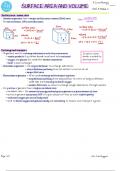
Surface area : volume ratio
• Smaller organisms have a larger surface area : volume (SA:V) ratio ratio Surface area
-
volume
• As size increases, SA:V ratio decreases
3. 5cm
surface area
surface area
2cm S 7
< > 2cm
=(2x2) x6 2m2
=
S 3. 5cm =
(3.5 x
3.5) x6 7m2=
S
C
.W
2cm volume - 1
-
volume
m
.
E 3.5 x 3.5 3.5
=
=
= x
2 x 2x2
WS
8. ...
-
=
3. 5cm
*
...,
...
3
SA:V 73.5:42.9
=
=
SA:V 24:8
= =
-
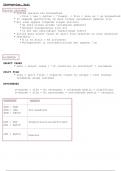
Exchange and transport
• Organisms need to exchange substances with the environment In plants, carbon
→ waste products (e.g. carbon dioxide, urea) need to be excreted dioxide is needed for
→ oxygen and glucose are needed for aerobic respiration photosynthesis.
→ heat is also exchanged
• Unicellular organisms → can rely on diffusion to exchange substances
→ short diffusion pathway from cell surface to centre of cell
→ larger SA:V ratio
• Multicellular organisms → often need exchange and transport systems
→ long diffusion pathway from body surface to centre of body so diffusion
would take much too long to deliver oxygen
→ smaller SA:V ratio so cannot exchange enough substances through surface
• Very active organisms have a higher metabolic rate
→ metabolic rate = the amount of energy used up by an organism in a given amount of time
→ active organisms use up more ATP in a given amount of time so must respire quickly
→ need more oxygen per unit of body mass
→ need to deliver oxygen and glucose rapidly and constantly to tissues via a transport system
Page 1 of 1 © Dr Zoë Huggett
, A Level Biology
THE LUNGS OCR A Module 3
Structure
I"race
• Trachea → windpipe from mouth
• Bronchi → branch off from trachea, one bronchus to each lung
&
*
bronchi↑f=
IeO li
E
• Bronchioles → branch off from bronchi, smaller tubes ↓
• Alveoli → tiny air sacs at the end of bronchioles where gas
.* IW
↳
~
exchange occurs
4
W
• Surrounded by the ribcage and intercostal muscles W so sign
Elastic fibres mean the lungs stretch and
bronchioles
recoil during inhalation and exhalation.
Smooth muscle can relax during exercise to Trachea C-shaped cartilage pieces, smooth
decrease resistance and increase air flow. muscle, elastic fibres, ciliated
epithelium with goblet cells
Isai
Bronchi Smaller cartilage pieces, smooth
muscle, elastic fibres, ciliated
epithelium with goblet cells
epoi Bronchioles
(larger)
Smooth muscle, elastic fibres,
ciliated epithelium with goblet cells
Bronchioles Elastic fibres, non-ciliated epithelium
Goblet cells secrete mucus into the (smaller)
trachea which traps microorganisms and
dust. The cilia on the columnar epithelial Alveoli Elastic fibres, non-ciliated epithelium
cells move the mucus towards mouth.
Gas exchange in the alveoli
• Oxygen diffuses from the air space into the blood across
the alveolar epithelium then the capillary endothelium
(carbon dioxide diffuses in the opposite direction)
• Alveoli are adapted for efficient gas exchange
→ have a large surface area (lots of spheres) &8 D
→ alveolar epithelium is one cell thick so there is a short capillary 0: ⑧
I
-
alveolar
epithelium
diffusion pathway endothelium
8 i
ar
space
8
"↓ ↑0
....
oooooo
→ alveolar epithelium is squamous epithelium so cells are & 02 CO2
flattened which gives a short diffusion pathway & & - 0
D
⑧
&
C&-
0
→ elastic fibres allow stretch and recoil to help force air ⑧ E! O
0
out and increase surface area blood
-
→ layer of surfactant reduces cohesion between water
molecules which prevents the alveoli collapsing
• Oxygen and carbon dioxide concentration gradients are
maintained by ventilation and blood flow
• Good blood supply means blood is always close to the alveoli
Page 1 of 2 © Dr Zoë Huggett
, A Level Biology
THE LUNGS OCR A Module 3
Ventilation
• Inspiration = breathing in, expiration = breathing out
Inspiration (inhalation) Expiration (exhalation)
↓ thoracic I ↑
caviy
I
* -B /a
⑧ !
↳
where
-space lungs ↳
ODi
-
!diaphragm
are contained
Il
iP ribs and -
0
⑧
↑
0
flattened 11 Il ⑧
external intercostal 11
O O curved
diaphragm IlIl muscles
O - Il
-0
- -
• Active process (requires energy) • Passive process
• External intercostal muscles and diaphragm • External intercostal muscles and diaphragm relax
contract • Ribcage moves down and in
• Ribcage moves up and out • Volume of thoracic cavity decreases
• Volume of thoracic cavity increases • Pressure in thoracic cavity increases above
• Pressure in thoracic cavity decreases below atmospheric pressure
atmospheric pressure • Air moves down a pressure gradient out of the
• Air moves down a pressure gradient into the lungs lungs
Forced expiration is active
because it requires contraction of
the internal intercostal muscles.
Measurements of breathing
• Spirometer → used to take measurements involving volume of air in the lungs
• Tidal volume → volume of air in a normal breath at rest
• Breathing rate → number of breaths per minute
• Vital capacity → maximum volume of air that can be breathed in (or out)
• Oxygen consumption → rate at which an organism uses oxygen (normally in dm3/min)
5 5
oxygen consumption
em L
=volume decrease I
To mrtn
over min
e
4
unfurn
⑪
es -
tidal
-
volume
tidal
volume
vital
I vital - I
capacity
capacity -residual volume 0
- I S
⑧ 0
I 2
0 10 20 30 40 50 60
time (mins)
time(s)
Volume of air in the spirometer decreases because the
CO2 exhaled into it is absorbed by soda lime, and the
oxygen inhaled from it is gradually absorbed by the
lungs for use in aerobic respiration.
Page 2 of 2 © Dr Zoë Huggett
SURFACE AREA AND VOLUME OCR A Module 3
Surface area : volume ratio
• Smaller organisms have a larger surface area : volume (SA:V) ratio ratio Surface area
-
volume
• As size increases, SA:V ratio decreases
3. 5cm
surface area
surface area
2cm S 7
< > 2cm
=(2x2) x6 2m2
=
S 3. 5cm =
(3.5 x
3.5) x6 7m2=
S
C
.W
2cm volume - 1
-
volume
m
.
E 3.5 x 3.5 3.5
=
=
= x
2 x 2x2
WS
8. ...
-
=
3. 5cm
*
...,
...
3
SA:V 73.5:42.9
=
=
SA:V 24:8
= =
-
Exchange and transport
• Organisms need to exchange substances with the environment In plants, carbon
→ waste products (e.g. carbon dioxide, urea) need to be excreted dioxide is needed for
→ oxygen and glucose are needed for aerobic respiration photosynthesis.
→ heat is also exchanged
• Unicellular organisms → can rely on diffusion to exchange substances
→ short diffusion pathway from cell surface to centre of cell
→ larger SA:V ratio
• Multicellular organisms → often need exchange and transport systems
→ long diffusion pathway from body surface to centre of body so diffusion
would take much too long to deliver oxygen
→ smaller SA:V ratio so cannot exchange enough substances through surface
• Very active organisms have a higher metabolic rate
→ metabolic rate = the amount of energy used up by an organism in a given amount of time
→ active organisms use up more ATP in a given amount of time so must respire quickly
→ need more oxygen per unit of body mass
→ need to deliver oxygen and glucose rapidly and constantly to tissues via a transport system
Page 1 of 1 © Dr Zoë Huggett
, A Level Biology
THE LUNGS OCR A Module 3
Structure
I"race
• Trachea → windpipe from mouth
• Bronchi → branch off from trachea, one bronchus to each lung
&
*
bronchi↑f=
IeO li
E
• Bronchioles → branch off from bronchi, smaller tubes ↓
• Alveoli → tiny air sacs at the end of bronchioles where gas
.* IW
↳
~
exchange occurs
4
W
• Surrounded by the ribcage and intercostal muscles W so sign
Elastic fibres mean the lungs stretch and
bronchioles
recoil during inhalation and exhalation.
Smooth muscle can relax during exercise to Trachea C-shaped cartilage pieces, smooth
decrease resistance and increase air flow. muscle, elastic fibres, ciliated
epithelium with goblet cells
Isai
Bronchi Smaller cartilage pieces, smooth
muscle, elastic fibres, ciliated
epithelium with goblet cells
epoi Bronchioles
(larger)
Smooth muscle, elastic fibres,
ciliated epithelium with goblet cells
Bronchioles Elastic fibres, non-ciliated epithelium
Goblet cells secrete mucus into the (smaller)
trachea which traps microorganisms and
dust. The cilia on the columnar epithelial Alveoli Elastic fibres, non-ciliated epithelium
cells move the mucus towards mouth.
Gas exchange in the alveoli
• Oxygen diffuses from the air space into the blood across
the alveolar epithelium then the capillary endothelium
(carbon dioxide diffuses in the opposite direction)
• Alveoli are adapted for efficient gas exchange
→ have a large surface area (lots of spheres) &8 D
→ alveolar epithelium is one cell thick so there is a short capillary 0: ⑧
I
-
alveolar
epithelium
diffusion pathway endothelium
8 i
ar
space
8
"↓ ↑0
....
oooooo
→ alveolar epithelium is squamous epithelium so cells are & 02 CO2
flattened which gives a short diffusion pathway & & - 0
D
⑧
&
C&-
0
→ elastic fibres allow stretch and recoil to help force air ⑧ E! O
0
out and increase surface area blood
-
→ layer of surfactant reduces cohesion between water
molecules which prevents the alveoli collapsing
• Oxygen and carbon dioxide concentration gradients are
maintained by ventilation and blood flow
• Good blood supply means blood is always close to the alveoli
Page 1 of 2 © Dr Zoë Huggett
, A Level Biology
THE LUNGS OCR A Module 3
Ventilation
• Inspiration = breathing in, expiration = breathing out
Inspiration (inhalation) Expiration (exhalation)
↓ thoracic I ↑
caviy
I
* -B /a
⑧ !
↳
where
-space lungs ↳
ODi
-
!diaphragm
are contained
Il
iP ribs and -
0
⑧
↑
0
flattened 11 Il ⑧
external intercostal 11
O O curved
diaphragm IlIl muscles
O - Il
-0
- -
• Active process (requires energy) • Passive process
• External intercostal muscles and diaphragm • External intercostal muscles and diaphragm relax
contract • Ribcage moves down and in
• Ribcage moves up and out • Volume of thoracic cavity decreases
• Volume of thoracic cavity increases • Pressure in thoracic cavity increases above
• Pressure in thoracic cavity decreases below atmospheric pressure
atmospheric pressure • Air moves down a pressure gradient out of the
• Air moves down a pressure gradient into the lungs lungs
Forced expiration is active
because it requires contraction of
the internal intercostal muscles.
Measurements of breathing
• Spirometer → used to take measurements involving volume of air in the lungs
• Tidal volume → volume of air in a normal breath at rest
• Breathing rate → number of breaths per minute
• Vital capacity → maximum volume of air that can be breathed in (or out)
• Oxygen consumption → rate at which an organism uses oxygen (normally in dm3/min)
5 5
oxygen consumption
em L
=volume decrease I
To mrtn
over min
e
4
unfurn
⑪
es -
tidal
-
volume
tidal
volume
vital
I vital - I
capacity
capacity -residual volume 0
- I S
⑧ 0
I 2
0 10 20 30 40 50 60
time (mins)
time(s)
Volume of air in the spirometer decreases because the
CO2 exhaled into it is absorbed by soda lime, and the
oxygen inhaled from it is gradually absorbed by the
lungs for use in aerobic respiration.
Page 2 of 2 © Dr Zoë Huggett