QUESTION 1
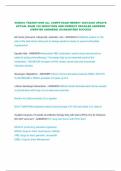
1.1. Define the following terms:
1.1.1. Pedagogy
The method and practice of teaching. Refers to the methods and
practices of teaching. It encompasses the strategies, techniques, and
approaches educators use to facilitate learning and ensure that
students gain knowledge, skills, and understanding. Pedagogy
involves not only the instructional methods but also the interaction
between teachers and students, the learning environment, and the
assessment of learning outcomes.
(Becoming a teacher pg. 174)
1.1.2. Pedagogical Content Knowledge
Merges content knowledge with pedagogical
Knowledge. Is a concept that merges content knowledge with
pedagogical knowledge. It refers to the understanding that teachers
develop about how to teach specific content effectively. PCK involves
knowing what makes a subject difficult or easy to learn, how to
organize and present the content in a way that makes it
comprehensible to students, and which teaching strategies and
methodologies are most effective for conveying that content.
(The teacher as a reflective practitioner P.G 11)
1.1.3. Epistemologies
Are theories or studies of the nature and grounds of knowledge,
especially with reference to its limits and validity. It is the branch of
philosophy that investigates the origin, nature, methods, and limits of
human knowledge. Different epistemological perspectives influence
how we understand knowledge, how it is acquired, and how it can be
validated or justified.
(176 Becoming a teacher)
1.1.4. Rote learning
Is a memorization technique based on repetition? The idea is to
learn information through continuous repetition without necessarily
understanding the meaning or context behind it. This type of
learning often involves the memorization of facts, figures, formulas,
or other content through continuous practice until it can be recalled
without hesitation.
(68 Becoming a teacher)
, 1.1.5. Indigenous Knowledge Systems
Refer to the traditional knowledge and wisdom of indigenous peoples,
developed over centuries through their interaction with their
environment. IKS includes understandings, skills, philosophies, and
methodologies that are specific to particular cultures and
communities. It encompasses practices in agriculture, medicine,
ecology, education, and social activities, reflecting a holistic way of
living and understanding the world that is passed down through
generations.
(The teacher as a caning professional pg. 43)
QUESTION 2
2.1. Discuss three (3) advantages of critical
education theory.
It could signal a move for teachers from being mainly users of knowledge to
becoming creators and co—creators of knowledge in conjunction with others
(Dewey, 1924; Moore, 1990; Shor, 1992).
It could prompt you to become "active agents in constructing new kinds of
knowledge and relationships" (Hayes and Cuban, 1997: 78).
It could enable all those who participate in education to define and produce
knowledge according to the social, historical and cultural contexts in which they
findthemselves (Tierney, 1996).
2.2. Construct your own teaching philosophy, which you will you use in
your teaching practice.
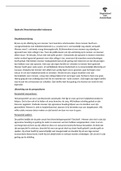
Holistic and Inclusive Education
I believe in a holistic approach to education that addresses the intellectual,
emotional, social, and physical development of each student. Education should
nurture well-rounded individuals who are capable of critical thinking, creativity,
and empathy.
Student-Centered Learning
My teaching philosophy is grounded in the principle of student-centered learning.
I aim to create a classroom environment where learners feel empowered to take
charge of their own learning. This involves understanding and accommodating
1.1. Define the following terms:
1.1.1. Pedagogy
The method and practice of teaching. Refers to the methods and
practices of teaching. It encompasses the strategies, techniques, and
approaches educators use to facilitate learning and ensure that
students gain knowledge, skills, and understanding. Pedagogy
involves not only the instructional methods but also the interaction
between teachers and students, the learning environment, and the
assessment of learning outcomes.
(Becoming a teacher pg. 174)
1.1.2. Pedagogical Content Knowledge
Merges content knowledge with pedagogical
Knowledge. Is a concept that merges content knowledge with
pedagogical knowledge. It refers to the understanding that teachers
develop about how to teach specific content effectively. PCK involves
knowing what makes a subject difficult or easy to learn, how to
organize and present the content in a way that makes it
comprehensible to students, and which teaching strategies and
methodologies are most effective for conveying that content.
(The teacher as a reflective practitioner P.G 11)
1.1.3. Epistemologies
Are theories or studies of the nature and grounds of knowledge,
especially with reference to its limits and validity. It is the branch of
philosophy that investigates the origin, nature, methods, and limits of
human knowledge. Different epistemological perspectives influence
how we understand knowledge, how it is acquired, and how it can be
validated or justified.
(176 Becoming a teacher)
1.1.4. Rote learning
Is a memorization technique based on repetition? The idea is to
learn information through continuous repetition without necessarily
understanding the meaning or context behind it. This type of
learning often involves the memorization of facts, figures, formulas,
or other content through continuous practice until it can be recalled
without hesitation.
(68 Becoming a teacher)
, 1.1.5. Indigenous Knowledge Systems
Refer to the traditional knowledge and wisdom of indigenous peoples,
developed over centuries through their interaction with their
environment. IKS includes understandings, skills, philosophies, and
methodologies that are specific to particular cultures and
communities. It encompasses practices in agriculture, medicine,
ecology, education, and social activities, reflecting a holistic way of
living and understanding the world that is passed down through
generations.
(The teacher as a caning professional pg. 43)
QUESTION 2
2.1. Discuss three (3) advantages of critical
education theory.
It could signal a move for teachers from being mainly users of knowledge to
becoming creators and co—creators of knowledge in conjunction with others
(Dewey, 1924; Moore, 1990; Shor, 1992).
It could prompt you to become "active agents in constructing new kinds of
knowledge and relationships" (Hayes and Cuban, 1997: 78).
It could enable all those who participate in education to define and produce
knowledge according to the social, historical and cultural contexts in which they
findthemselves (Tierney, 1996).
2.2. Construct your own teaching philosophy, which you will you use in
your teaching practice.
Holistic and Inclusive Education
I believe in a holistic approach to education that addresses the intellectual,
emotional, social, and physical development of each student. Education should
nurture well-rounded individuals who are capable of critical thinking, creativity,
and empathy.
Student-Centered Learning
My teaching philosophy is grounded in the principle of student-centered learning.
I aim to create a classroom environment where learners feel empowered to take
charge of their own learning. This involves understanding and accommodating