The Endocrine System
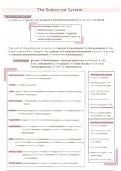
The Endocrine System
is made up of glands that produce & secrete hormones directly into the blood
Chemical messenger system consisting of:
Feedback loop of hormones
Released by internal glands of organism
Directly into circulatory system: regulating
distant target hormones
The role of the endocrine system is to control & coordinate the life processes in the
body’s response to change in the internal and external environment in such a way that
a constant internal environment is maintained (homeostasis)
LIFE PROCESSES growth & development, chemical reactions in the body in the
body (metabolism), the balance of water & salts in the body
(osmoregulation) as well as reproduction
Endocrine System | System made up of glands that produce and secrete hormones The Nervous System
directly into the blood stream Consists of neurons
Info transmitted in the
Secrete | to release or give off form of nerve impulses
Gland | group of cells that are specialised to produce and secrete a specific chemical nerve impulses travel
substance (ie hormones) along nerve fibres
Info travels quickly
Endocrine gland | a ductless gland that secretes its hormones directly into the blood
stream affects the action of the
effectors (muscles/glands)
Hormone | chemical substance that is produced and secreted in very small amounts into
the blood stream by endocrine glands Effect of nerve impulse
does not last very long
Target Gland | organ that responds to a hormone secreted by an endocrine gland
The Endocrine System
Hypothalamus | part of the brain that acts as an endocrine gland secreting hormones Consists of glands
that either stimulate or suppress the release of hormones by the
Info transmitted in the
pituitary gland form of hormones
ADH | hormone produced by the hypothalamus which is stored in the pituitary gland; The hormones travel
allows more water to be re-absorbed into the blood from the kidneys, reducing In the blood
the volume of water lost in urine
Info travels slowly
Pituitary Gland | endocrine gland at the base of the brain; also known as the master
affects the action of the
gland because it produces hormones that regulate the secretion of target organ
other hormones
The effect can last long
Thyroid Gland | endocrine gland at the front of the neck that releases thyroxine
, ADH = anti-diuretic Hormone
THE HYPOTHALAMUS THE PITUITARY
Located in the centre of the brain diuretic is thee ability to Mastergland located at the base of the
activates & controls the autonomic nervous system conserve water cranium ‘turkish saddle’ & is linked to the
hypothalamus by a thin stalk
produces hormones that either stimulates or
inhibits the release of hormones from the pituitary ANTERIOR
gland growth hormone
Thyroid Stimulating Hormone (TSH)
Follicle Stimulating Hormone (FSH)
Secrete releasing factors which stimulate the anterior pituitary gland Luteinizing Hormone (LH)
Function: Nerve impulses stimulate the posterior pituitary gland Prolactin
[& responsible for the production of ADH] Adrenocorticotrophic Hormone (ACTH)
POSTERIOR
regulates the amount of water in the
blood
Anti-diuretic Hormone (ADH)
∴ ↓water = ADH↑
Oxytocin
THE PANCREAS
The Pancreas is an elongated organ located in the abdomen behind the stomach .
Exocrine: Secretes digestive enzymes into the small intestine
Endocrine: Secretes hormones into the blood (has islets of Langerhans)
ADRENAL GLAND
THYROID GLAND
Located on top of the kidney
located in the lower front part of the neck , infront of trachea &
below larynx consists the outer medulla &
the inner medulla
shaped like a butterfly & has a Left & Right lobe (connected by a
narrow band of tissue. ) GONADS
are the organs that produce
secretes hormones that control the body's metabolism reproductive cells (gametes)
( Thyroxine )
produce hormones that determine
the development of secondary
sexual characteristics
iodine is essential for production of thyroxine
Lack of iodine = development of a goitre C (swelling of
the thyroid gland due to malfunction of the gland)
THE HYPOTHALAMUS & PITUITARY GLAND
ANTERIOR:
a) growth hormone:
Stimulates protein synthesis & the growth of muscles/bones promotes the breakdown
of fats instead of glucose as an energy source
Growth hormone:
target organ - body cells (muscles/bones) In Children:
too little = hypo-secretion (dwarfism)
result - growth too much = hyper-secretion (gigantism)
In adults:
b) thyroid stimulating hormone: hyper-secrection (acromegaly)
Stimulates thyroid to produce thyroxine
regulates the concentration of thyroxine in the blood stream
Target organ - Thyroid Result - Thyroxine (stimulates growth and metabolism)
The Endocrine System
is made up of glands that produce & secrete hormones directly into the blood
Chemical messenger system consisting of:
Feedback loop of hormones
Released by internal glands of organism
Directly into circulatory system: regulating
distant target hormones
The role of the endocrine system is to control & coordinate the life processes in the
body’s response to change in the internal and external environment in such a way that
a constant internal environment is maintained (homeostasis)
LIFE PROCESSES growth & development, chemical reactions in the body in the
body (metabolism), the balance of water & salts in the body
(osmoregulation) as well as reproduction
Endocrine System | System made up of glands that produce and secrete hormones The Nervous System
directly into the blood stream Consists of neurons
Info transmitted in the
Secrete | to release or give off form of nerve impulses
Gland | group of cells that are specialised to produce and secrete a specific chemical nerve impulses travel
substance (ie hormones) along nerve fibres
Info travels quickly
Endocrine gland | a ductless gland that secretes its hormones directly into the blood
stream affects the action of the
effectors (muscles/glands)
Hormone | chemical substance that is produced and secreted in very small amounts into
the blood stream by endocrine glands Effect of nerve impulse
does not last very long
Target Gland | organ that responds to a hormone secreted by an endocrine gland
The Endocrine System
Hypothalamus | part of the brain that acts as an endocrine gland secreting hormones Consists of glands
that either stimulate or suppress the release of hormones by the
Info transmitted in the
pituitary gland form of hormones
ADH | hormone produced by the hypothalamus which is stored in the pituitary gland; The hormones travel
allows more water to be re-absorbed into the blood from the kidneys, reducing In the blood
the volume of water lost in urine
Info travels slowly
Pituitary Gland | endocrine gland at the base of the brain; also known as the master
affects the action of the
gland because it produces hormones that regulate the secretion of target organ
other hormones
The effect can last long
Thyroid Gland | endocrine gland at the front of the neck that releases thyroxine
, ADH = anti-diuretic Hormone
THE HYPOTHALAMUS THE PITUITARY
Located in the centre of the brain diuretic is thee ability to Mastergland located at the base of the
activates & controls the autonomic nervous system conserve water cranium ‘turkish saddle’ & is linked to the
hypothalamus by a thin stalk
produces hormones that either stimulates or
inhibits the release of hormones from the pituitary ANTERIOR
gland growth hormone
Thyroid Stimulating Hormone (TSH)
Follicle Stimulating Hormone (FSH)
Secrete releasing factors which stimulate the anterior pituitary gland Luteinizing Hormone (LH)
Function: Nerve impulses stimulate the posterior pituitary gland Prolactin
[& responsible for the production of ADH] Adrenocorticotrophic Hormone (ACTH)
POSTERIOR
regulates the amount of water in the
blood
Anti-diuretic Hormone (ADH)
∴ ↓water = ADH↑
Oxytocin
THE PANCREAS
The Pancreas is an elongated organ located in the abdomen behind the stomach .
Exocrine: Secretes digestive enzymes into the small intestine
Endocrine: Secretes hormones into the blood (has islets of Langerhans)
ADRENAL GLAND
THYROID GLAND
Located on top of the kidney
located in the lower front part of the neck , infront of trachea &
below larynx consists the outer medulla &
the inner medulla
shaped like a butterfly & has a Left & Right lobe (connected by a
narrow band of tissue. ) GONADS
are the organs that produce
secretes hormones that control the body's metabolism reproductive cells (gametes)
( Thyroxine )
produce hormones that determine
the development of secondary
sexual characteristics
iodine is essential for production of thyroxine
Lack of iodine = development of a goitre C (swelling of
the thyroid gland due to malfunction of the gland)
THE HYPOTHALAMUS & PITUITARY GLAND
ANTERIOR:
a) growth hormone:
Stimulates protein synthesis & the growth of muscles/bones promotes the breakdown
of fats instead of glucose as an energy source
Growth hormone:
target organ - body cells (muscles/bones) In Children:
too little = hypo-secretion (dwarfism)
result - growth too much = hyper-secretion (gigantism)
In adults:
b) thyroid stimulating hormone: hyper-secrection (acromegaly)
Stimulates thyroid to produce thyroxine
regulates the concentration of thyroxine in the blood stream
Target organ - Thyroid Result - Thyroxine (stimulates growth and metabolism)