
CHAPTER 4
THE FIVE-FACTOR THEORY AND THE FIVE-FACTOR MODEL
The five-factor theory (FFT) proposed by Paul Costa and Robert McCrae has
had a substantial influence on personality trait research.
This is a comprehensive theory in that it covers most of what typically interested
personality researchers, such as traits, behaviour, and social-cognitive
constructs, and the connections between these
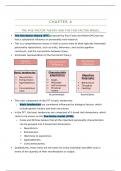
Schematic representation of the five-factor theory:
Genetic Environmental Situational
Influences Influences Influences
Basic tendencies Characteristic
adaptations Objective
Neuroticism biography
Extraversion Goals
Agreeablenes Attitudes Behaviours
s Self-schemas Thoughts
Conscientious Personal Feelings
ness myths
Accommodati Assimilation
on
The main component of the FFT is basic tendencies.
o Basic tendencies are considered influenced by biological factors, which
include genetic factors and brain structures.
In the FFT, the basic tendencies are comprised of 5 broad trait dimensions, which
came to be known as the five-factor model (FFM).
o Costa and McCrae believe that all the important personality characteristics
can be grouped into 5 broad trait dimensions:
Neuroticism.
Extraversion.
Openness to experience.
Agreeableness.
Conscientiousness.
Qualitatively, these traits are the same for every individual and differ only in
terms of the quantity of their manifestation or output.
, o Although personality traits are sets of characteristics that everyone
possesses, the strength (or dimension) with which they manifest themselves
may vary from person to person.
These 5 dimensions capture a wide range of individual personality differences.
o Eg. On the extraversion trait, some people may be outgoing, and others may
be shy and reserved, while most people will be in between.
Each of these traits lies on a continuum.
o Factors such as age and culture also play a role in how a trait is manifested.
Eg. The manifestation of extraversion in a 12-year-old will be quite
different from the extraverted behaviour of a 70-year-old and may be
quite different among the Xhosas in South Africa than among the
Chinese in China.
Each trait is represented by 6 facets, reflecting the main characteristics
associated with it.
Neuroticism: Concerns the extent to which a person is prone to
experiencing negative emotions and moods.
The 6 facets are
1. Anxiety.
2. Hostility.
3. Self-consciousness.
4. Depression.
5. Impulsiveness.
6. Vulnerability.
People high in neuroticism, experience more frequent and intense
negative emotions such as fear, sadness, and frustration.
They tend to have more frequent mood swings and exhibit
emotional instability.
Those low in neuroticism are calmer and more optimistic and find it
easier to regulate their emotions.
Indicates emotional stability.
, Extraversion: The tendency to be outgoing in social situations.
The 6 facets can be grouped into 3 interpersonal traits and 3
temperamental traits:
1. Warmth.
Interperso 2. Gregariousness.
nal
3. Assertiveness.
4. Activity.
Temperament 5. Excitement.
al 6. Positive emotions.
People high in extraversion tend to be talkative, are sociable, and
compassionate, tend to take charge in group situations, and express
positive emotions.
People low in extraversion tend to feel uncomfortable or shy in social
situations and keep their thoughts and feelings to themselves.
Openness: The overall depth and breadth of an individual’s intellectual,
artistic and experiential life.
The six facets represent six different areas:
1. Openness to fantasy (Eg. A vivid imagination).
2. Openness to aesthetics (e.g. appreciation of art and beauty).
3. Openness to action (e.g. a willingness to try something new).
4. Openness to ideas (e.g. curious and open to new ideas).
5. Openness to values (e.g. open-mindedness).
6. Openness to feelings.
Individuals high in openness tend to have a broad range of interests
and enjoy learning and trying new things.
Those low in openness tend to have narrower interests and prefer
familiarity and routine to novelty and variety.
Agreeableness: Reflects the extent to which a person behaves pro-socially
toward others and maintains pleasant, harmonious interpersonal relations.
The 6 facets are:
1. Sincerity.
2. Altruism.
3. Trust.
4. Modesty.
5. Compliance.
6. Kindness.
, People high in agreeableness are more willing to help and forgive
others and treat others with respect; those low in agreeableness tend
to look down on others, start arguments, and hold grudges.
Conscientiousness: Reflects the propensity to be self-controlled, task and
goal-directed and rule following.
Describes an individual's capacity to organise things, complete tasks,
and work toward long-term goals.
The 6 facets include:
1. Orderliness.
2. Self-discipline.
3. Reliability.
4. Competence.
5. Achievement.
6. Striving.
Highly conscientious people prefer order and structure;are productive
workers, ambitious and energetic; tendto follow rules and norms; and are
better to delay gratification.
Those low in conscientiousness have difficulty in controlling their impulses,
are easily distracted from tasks, tend to be negligent, late, aimless, and
not persistent.
Personality trait Basic definition Characteristics
Neuroticism Emotional instability vs Contrasts anxiety,
emotional stability. moodiness, and
sensitivity with negative
stimuli with positive
coping abilities and even
temperedness.
Extraversion Outgoing vs introversion. Contrasts warmth,
gregariousness,
assertiveness, activity,
excitement-seeking and
positive emotions with
passivity and reserve.
Openness to Curiosity and interest in Contrasts openness with
experience variety vs preference for fantasy, aesthetics,
sameness. curiosity, feelings,
THE FIVE-FACTOR THEORY AND THE FIVE-FACTOR MODEL
The five-factor theory (FFT) proposed by Paul Costa and Robert McCrae has
had a substantial influence on personality trait research.
This is a comprehensive theory in that it covers most of what typically interested
personality researchers, such as traits, behaviour, and social-cognitive
constructs, and the connections between these
Schematic representation of the five-factor theory:
Genetic Environmental Situational
Influences Influences Influences
Basic tendencies Characteristic
adaptations Objective
Neuroticism biography
Extraversion Goals
Agreeablenes Attitudes Behaviours
s Self-schemas Thoughts
Conscientious Personal Feelings
ness myths
Accommodati Assimilation
on
The main component of the FFT is basic tendencies.
o Basic tendencies are considered influenced by biological factors, which
include genetic factors and brain structures.
In the FFT, the basic tendencies are comprised of 5 broad trait dimensions, which
came to be known as the five-factor model (FFM).
o Costa and McCrae believe that all the important personality characteristics
can be grouped into 5 broad trait dimensions:
Neuroticism.
Extraversion.
Openness to experience.
Agreeableness.
Conscientiousness.
Qualitatively, these traits are the same for every individual and differ only in
terms of the quantity of their manifestation or output.
, o Although personality traits are sets of characteristics that everyone
possesses, the strength (or dimension) with which they manifest themselves
may vary from person to person.
These 5 dimensions capture a wide range of individual personality differences.
o Eg. On the extraversion trait, some people may be outgoing, and others may
be shy and reserved, while most people will be in between.
Each of these traits lies on a continuum.
o Factors such as age and culture also play a role in how a trait is manifested.
Eg. The manifestation of extraversion in a 12-year-old will be quite
different from the extraverted behaviour of a 70-year-old and may be
quite different among the Xhosas in South Africa than among the
Chinese in China.
Each trait is represented by 6 facets, reflecting the main characteristics
associated with it.
Neuroticism: Concerns the extent to which a person is prone to
experiencing negative emotions and moods.
The 6 facets are
1. Anxiety.
2. Hostility.
3. Self-consciousness.
4. Depression.
5. Impulsiveness.
6. Vulnerability.
People high in neuroticism, experience more frequent and intense
negative emotions such as fear, sadness, and frustration.
They tend to have more frequent mood swings and exhibit
emotional instability.
Those low in neuroticism are calmer and more optimistic and find it
easier to regulate their emotions.
Indicates emotional stability.
, Extraversion: The tendency to be outgoing in social situations.
The 6 facets can be grouped into 3 interpersonal traits and 3
temperamental traits:
1. Warmth.
Interperso 2. Gregariousness.
nal
3. Assertiveness.
4. Activity.
Temperament 5. Excitement.
al 6. Positive emotions.
People high in extraversion tend to be talkative, are sociable, and
compassionate, tend to take charge in group situations, and express
positive emotions.
People low in extraversion tend to feel uncomfortable or shy in social
situations and keep their thoughts and feelings to themselves.
Openness: The overall depth and breadth of an individual’s intellectual,
artistic and experiential life.
The six facets represent six different areas:
1. Openness to fantasy (Eg. A vivid imagination).
2. Openness to aesthetics (e.g. appreciation of art and beauty).
3. Openness to action (e.g. a willingness to try something new).
4. Openness to ideas (e.g. curious and open to new ideas).
5. Openness to values (e.g. open-mindedness).
6. Openness to feelings.
Individuals high in openness tend to have a broad range of interests
and enjoy learning and trying new things.
Those low in openness tend to have narrower interests and prefer
familiarity and routine to novelty and variety.
Agreeableness: Reflects the extent to which a person behaves pro-socially
toward others and maintains pleasant, harmonious interpersonal relations.
The 6 facets are:
1. Sincerity.
2. Altruism.
3. Trust.
4. Modesty.
5. Compliance.
6. Kindness.
, People high in agreeableness are more willing to help and forgive
others and treat others with respect; those low in agreeableness tend
to look down on others, start arguments, and hold grudges.
Conscientiousness: Reflects the propensity to be self-controlled, task and
goal-directed and rule following.
Describes an individual's capacity to organise things, complete tasks,
and work toward long-term goals.
The 6 facets include:
1. Orderliness.
2. Self-discipline.
3. Reliability.
4. Competence.
5. Achievement.
6. Striving.
Highly conscientious people prefer order and structure;are productive
workers, ambitious and energetic; tendto follow rules and norms; and are
better to delay gratification.
Those low in conscientiousness have difficulty in controlling their impulses,
are easily distracted from tasks, tend to be negligent, late, aimless, and
not persistent.
Personality trait Basic definition Characteristics
Neuroticism Emotional instability vs Contrasts anxiety,
emotional stability. moodiness, and
sensitivity with negative
stimuli with positive
coping abilities and even
temperedness.
Extraversion Outgoing vs introversion. Contrasts warmth,
gregariousness,
assertiveness, activity,
excitement-seeking and
positive emotions with
passivity and reserve.
Openness to Curiosity and interest in Contrasts openness with
experience variety vs preference for fantasy, aesthetics,
sameness. curiosity, feelings,



