Sonnet 43 by Elizabeth Barrett Browning (P.05)
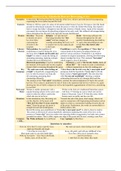
Narrative In the poem, Browning describes the intensity of her love, which is powerful and all-encompassing,
expressing her love reaches beyond life itself.
Contexts Written in 1850 as a part of a series of 44 sonnets called Sonnets from the Portuguese, the title based
around her affectionate nickname for whom the poem is writer for, Robert Browning. She eloped to
Italy to escape her father’s disapproval and she had a history of family issues. Apart of the romantic
movement, she was known for glorifying religion in her early work. She suffered with incapacitating
illness throughout her life and as she aged she become disillusioned.
Themes Devotion – the poem Religion – (or lack thereof) Death – Browning suffered with
is directly set out to Browning describes her “lost illnesses throughout her life and
be a love letter saints” and uses imagery of possibly foreshadowing her death by
expressing her worship surrounding her lover, as if 11 years when describing how she
devotion to the to express how he has replaced god would “love thee better after
recipient. in her heart. death”.
Literary Polysyndedon, the repetition of Parallelism is used in the repetition of “I love thee” at
Devices conjunctions is used in listing the ways various points in the poem, providing structure as it
she loves him (“depth and breadth and prefixes various sentences. Parallelism is an attribute
height”) in order to create the feeling of common to religion incantations, showing how Browning
amounting reasoning, implying a deeply almost worships her lover. This contrasts “lost saints”
founded and overwhelming love. which suggests a loss of piousness.
Rhetorical questioning is used in establishing Parataxis is used in “the breath, Smiles, tears, of
the structure of the poem and set out a regular all my life!” – this is done to create a momentum
format which is recurring throughout the poem. without conjunctions to slow the reading pace.
Key “My souls can reach, when feeling out “I love thee to the level of every day’s most quiet need”
Language of sight” is hyperbolic, exaggerating her juxtaposes both the hyperbolic (“every day”) with the
love in order to present it as deep and litotic realism (“most quiet need”). She also does this
all-consuming, presenting their with “by sun and candlelight” showing a constant
relationship ethereally. relationship between the two through thick and thin.
The mention of her “lost saints” immediately contrasts the acknowledgement of God in the second
last line. This is done to undermine the rule of God as she expresses that her love will love on, again
showing her loss of faith in religion as well as her hyperbolic aggrandization of their love, prioritising
it over God.
Form and Written in iambic pentameter with a Written in the form of a traditional Petrarchan sonnet,
Meter regular rhyming scheme in the octave and with lines 1-9 forming an octave which sets out the
sestet in order the reflect a perfection theme of the poem. Lines 9-14 form the sestet, which
which she sees in her lover. focuses more on reality and her own life.
Structure In the introductory line, Browning sets Towards the end of the poem, short snappy clauses are
out the objective of the poem with used in conjunction with fragmenting punctuation such as
“How do I love thee? Let me count the dashes to achieve a momentum building towards the end
ways.” From the get-go, the poem is of the poem. Furthermore, the words are monosyllabic to
straight forward and unambiguous. further achieve this.
Barrett Browning uses enjambment in “every day’s most quiet need” in order to deceive readers.
This comes on the heels of various hyperbolic statements explaining the extent of her love so the
presence of “every day” deceives readers into expecting further exaggeration, but leads onto content
grounded in realism. This in effect segues one stage of the poem into the next, creating a neat flow.
Compare She Walks in Beauty by Lord Byron Cozy Apologia by Rita Dove
s with…
Quotations to remember
How do I love thee? Let me count the ways. My soul can reach, when feeling out of sight
… depth and breadth and height
I love thee to every day’s In my old griefs, and with my childhood’s face
Most quiet need, by sun and candle light. I love thee with a love I seemed to lose
With my lost saints – I love thee with breath, … - and if God choose,
Smiles, tears, of all my life! … I shall but love thee better after death
Narrative In the poem, Browning describes the intensity of her love, which is powerful and all-encompassing,
expressing her love reaches beyond life itself.
Contexts Written in 1850 as a part of a series of 44 sonnets called Sonnets from the Portuguese, the title based
around her affectionate nickname for whom the poem is writer for, Robert Browning. She eloped to
Italy to escape her father’s disapproval and she had a history of family issues. Apart of the romantic
movement, she was known for glorifying religion in her early work. She suffered with incapacitating
illness throughout her life and as she aged she become disillusioned.
Themes Devotion – the poem Religion – (or lack thereof) Death – Browning suffered with
is directly set out to Browning describes her “lost illnesses throughout her life and
be a love letter saints” and uses imagery of possibly foreshadowing her death by
expressing her worship surrounding her lover, as if 11 years when describing how she
devotion to the to express how he has replaced god would “love thee better after
recipient. in her heart. death”.
Literary Polysyndedon, the repetition of Parallelism is used in the repetition of “I love thee” at
Devices conjunctions is used in listing the ways various points in the poem, providing structure as it
she loves him (“depth and breadth and prefixes various sentences. Parallelism is an attribute
height”) in order to create the feeling of common to religion incantations, showing how Browning
amounting reasoning, implying a deeply almost worships her lover. This contrasts “lost saints”
founded and overwhelming love. which suggests a loss of piousness.
Rhetorical questioning is used in establishing Parataxis is used in “the breath, Smiles, tears, of
the structure of the poem and set out a regular all my life!” – this is done to create a momentum
format which is recurring throughout the poem. without conjunctions to slow the reading pace.
Key “My souls can reach, when feeling out “I love thee to the level of every day’s most quiet need”
Language of sight” is hyperbolic, exaggerating her juxtaposes both the hyperbolic (“every day”) with the
love in order to present it as deep and litotic realism (“most quiet need”). She also does this
all-consuming, presenting their with “by sun and candlelight” showing a constant
relationship ethereally. relationship between the two through thick and thin.
The mention of her “lost saints” immediately contrasts the acknowledgement of God in the second
last line. This is done to undermine the rule of God as she expresses that her love will love on, again
showing her loss of faith in religion as well as her hyperbolic aggrandization of their love, prioritising
it over God.
Form and Written in iambic pentameter with a Written in the form of a traditional Petrarchan sonnet,
Meter regular rhyming scheme in the octave and with lines 1-9 forming an octave which sets out the
sestet in order the reflect a perfection theme of the poem. Lines 9-14 form the sestet, which
which she sees in her lover. focuses more on reality and her own life.
Structure In the introductory line, Browning sets Towards the end of the poem, short snappy clauses are
out the objective of the poem with used in conjunction with fragmenting punctuation such as
“How do I love thee? Let me count the dashes to achieve a momentum building towards the end
ways.” From the get-go, the poem is of the poem. Furthermore, the words are monosyllabic to
straight forward and unambiguous. further achieve this.
Barrett Browning uses enjambment in “every day’s most quiet need” in order to deceive readers.
This comes on the heels of various hyperbolic statements explaining the extent of her love so the
presence of “every day” deceives readers into expecting further exaggeration, but leads onto content
grounded in realism. This in effect segues one stage of the poem into the next, creating a neat flow.
Compare She Walks in Beauty by Lord Byron Cozy Apologia by Rita Dove
s with…
Quotations to remember
How do I love thee? Let me count the ways. My soul can reach, when feeling out of sight
… depth and breadth and height
I love thee to every day’s In my old griefs, and with my childhood’s face
Most quiet need, by sun and candle light. I love thee with a love I seemed to lose
With my lost saints – I love thee with breath, … - and if God choose,
Smiles, tears, of all my life! … I shall but love thee better after death