1
Introduction
What is a business organisation?
• Business organisation/entity:
o Legal structure that is used to conduct business
▪ Legal structure may have to be created by law or sometimes only
recognised by law.
▪ Conduct of business
o List of business organisations:
▪ Sole proprietorship
▪ Partnership
▪ Business trusts
▪ Close corporation
▪ Companies (s8)
▪ Common law non-profit
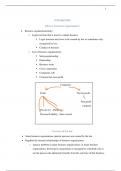
Companies
Profit Not for profit
Non-profit
company
Private Co. ; Public Co ;
Personal Liability ; State-owned
Function of the law
• Some business organisations (juristic persons) are created by the law
• Regulate the internal relationships of business organisations
o Agency problem in many business organisations: in many business
organisations, the business organisation is managed by somebody who is
not the person who ultimately benefits from the activities of that business.
, 2
▪ Often there is a conflict between the interests of the person
managing the business and the interests of those who are meant to
benefit from the business. → manifests when there is a difference
between beneficiaries v managers of a business.
o (those that participate in the business). What is internal v external depends
on the type of business organisation and the view that the law takes.
▪ Sole proprietorship: perhaps employees to some extent
• Only conducted by one person, so doesn’t require much
internal regulation (besides for employees).
▪ Partnership: partners
• In a partnership there will always be more than one partner;
some regulation of this relationship between partners is
necessary.
• Basic principle: sic ut fratres (partners should act like
brothers).
▪ Trusts:
• Trusts: trustees and beneficiaries → 3 internal relationship
dynamics to regulate: relationship between trustees;
between trustees and beneficiaries; between beneficiaries.
• Agency problem is relevant where trustees and beneficiaries
are not the same people and have different goals.
• Some trusts are not business organisations, but some are
(created to conduct businesses) but the law of trust is very
bad at distinguishing different types of trust.
• One of the biggest economic issues in the world: tax
evasion. Often business trusts are used as a tax evasion
mechanism, and the law is not carefully developed to
govern those types of situations.
▪ Common law non-profits
• E.g. a sports club → can create a business organisation in
the common law (these also need internal regulation to
ensure proper operation of those who conduct its activities).
, 3
• Beneficiaries of those organisations sometimes are inside
the business, e.g. members of a golf club but these kinds of
non-profit activities can also be conducted for beneficiaries
not within the organisation: e.g. shelter for homeless people
– they are not members of the business organisation, but
solely external beneficiaries.
▪ Close corporation: members
• Have members.
• Close; not closed: refers to the fact that people in the
organisation work closely together.
• CC’s are a type of business organisation created in SA for
small businesses. The idea is that the members of the
business are very similar to partners of a partnership. The
regulation of the relationship between them internally is
similar to that of a partnership.
• Close Corporations Act in the 1980’s → many created →
Companies Act of 2008 – cannot make new CC’s.
▪ Companies: relationship between shareholders inter se and between
shareholders and managers
• In all for-profit companies: there are those who manage the
company and at the head of that there is a board of directors
(considerable amount of regulation of relationship of
directors).
• Old Mutual v Moyo: Mr Moyo was the managing director
of Old Mutual – there was conflict on the board between Mr
Moyo and other members of the board – he was removed as
the director and he disputed it, it went to court (this
influenced the share price of Old Mutual). Court held he
was properly dismissed.
• For-profit companies always have shareholders who hold
the ultimate interest in the company.
• Can be conflicts between board v shareholders: agency
problem.
, 4
• 3 typical internal relationships:
o horizontally between directors;
o vertically between board and shareholders;
o relationship between shareholders: conflicts between
shareholders are very dangerous for smaller
companies.
• Regulate the external relationships of businesses
o How do businesses interact with the outside world?
▪ When and how can they contract?
• Makate v Vodacom is most important case on this question:
when does Vodacom (a massive organisation) conclude a
contract with an employee Mr Makate – Constitutional
Court created new law to allow them to conclude that there
was a contract with Mr Makate. According to trite law,
there was no contract with him.
• Especially in a complex bureaucratic organisation, when are
they said to have contracted with this organisation?
▪ When are they liable in delict or criminal law?
• Criminal law: business organisations that are juristic
persons can commit crimes, e.g. Weapon transaction fraud
cases – one person in court but many accused persons are
juristic persons. Important regarding environmental crimes.
In the UK: corporate manslaughter (interesting topic for
Legal Skills) – because of the activities of a company
somebody gets killed (natural or juristic person) – if the
reason for it is that the organisation negligently did not
create proper systems to prevent this, they may be held
liable for manslaughter.
▪ Relationship with creditors’ employees and other stakeholders
• Creditors, employees, and stakeholders are regarded as
external.
• the internal external distinction.
o Which parties are internal and which are external?
Introduction
What is a business organisation?
• Business organisation/entity:
o Legal structure that is used to conduct business
▪ Legal structure may have to be created by law or sometimes only
recognised by law.
▪ Conduct of business
o List of business organisations:
▪ Sole proprietorship
▪ Partnership
▪ Business trusts
▪ Close corporation
▪ Companies (s8)
▪ Common law non-profit
Companies
Profit Not for profit
Non-profit
company
Private Co. ; Public Co ;
Personal Liability ; State-owned
Function of the law
• Some business organisations (juristic persons) are created by the law
• Regulate the internal relationships of business organisations
o Agency problem in many business organisations: in many business
organisations, the business organisation is managed by somebody who is
not the person who ultimately benefits from the activities of that business.
, 2
▪ Often there is a conflict between the interests of the person
managing the business and the interests of those who are meant to
benefit from the business. → manifests when there is a difference
between beneficiaries v managers of a business.
o (those that participate in the business). What is internal v external depends
on the type of business organisation and the view that the law takes.
▪ Sole proprietorship: perhaps employees to some extent
• Only conducted by one person, so doesn’t require much
internal regulation (besides for employees).
▪ Partnership: partners
• In a partnership there will always be more than one partner;
some regulation of this relationship between partners is
necessary.
• Basic principle: sic ut fratres (partners should act like
brothers).
▪ Trusts:
• Trusts: trustees and beneficiaries → 3 internal relationship
dynamics to regulate: relationship between trustees;
between trustees and beneficiaries; between beneficiaries.
• Agency problem is relevant where trustees and beneficiaries
are not the same people and have different goals.
• Some trusts are not business organisations, but some are
(created to conduct businesses) but the law of trust is very
bad at distinguishing different types of trust.
• One of the biggest economic issues in the world: tax
evasion. Often business trusts are used as a tax evasion
mechanism, and the law is not carefully developed to
govern those types of situations.
▪ Common law non-profits
• E.g. a sports club → can create a business organisation in
the common law (these also need internal regulation to
ensure proper operation of those who conduct its activities).
, 3
• Beneficiaries of those organisations sometimes are inside
the business, e.g. members of a golf club but these kinds of
non-profit activities can also be conducted for beneficiaries
not within the organisation: e.g. shelter for homeless people
– they are not members of the business organisation, but
solely external beneficiaries.
▪ Close corporation: members
• Have members.
• Close; not closed: refers to the fact that people in the
organisation work closely together.
• CC’s are a type of business organisation created in SA for
small businesses. The idea is that the members of the
business are very similar to partners of a partnership. The
regulation of the relationship between them internally is
similar to that of a partnership.
• Close Corporations Act in the 1980’s → many created →
Companies Act of 2008 – cannot make new CC’s.
▪ Companies: relationship between shareholders inter se and between
shareholders and managers
• In all for-profit companies: there are those who manage the
company and at the head of that there is a board of directors
(considerable amount of regulation of relationship of
directors).
• Old Mutual v Moyo: Mr Moyo was the managing director
of Old Mutual – there was conflict on the board between Mr
Moyo and other members of the board – he was removed as
the director and he disputed it, it went to court (this
influenced the share price of Old Mutual). Court held he
was properly dismissed.
• For-profit companies always have shareholders who hold
the ultimate interest in the company.
• Can be conflicts between board v shareholders: agency
problem.
, 4
• 3 typical internal relationships:
o horizontally between directors;
o vertically between board and shareholders;
o relationship between shareholders: conflicts between
shareholders are very dangerous for smaller
companies.
• Regulate the external relationships of businesses
o How do businesses interact with the outside world?
▪ When and how can they contract?
• Makate v Vodacom is most important case on this question:
when does Vodacom (a massive organisation) conclude a
contract with an employee Mr Makate – Constitutional
Court created new law to allow them to conclude that there
was a contract with Mr Makate. According to trite law,
there was no contract with him.
• Especially in a complex bureaucratic organisation, when are
they said to have contracted with this organisation?
▪ When are they liable in delict or criminal law?
• Criminal law: business organisations that are juristic
persons can commit crimes, e.g. Weapon transaction fraud
cases – one person in court but many accused persons are
juristic persons. Important regarding environmental crimes.
In the UK: corporate manslaughter (interesting topic for
Legal Skills) – because of the activities of a company
somebody gets killed (natural or juristic person) – if the
reason for it is that the organisation negligently did not
create proper systems to prevent this, they may be held
liable for manslaughter.
▪ Relationship with creditors’ employees and other stakeholders
• Creditors, employees, and stakeholders are regarded as
external.
• the internal external distinction.
o Which parties are internal and which are external?