COMMUNICATION 13 SIGNALLING
4 at communication 31 Signalling
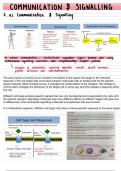
To achieve communication multicellular organisms signal between cells using
extracellular signalling molecules and complementary receptor proteins
examples of extracellular signalling molecules include steroid hormones
peptide hormones and neurotransmitters
The same series of events occurs whatever the details of the signal, the target or the intended
response. First, the target cells must have receptor molecules with as binding site for the speci c
signal molecule. When binding occurs, it changes the conformation of the receptor. This change in
conformation changes the behaviour of the target cell in some way and this initiates a response within
the cell.
Di erent cell types produce speci c signals that can only be detected and responded to by cells with
the speci c receptor. Signalling molecules may have di erent e ects on di erent target cell types due
to di erences in the intracellular signalling molecules and pathways that are involved.
In a multicellular organism, di erent cell types may show a tissue-speci c response to the same signal.
, 4 b Hydrophobic signals 13 Control of Transcription
Hydrophobic signalling molecules include the steroid hormones oestrogen and
testosterone
Hydrophobic signalling molecules are lipid soluble so are able to diffuse directly
through the phospholipid bilayers of membranes and so bind to intracellular
receptors
The receptors
for these signals are therefore in the cytosol or within the
nucleus of the target cell
The receptors proteins for steroid hormones are transcription factors Transcription
factors are proteins that when bound to DNA can either stimulate or inhibit
initiation of transcription
once the hormone signal has bound to the receptor the hormone receptor
complex is formed The hormone receptor complex can then move to the
nucleus where it binds to specific sites on DNA and affects gene expression
The hormone receptor complex binds to specific DNA sequences called hormone
response elements ARES Binding at these sites influences the rate of
transcription with each steroid hormone affecting the gene expression of
many
different genes
As a result hydrophobic signals can directly influence transcription of genes
4 at communication 31 Signalling
To achieve communication multicellular organisms signal between cells using
extracellular signalling molecules and complementary receptor proteins
examples of extracellular signalling molecules include steroid hormones
peptide hormones and neurotransmitters
The same series of events occurs whatever the details of the signal, the target or the intended
response. First, the target cells must have receptor molecules with as binding site for the speci c
signal molecule. When binding occurs, it changes the conformation of the receptor. This change in
conformation changes the behaviour of the target cell in some way and this initiates a response within
the cell.
Di erent cell types produce speci c signals that can only be detected and responded to by cells with
the speci c receptor. Signalling molecules may have di erent e ects on di erent target cell types due
to di erences in the intracellular signalling molecules and pathways that are involved.
In a multicellular organism, di erent cell types may show a tissue-speci c response to the same signal.
, 4 b Hydrophobic signals 13 Control of Transcription
Hydrophobic signalling molecules include the steroid hormones oestrogen and
testosterone
Hydrophobic signalling molecules are lipid soluble so are able to diffuse directly
through the phospholipid bilayers of membranes and so bind to intracellular
receptors
The receptors
for these signals are therefore in the cytosol or within the
nucleus of the target cell
The receptors proteins for steroid hormones are transcription factors Transcription
factors are proteins that when bound to DNA can either stimulate or inhibit
initiation of transcription
once the hormone signal has bound to the receptor the hormone receptor
complex is formed The hormone receptor complex can then move to the
nucleus where it binds to specific sites on DNA and affects gene expression
The hormone receptor complex binds to specific DNA sequences called hormone
response elements ARES Binding at these sites influences the rate of
transcription with each steroid hormone affecting the gene expression of
many
different genes
As a result hydrophobic signals can directly influence transcription of genes