Hello everyone! Welcome back to a new session. Today, we are starting with the first
chapter, which is the introduction to life processes. For CBSE and ICC students, this chapter
covers the topic of photosynthesis.
Before we begin, let me remind you that we have classes for physics, chemistry,
mathematics, and biology for classes 8, 9, and 10 CBSE. We also have classes for physics,
chemistry, mathematics, and biology for classes 8, 9, and 10 ICSE. Additionally, we offer
master coding with Java classes, Python programming classes, and physics and chemistry
classes for Cambridge IGCSE. Feel free to join now or in the future, and please spread the
word so we can have more people with us.
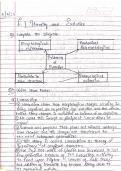
Let's start with some basic questions. What distinguishes something living from a nonliving
object? Some of the ways to distinguish between living and nonliving things that you
mentioned are: movement, growth, respiration, excretion, reproduction, digestion, nutrition,
molecular movement, circulation, response to stimuli, sense organs, ability to think, and
evolution. Another important point is death. Let's go through these characteristics one by
one.
Movement
Movement or locomotion refers to changing position or moving certain parts of the body.
While movement is a characteristic of living organisms, it is not the only characteristic that
defines a living being. Some animals or even plants cannot move, but they are still
considered living.
Growth
Growth is seen in plants, animals, cells, and unicellular organisms. However, there can be
cases of stunted growth or growth defects, which do not make an organism less alive.
Respiration, Excretion, Digestion, Nutrition, and Circulation
chapter, which is the introduction to life processes. For CBSE and ICC students, this chapter
covers the topic of photosynthesis.
Before we begin, let me remind you that we have classes for physics, chemistry,
mathematics, and biology for classes 8, 9, and 10 CBSE. We also have classes for physics,
chemistry, mathematics, and biology for classes 8, 9, and 10 ICSE. Additionally, we offer
master coding with Java classes, Python programming classes, and physics and chemistry
classes for Cambridge IGCSE. Feel free to join now or in the future, and please spread the
word so we can have more people with us.
Let's start with some basic questions. What distinguishes something living from a nonliving
object? Some of the ways to distinguish between living and nonliving things that you
mentioned are: movement, growth, respiration, excretion, reproduction, digestion, nutrition,
molecular movement, circulation, response to stimuli, sense organs, ability to think, and
evolution. Another important point is death. Let's go through these characteristics one by
one.
Movement
Movement or locomotion refers to changing position or moving certain parts of the body.
While movement is a characteristic of living organisms, it is not the only characteristic that
defines a living being. Some animals or even plants cannot move, but they are still
considered living.
Growth
Growth is seen in plants, animals, cells, and unicellular organisms. However, there can be
cases of stunted growth or growth defects, which do not make an organism less alive.
Respiration, Excretion, Digestion, Nutrition, and Circulation