Change Management – Cameron & Green CH1-10
Part one:
In Part One we look at change and the management of change from three diferent perspecties: the
indiiidual, the team and the organizatonal perspectie. We also examine the roles, styles and skills
needed to become a successful leader of change.
Chapter 1: Individual change
This chapter draws the key theories of how individuals go through change. The aim of this chapter is to
give managers and others experiencing or implementng change and understanding of the change
process and how it impacts individuals, and strategies to use when helping people through change to
ensure results are achieved.
The following topics will be mentoned in this chapter:
Learning and the process of change – in what ways can models of learning help us understand
individual change?
The behavioral approach to change – how can we change people’s behavior?
The cognitve approach to change – how change can be made atractve to people and how
people can achieve the results that they want.
The psychodynamic approach to change – what’s actually going on for people.
The humanistc psychology approach to change – how can people maximize the benefts of
change
Managing change in self and others – if we can understand people’s internal experience and we
know what changes need to happen, what is the best way to efect change?
“An important point for managers of change is to understand the diference between the changes being
managed in the external world and the concurrent psychological transitons (gelijktjdige psychologische
oiergangen) that are experienced internally by people”
There are 4 main approaches to change:
1. The behavioural approach Changing the behaviors of others through rewards and
punishment. This leads to behavioural analysis and use of reward strategies
2. The cognitve approach Achieving results through positve reframing. Associated techniques
are goal setng and coaching to achieve results
3. The psychodynamic approach Understanding and relatng to the inner world of change,
especially signifcant when people are going through change
4. The humanistc psychological approaches Believing in development and growth, and
maximizing potental. The emphasis is on healthy development,, healthy authentc relatonships
and healthy organizatons.
1|Page
,1.1 Learning and the process of change
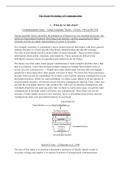
Buchanan and Hucynski 1985 Defines learning as “ the process of
acquiring knowledge through experience which leads to a change
in behavior” Learning is not just gaining knowledge, but the
applicaton of it through doing something diferent in the world.
When learning something new it requires tme and psychological
space which is not easy to create when learning at normal speed,
you need more tme.
Conscious and unconscious competence and incompetence
Another way of looking at the process of learning is to view if from Gestalt’s perspectve. Some things
being in the foreground and other things being in the background of people’s consciousness.
Example: all the colors in your garden are of equal note, untl someone mentons white and you
immediately start to notce the white fowers. They haie to come to the foreground of your
consciousness.
Unconsciously competent When you are an experienced worker, many aspects of working are
unconscious.
Conscious incompetent However as soon as there is a new situaton in your work you realize that
many of the things you took for granted, you cannot do as good as before. You have become conscious
of your incompetence. Through practce and some experience you manage – quite consciously – to
become competent again.
Unconscious incompetence Of course there is another cycle: not the one of startng at unconscious
competence, but one of startng at unconscious incompetence. This is where you do not know what you
do not know, and the only way of realizing is by making a mistake ( and refectng upon it), or when
someone kind enough and brave enough tells you. From self-refecton of from others feedback your
unconscious incompetence becomes conscious, and you are able to begin the cycle of learning.
2|Page
, Kolb’s learning cycle
David kolb (1984) developed a model – fgure 1.4 - of experiental learning,
which shows how learning occurs, and what stages a typical individual
goes through in order to learn. It shows that we learn through a
process of doing and thinking.
Kolb saw the individual learning as a cycle through which
individual has concrete experience. The individual actually
does something, refects upon his or her specifc
experience, makes some sense of the experience by drawing some
general conclusions, and plans to do things diferently in the future. Kolb
argue that learning could not take place without someone going through all
stages of the cycle.
1.2 The behavioral approach to change
The behavioral approach to change focuses on how one you can change another individual’s behavior
using reward and punishment.
In order to create the preferred behavior the individual must be encouraged to behave that way, and
discouraged from behaving any other way. Using the noton of rewards and punishments, 4 possible
situatons arise when you want to encourage a specifc behavior.
So in what ways can behaviourism help us with individuals going through change?
4 steps in planned behavior change are required:
Step 1: The identicaton of the behaviours that impact performance.
Step 2: The measurement of those behaviors - How much are these behaviors currently in use?
Step 3: A functonal analysis of the behaviors – The identfcaton of the component parts that make up
each behaviour.
Step 4: The generaton of a strategy of interienton – What rewards and punishments should be linked
to the behaviours that impact performance.
Step 5: An eialuaton of the efectveness of the interventon strategy.
3|Page
Part one:
In Part One we look at change and the management of change from three diferent perspecties: the
indiiidual, the team and the organizatonal perspectie. We also examine the roles, styles and skills
needed to become a successful leader of change.
Chapter 1: Individual change
This chapter draws the key theories of how individuals go through change. The aim of this chapter is to
give managers and others experiencing or implementng change and understanding of the change
process and how it impacts individuals, and strategies to use when helping people through change to
ensure results are achieved.
The following topics will be mentoned in this chapter:
Learning and the process of change – in what ways can models of learning help us understand
individual change?
The behavioral approach to change – how can we change people’s behavior?
The cognitve approach to change – how change can be made atractve to people and how
people can achieve the results that they want.
The psychodynamic approach to change – what’s actually going on for people.
The humanistc psychology approach to change – how can people maximize the benefts of
change
Managing change in self and others – if we can understand people’s internal experience and we
know what changes need to happen, what is the best way to efect change?
“An important point for managers of change is to understand the diference between the changes being
managed in the external world and the concurrent psychological transitons (gelijktjdige psychologische
oiergangen) that are experienced internally by people”
There are 4 main approaches to change:
1. The behavioural approach Changing the behaviors of others through rewards and
punishment. This leads to behavioural analysis and use of reward strategies
2. The cognitve approach Achieving results through positve reframing. Associated techniques
are goal setng and coaching to achieve results
3. The psychodynamic approach Understanding and relatng to the inner world of change,
especially signifcant when people are going through change
4. The humanistc psychological approaches Believing in development and growth, and
maximizing potental. The emphasis is on healthy development,, healthy authentc relatonships
and healthy organizatons.
1|Page
,1.1 Learning and the process of change
Buchanan and Hucynski 1985 Defines learning as “ the process of
acquiring knowledge through experience which leads to a change
in behavior” Learning is not just gaining knowledge, but the
applicaton of it through doing something diferent in the world.
When learning something new it requires tme and psychological
space which is not easy to create when learning at normal speed,
you need more tme.
Conscious and unconscious competence and incompetence
Another way of looking at the process of learning is to view if from Gestalt’s perspectve. Some things
being in the foreground and other things being in the background of people’s consciousness.
Example: all the colors in your garden are of equal note, untl someone mentons white and you
immediately start to notce the white fowers. They haie to come to the foreground of your
consciousness.
Unconsciously competent When you are an experienced worker, many aspects of working are
unconscious.
Conscious incompetent However as soon as there is a new situaton in your work you realize that
many of the things you took for granted, you cannot do as good as before. You have become conscious
of your incompetence. Through practce and some experience you manage – quite consciously – to
become competent again.
Unconscious incompetence Of course there is another cycle: not the one of startng at unconscious
competence, but one of startng at unconscious incompetence. This is where you do not know what you
do not know, and the only way of realizing is by making a mistake ( and refectng upon it), or when
someone kind enough and brave enough tells you. From self-refecton of from others feedback your
unconscious incompetence becomes conscious, and you are able to begin the cycle of learning.
2|Page
, Kolb’s learning cycle
David kolb (1984) developed a model – fgure 1.4 - of experiental learning,
which shows how learning occurs, and what stages a typical individual
goes through in order to learn. It shows that we learn through a
process of doing and thinking.
Kolb saw the individual learning as a cycle through which
individual has concrete experience. The individual actually
does something, refects upon his or her specifc
experience, makes some sense of the experience by drawing some
general conclusions, and plans to do things diferently in the future. Kolb
argue that learning could not take place without someone going through all
stages of the cycle.
1.2 The behavioral approach to change
The behavioral approach to change focuses on how one you can change another individual’s behavior
using reward and punishment.
In order to create the preferred behavior the individual must be encouraged to behave that way, and
discouraged from behaving any other way. Using the noton of rewards and punishments, 4 possible
situatons arise when you want to encourage a specifc behavior.
So in what ways can behaviourism help us with individuals going through change?
4 steps in planned behavior change are required:
Step 1: The identicaton of the behaviours that impact performance.
Step 2: The measurement of those behaviors - How much are these behaviors currently in use?
Step 3: A functonal analysis of the behaviors – The identfcaton of the component parts that make up
each behaviour.
Step 4: The generaton of a strategy of interienton – What rewards and punishments should be linked
to the behaviours that impact performance.
Step 5: An eialuaton of the efectveness of the interventon strategy.
3|Page