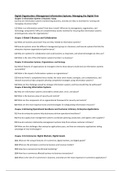
Digital Organisation: Management Information Systems: Managing the Digital Firm
Chapter 1 Information Systems in Business Today
1.1 How are information systems transforming business, and why are they so essential for running and
managing a business today?
1.2 What is an information system? How does it work? What are its management, organization, and
technology components? Why are complementary assets essential for ensuring that information systems
provide genuine value for organizations?
Chapter 2 Global E-Business and Collaboration
2.1 What are business processes? How are they related to information systems?
2.2 How do systems serve the different management groups in a business, and how do systems that link the
enterprise improve organizational performance?
2.3 Why are systems for collaboration and social business so important, and what technologies do they use?
2.4 What is the role of the information systems function in a business?
Chapter 3 Information Systems, Organizations, and Strategy
3.1 Which features of organizations do managers need to know about to build and use information systems
successfully?
3.2 What is the impact of information systems on organizations?
3.3 How do Porter’s competitive forces model, the value chain model, synergies, core competencies, and
network economics help companies develop competitive strategies using information systems?
3.4 What are the challenges posed by strategic information systems, and how should they be addressed?
Chapter 8 Securing Information Systems
8.1 Why are information systems vulnerable to destruction, error, and abuse?
8.2 What is the business value of security and control?
8.3 What are the components of an organizational framework for security and control?
8.4 What are the most important tools and technologies for safeguarding information resources?
Chapter 9 Achieving Operational Excellence and Customer Intimacy: Enterprise Applications
9.1 How do enterprise systems help businesses achieve operational excellence?
9.2 How do supply chain management systems coordinate planning, production, and logistics with suppliers?
9.3 How do customer relationship management systems help firms achieve customer intimacy?
9.4 What are the challenges that enterprise applications pose, and how are enterprise applications taking
advantage of new technologies?
Chapter 10 E-Commerce: Digital Markets, Digital Goods
10.1 What are the unique features of e-commerce, digital markets, and digital goods?
10.2 What are the principal e-commerce business and revenue models?
10.3 How has e-commerce transformed marketing?
10.4 How has e-commerce affected business-to-business transactions?
10.5 What is the role of m-commerce in business, and what are the most important m-commerce applications?
,Chapter 11 Managing Knowledge
11.1 What is the role of knowledge management systems in business?
11.2 What types of systems are used for enterprise-wide knowledge management, and how do they provide
value for businesses?
11.3 What are the major types of knowledge work systems, and how do they provide value for firms?
11.4 What are the business benefits of using intelligent techniques for knowledge management?
Chapter 12
12.1 What are the different types of decisions, and how does the decision making process work?
12.2 How do information systems support the activities of managers and management decision making?
12.3 How do business intelligence and business analytics support decision making?
12.4 How do different decision-making constituencies in an organization use business intelligence, and what is
the role of information systems in helping people working in a group make decisions more efficiently?
Inhoud
Digital Organisation ........................................................................................................................................... 10
Introduction ......................................................................................................................................................... 10
Rugby Football Union Tries Big Data ............................................................................................................... 12
How Information Systems Are Transforming Business................................................................................... 12
Figure 1.1: Information Technology Capital Investment ................................................................................. 13
What’s New in Management Information Systems ........................................................................................ 14
Globalization Challenges and Opportunities: A Flattened World ................................................................. 15
The Emerging Digital Firm ................................................................................................................................. 16
Strategic Business Objectives of Information Systems ................................................................................... 16
GDPR .................................................................................................................................................................... 19
Sox ........................................................................................................................................................................ 20
What Is an Information System? ....................................................................................................................... 20
Figure 1.3 data and information ........................................................................................................................ 22
Dimensions of Information Systems: Organizations....................................................................................... 22
Dimensions of Information Systems: Management........................................................................................ 23
Dimensions of Information Systems: Technology........................................................................................... 24
Figure 1.7: The Business Information Value Chain .......................................................................................... 25
It Isn’t Just Technology: A Business Perspective on Information Systems ................................................... 25
Figure 1.8: Variation in Returns on Information Technology ......................................................................... 26
Complementary Assets: Organizational Capital and the Right Business Model ......................................... 26
Academic disciplines involved........................................................................................................................... 27
Figure 1.10: A Sociotechnical Perspective on Information Systems ............................................................... 27
Chapter 2: Global E-business and Collaboration ............................................................................................ 29
Enterprise Social Networking Helps ABB innovate and Grow ....................................................................... 29
Business Processes ............................................................................................................................................. 30
Figure 2.1: The Order Fulfillment Process ........................................................................................................ 32
,How Information Technology Improves Business Processes......................................................................... 32
Simply investing in technology will not gain businessvalue!i ........................................................................ 33
Systems for Different Management Groups .................................................................................................... 34
Management information systems (MIS) ......................................................................................................... 34
Decision support systems .................................................................................................................................. 35
Executive support systems................................................................................................................................. 36
Management Information Systems .................................................................................................................. 36
Figure 2.3: How Management Information Systems Obtain Their Data from ............................................. 37
the Organization’s TPS ....................................................................................................................................... 37
Figure 2.4: Sample MIS Report ......................................................................................................................... 37
Decision support systems .................................................................................................................................. 38
Figure 2.5: Voyage-Estimating Decision-Support System ............................................................................. 38
Executive Support Systems ................................................................................................................................ 38
Enterprise Applications ...................................................................................................................................... 38
Figure 2.6: Enterprise Application Architecture ............................................................................................... 40
Enterprise Systems.............................................................................................................................................. 40
Supply Chain Management (SCM) Systems .................................................................................................... 41
Fulfilment system ................................................................................................................................................ 43
Intern organisational systems............................................................................................................................ 43
Customer Relationship Management (CRM) Systems .................................................................................... 43
Knowledge Management Systems (KMS) ........................................................................................................ 43
Intranets and Extranets ...................................................................................................................................... 44
E-business, E-commerce, and E-government ................................................................................................. 45
What Is Social Business? .................................................................................................................................... 45
Business Benefits of Collaboration and Teamwork......................................................................................... 46
Figure 2.7: Requirements for Collaboration .................................................................................................... 47
Tools and Technologies for Collaboration and Social Business .................................................................... 48
Figure 2.8: The Time/Space Collaboration and Social Tool Matrix ............................................................... 48
The Information Systems Department ............................................................................................................. 48
Organizing the Information Systems Function................................................................................................ 49
IT governance ..................................................................................................................................................... 50
Chapter 3: Information Systems, Organizations, and Strategy ..................................................................... 51
Tate & Lyle Devise a Global IT Strategy ........................................................................................................... 51
The Relationship Between Organizations and Information Technology ...................................................... 51
What Is an Organization? .................................................................................................................................. 52
Figure 3.2: The Technical Microeconomic Definition of the Organization .................................................. 53
Figure 3.3: The Behavioral View of Organizations .......................................................................................... 53
Features of Organizations ................................................................................................................................. 53
Routines and Business Processes ...................................................................................................................... 54
Figure 3.4: Routines, Business Processes, and Firms ...................................................................................... 55
Organizational Politics ....................................................................................................................................... 55
, Organizational Culture ....................................................................................................................................... 55
Organizational Environments ............................................................................................................................ 55
Disruptive Technologies..................................................................................................................................... 57
→ brings radical change .................................................................................................................................... 57
Organizational Structure.................................................................................................................................... 57
Information system often reflects organizational structure ........................................................................... 57
Other Organizational Features.......................................................................................................................... 57
Economic impact: Transaction Cost Theory .................................................................................................... 58
Economic impact: Agency Theory .................................................................................................................... 59
owner of the company and the agent that works for the company ............................................................ 59
Organizational and Behavioral Impacts ........................................................................................................... 60
Understanding Organizational Resistance to Change ................................................................................... 61
Research on IS project failures finds that the most common reason for failure is resistance to change:
this shows the importance of involving the stakeholders from early on when it comes to change 3.3
How do Porter’s competitive forces model, the value chain model, synergies, core competencies, and
network economics help companies develop competitive strategies using information systems?.......... 61
The Internet and Organizations ........................................................................................................................ 62
Implications for the Design and Understanding of Information Systems .................................................... 62
Porter’s Competitive Forces Model (!).............................................................................................................. 63
Figure 3.8: Porter’s Competitive Forces Model ............................................................................................... 63
Information System Strategies for Dealing with Competitive Forces ........................................................... 65
The Internet’s Impact on Competitive Advantage .......................................................................................... 67
Smart Products and the Internet of Things ..................................................................................................... 67
The Business Value Chain Model ...................................................................................................................... 68
Figure 3.9: The Value Chain Model .................................................................................................................. 68
Extending the Value Chain: The Value Web .................................................................................................... 69
Figure 3.10: The Value Web ............................................................................................................................... 69
Synergies ............................................................................................................................................................. 69
Core competencies............................................................................................................................................. 70
Network-Based Strategies ................................................................................................................................. 71
Network economics............................................................................................................................................ 71
Virtual company model ..................................................................................................................................... 71
Business Ecosystems and Platforms ................................................................................................................. 71
Challenges Posed by Strategic Information Systems ..................................................................................... 73
Chapter 8: Securing Information Systems ....................................................................................................... 75
Hackers Attack Singapore’s Telecom Infrastructure ....................................................................................... 75
Why Systems Are Vulnerable ............................................................................................................................ 75
- Confidentiality of information (only people who are authorized have access to information) .............. 75
- Integrity (is the date accurate?) ...................................................................................................................... 75
- Availability (information has to be available at an appropriate time) ........................................................ 75
Figure 8.1: Contemporary Security Challenges and Vulnerabilities............................................................... 76
Chapter 1 Information Systems in Business Today
1.1 How are information systems transforming business, and why are they so essential for running and
managing a business today?
1.2 What is an information system? How does it work? What are its management, organization, and
technology components? Why are complementary assets essential for ensuring that information systems
provide genuine value for organizations?
Chapter 2 Global E-Business and Collaboration
2.1 What are business processes? How are they related to information systems?
2.2 How do systems serve the different management groups in a business, and how do systems that link the
enterprise improve organizational performance?
2.3 Why are systems for collaboration and social business so important, and what technologies do they use?
2.4 What is the role of the information systems function in a business?
Chapter 3 Information Systems, Organizations, and Strategy
3.1 Which features of organizations do managers need to know about to build and use information systems
successfully?
3.2 What is the impact of information systems on organizations?
3.3 How do Porter’s competitive forces model, the value chain model, synergies, core competencies, and
network economics help companies develop competitive strategies using information systems?
3.4 What are the challenges posed by strategic information systems, and how should they be addressed?
Chapter 8 Securing Information Systems
8.1 Why are information systems vulnerable to destruction, error, and abuse?
8.2 What is the business value of security and control?
8.3 What are the components of an organizational framework for security and control?
8.4 What are the most important tools and technologies for safeguarding information resources?
Chapter 9 Achieving Operational Excellence and Customer Intimacy: Enterprise Applications
9.1 How do enterprise systems help businesses achieve operational excellence?
9.2 How do supply chain management systems coordinate planning, production, and logistics with suppliers?
9.3 How do customer relationship management systems help firms achieve customer intimacy?
9.4 What are the challenges that enterprise applications pose, and how are enterprise applications taking
advantage of new technologies?
Chapter 10 E-Commerce: Digital Markets, Digital Goods
10.1 What are the unique features of e-commerce, digital markets, and digital goods?
10.2 What are the principal e-commerce business and revenue models?
10.3 How has e-commerce transformed marketing?
10.4 How has e-commerce affected business-to-business transactions?
10.5 What is the role of m-commerce in business, and what are the most important m-commerce applications?
,Chapter 11 Managing Knowledge
11.1 What is the role of knowledge management systems in business?
11.2 What types of systems are used for enterprise-wide knowledge management, and how do they provide
value for businesses?
11.3 What are the major types of knowledge work systems, and how do they provide value for firms?
11.4 What are the business benefits of using intelligent techniques for knowledge management?
Chapter 12
12.1 What are the different types of decisions, and how does the decision making process work?
12.2 How do information systems support the activities of managers and management decision making?
12.3 How do business intelligence and business analytics support decision making?
12.4 How do different decision-making constituencies in an organization use business intelligence, and what is
the role of information systems in helping people working in a group make decisions more efficiently?
Inhoud
Digital Organisation ........................................................................................................................................... 10
Introduction ......................................................................................................................................................... 10
Rugby Football Union Tries Big Data ............................................................................................................... 12
How Information Systems Are Transforming Business................................................................................... 12
Figure 1.1: Information Technology Capital Investment ................................................................................. 13
What’s New in Management Information Systems ........................................................................................ 14
Globalization Challenges and Opportunities: A Flattened World ................................................................. 15
The Emerging Digital Firm ................................................................................................................................. 16
Strategic Business Objectives of Information Systems ................................................................................... 16
GDPR .................................................................................................................................................................... 19
Sox ........................................................................................................................................................................ 20
What Is an Information System? ....................................................................................................................... 20
Figure 1.3 data and information ........................................................................................................................ 22
Dimensions of Information Systems: Organizations....................................................................................... 22
Dimensions of Information Systems: Management........................................................................................ 23
Dimensions of Information Systems: Technology........................................................................................... 24
Figure 1.7: The Business Information Value Chain .......................................................................................... 25
It Isn’t Just Technology: A Business Perspective on Information Systems ................................................... 25
Figure 1.8: Variation in Returns on Information Technology ......................................................................... 26
Complementary Assets: Organizational Capital and the Right Business Model ......................................... 26
Academic disciplines involved........................................................................................................................... 27
Figure 1.10: A Sociotechnical Perspective on Information Systems ............................................................... 27
Chapter 2: Global E-business and Collaboration ............................................................................................ 29
Enterprise Social Networking Helps ABB innovate and Grow ....................................................................... 29
Business Processes ............................................................................................................................................. 30
Figure 2.1: The Order Fulfillment Process ........................................................................................................ 32
,How Information Technology Improves Business Processes......................................................................... 32
Simply investing in technology will not gain businessvalue!i ........................................................................ 33
Systems for Different Management Groups .................................................................................................... 34
Management information systems (MIS) ......................................................................................................... 34
Decision support systems .................................................................................................................................. 35
Executive support systems................................................................................................................................. 36
Management Information Systems .................................................................................................................. 36
Figure 2.3: How Management Information Systems Obtain Their Data from ............................................. 37
the Organization’s TPS ....................................................................................................................................... 37
Figure 2.4: Sample MIS Report ......................................................................................................................... 37
Decision support systems .................................................................................................................................. 38
Figure 2.5: Voyage-Estimating Decision-Support System ............................................................................. 38
Executive Support Systems ................................................................................................................................ 38
Enterprise Applications ...................................................................................................................................... 38
Figure 2.6: Enterprise Application Architecture ............................................................................................... 40
Enterprise Systems.............................................................................................................................................. 40
Supply Chain Management (SCM) Systems .................................................................................................... 41
Fulfilment system ................................................................................................................................................ 43
Intern organisational systems............................................................................................................................ 43
Customer Relationship Management (CRM) Systems .................................................................................... 43
Knowledge Management Systems (KMS) ........................................................................................................ 43
Intranets and Extranets ...................................................................................................................................... 44
E-business, E-commerce, and E-government ................................................................................................. 45
What Is Social Business? .................................................................................................................................... 45
Business Benefits of Collaboration and Teamwork......................................................................................... 46
Figure 2.7: Requirements for Collaboration .................................................................................................... 47
Tools and Technologies for Collaboration and Social Business .................................................................... 48
Figure 2.8: The Time/Space Collaboration and Social Tool Matrix ............................................................... 48
The Information Systems Department ............................................................................................................. 48
Organizing the Information Systems Function................................................................................................ 49
IT governance ..................................................................................................................................................... 50
Chapter 3: Information Systems, Organizations, and Strategy ..................................................................... 51
Tate & Lyle Devise a Global IT Strategy ........................................................................................................... 51
The Relationship Between Organizations and Information Technology ...................................................... 51
What Is an Organization? .................................................................................................................................. 52
Figure 3.2: The Technical Microeconomic Definition of the Organization .................................................. 53
Figure 3.3: The Behavioral View of Organizations .......................................................................................... 53
Features of Organizations ................................................................................................................................. 53
Routines and Business Processes ...................................................................................................................... 54
Figure 3.4: Routines, Business Processes, and Firms ...................................................................................... 55
Organizational Politics ....................................................................................................................................... 55
, Organizational Culture ....................................................................................................................................... 55
Organizational Environments ............................................................................................................................ 55
Disruptive Technologies..................................................................................................................................... 57
→ brings radical change .................................................................................................................................... 57
Organizational Structure.................................................................................................................................... 57
Information system often reflects organizational structure ........................................................................... 57
Other Organizational Features.......................................................................................................................... 57
Economic impact: Transaction Cost Theory .................................................................................................... 58
Economic impact: Agency Theory .................................................................................................................... 59
owner of the company and the agent that works for the company ............................................................ 59
Organizational and Behavioral Impacts ........................................................................................................... 60
Understanding Organizational Resistance to Change ................................................................................... 61
Research on IS project failures finds that the most common reason for failure is resistance to change:
this shows the importance of involving the stakeholders from early on when it comes to change 3.3
How do Porter’s competitive forces model, the value chain model, synergies, core competencies, and
network economics help companies develop competitive strategies using information systems?.......... 61
The Internet and Organizations ........................................................................................................................ 62
Implications for the Design and Understanding of Information Systems .................................................... 62
Porter’s Competitive Forces Model (!).............................................................................................................. 63
Figure 3.8: Porter’s Competitive Forces Model ............................................................................................... 63
Information System Strategies for Dealing with Competitive Forces ........................................................... 65
The Internet’s Impact on Competitive Advantage .......................................................................................... 67
Smart Products and the Internet of Things ..................................................................................................... 67
The Business Value Chain Model ...................................................................................................................... 68
Figure 3.9: The Value Chain Model .................................................................................................................. 68
Extending the Value Chain: The Value Web .................................................................................................... 69
Figure 3.10: The Value Web ............................................................................................................................... 69
Synergies ............................................................................................................................................................. 69
Core competencies............................................................................................................................................. 70
Network-Based Strategies ................................................................................................................................. 71
Network economics............................................................................................................................................ 71
Virtual company model ..................................................................................................................................... 71
Business Ecosystems and Platforms ................................................................................................................. 71
Challenges Posed by Strategic Information Systems ..................................................................................... 73
Chapter 8: Securing Information Systems ....................................................................................................... 75
Hackers Attack Singapore’s Telecom Infrastructure ....................................................................................... 75
Why Systems Are Vulnerable ............................................................................................................................ 75
- Confidentiality of information (only people who are authorized have access to information) .............. 75
- Integrity (is the date accurate?) ...................................................................................................................... 75
- Availability (information has to be available at an appropriate time) ........................................................ 75
Figure 8.1: Contemporary Security Challenges and Vulnerabilities............................................................... 76