

OBS 114
22 June 2023 12:37
CHAPTER 9: GROUPS AND TEAMS
• Groups-two or more people who interact with each other to accomplish certain goals or meet certain needs.
• Teams-a group whose members work intensely with one another to achieve a specific common goal or objective.
• Teams can be groups but groups cannot be teams and the two characteristics that distinguish teams from groups are
the intensity with which team members work together and the presence of a specific objective.
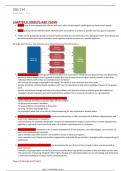
Groups and Teams' Contributions to Organisational Performance
• Performance enhancers-synergy (performance gains that result when individuals and departments coordinate their
actions) is where people work in groups or teams that can produce more or higher-quality outputs as well their
individual efforts, where they are combined later combined.
-the essence of synergy is captured in the saying "the whole is more than the sum of its parts."
-groups should be composed with members who have complementary skills and knowledge relevant to the group's
work.
-groups should have enough autonomy to solve problems and determine how to achieve goals and objectives.
-managers should empower and coach subordinates and give them resources to perform as a group/team.
• Factors that can contribute to synergy in groups include:
-ability of group members to bounce ideas off one another.
-to correct one another's mistakes.
-to solve problems immediately as they arise.
-to bring a diverse knowledge base.
-to accomplish work that is too vast or all-encompassing for any individual to achieve alone.
• Increase responsiveness to customers-it requires wide variety of skills and expertise in different departments and
levels in an organisation's hierarchy.
-diversity brings for example salespeople, research and development experts, and members of other departments
together in a group or cross-functional team can enhance responsiveness to customers.
• Increases innovation-innovation is the creative development of new products, new technologies, new services, or
even new organisational structures.
-team members can often uncover one another’s errors or false assumptions.
-team members can critique one another’s approaches and build off one another’s strengths while compensating for
weaknesses.
• Increases motivations and satisfaction-can accompany the use of teams that cal lead to other outcomes such as
lower turnover.
-members of groups/teams are likely to be more satisfied than they would have been if they had been on their own.
-the experience of working alongside other highly charged and motivated people can be stimulating and motivating.
-a motivated workforce increase market competitiveness.
Types of Groups and Teams
OBS 114 CHAPTER 9 Page 1
, • Formal group-a group that managers establish to achieve organisational goals.
• Cross-functional teams-are composed with members from different departments.
• Cross-cultural teams-are composed with members from different countries or cultures.
• Top management teams-a group composed of the CEO and the directors and managers most responsible for
achieving the organisational goals.
-responsible for developing the strategies that will result in an organisation's competitive advantage (between 5 and
7 members).
• Research and development teams-a team whose members have the expertise and experience needed to develop
new products.
-usually have members in the technological department.
• Command groups-a group of composed of subordinates who report to the same supervisor (called department/unit).
-top managers design organisation's structure and they are the ones that create the command groups for their
subordinates and establish a reporting relationship and a chain of command.
• Task force-a committee of managers from various functions or divisions who meet to solve a specific, mutual
problem (ad hoc committee).
• Self-managed work teams-a group of employees who supervise their own activities and monitor the quality of the
goods and services they provide.
-the team members are empowered and have the responsibility and autonomy to complete identifiable pieces of
work.
-makes sure that the team's work is sufficiently complex and entails a number of different steps that will be
performed and results to the finished product.
-analysing the type of training the team members need and the group will provide the training.
-must have extensive technical and interpersonal skills.
• Virtual teams-a team whose members rarely or never meet face-to-face but rather interact by using various forms of
information technology (email, computer networks, telephone, fax and videoconferences).
-the challenge that virtual teams face is building a sense of trust and companionship amongst the members.
-communication is beneficial in order to keep the virtual teams intact.
• Informal group-a group that managers or nonmanagerial employees for to help them achieve their own goals or
meet their own needs.
-is formed predominantly due to friendship and common interest.
• Friendship groups-an informal group of employees who enjoy one another's company and socialise with one
another.
-this type of group helps satisfy employees' needs for interpersonal interaction and can provide needed social
support in times of stress and also contribute to people's feeling good at work.
• Interest groups-an informal group of employees seeking to achieve a common goal related to their membership in
the organisation or have a shared interest in something.
-also can signal the need for change.
Five Key Elements of Group Dynamics
1. Group size, tasks and roles
• Advantages of the size of less than 10 members-the group interaction is better.
-the members are more motivated, satisfied and committed to their tasks.
OBS 114 CHAPTER 9 Page 2
22 June 2023 12:37
CHAPTER 9: GROUPS AND TEAMS
• Groups-two or more people who interact with each other to accomplish certain goals or meet certain needs.
• Teams-a group whose members work intensely with one another to achieve a specific common goal or objective.
• Teams can be groups but groups cannot be teams and the two characteristics that distinguish teams from groups are
the intensity with which team members work together and the presence of a specific objective.
Groups and Teams' Contributions to Organisational Performance
• Performance enhancers-synergy (performance gains that result when individuals and departments coordinate their
actions) is where people work in groups or teams that can produce more or higher-quality outputs as well their
individual efforts, where they are combined later combined.
-the essence of synergy is captured in the saying "the whole is more than the sum of its parts."
-groups should be composed with members who have complementary skills and knowledge relevant to the group's
work.
-groups should have enough autonomy to solve problems and determine how to achieve goals and objectives.
-managers should empower and coach subordinates and give them resources to perform as a group/team.
• Factors that can contribute to synergy in groups include:
-ability of group members to bounce ideas off one another.
-to correct one another's mistakes.
-to solve problems immediately as they arise.
-to bring a diverse knowledge base.
-to accomplish work that is too vast or all-encompassing for any individual to achieve alone.
• Increase responsiveness to customers-it requires wide variety of skills and expertise in different departments and
levels in an organisation's hierarchy.
-diversity brings for example salespeople, research and development experts, and members of other departments
together in a group or cross-functional team can enhance responsiveness to customers.
• Increases innovation-innovation is the creative development of new products, new technologies, new services, or
even new organisational structures.
-team members can often uncover one another’s errors or false assumptions.
-team members can critique one another’s approaches and build off one another’s strengths while compensating for
weaknesses.
• Increases motivations and satisfaction-can accompany the use of teams that cal lead to other outcomes such as
lower turnover.
-members of groups/teams are likely to be more satisfied than they would have been if they had been on their own.
-the experience of working alongside other highly charged and motivated people can be stimulating and motivating.
-a motivated workforce increase market competitiveness.
Types of Groups and Teams
OBS 114 CHAPTER 9 Page 1
, • Formal group-a group that managers establish to achieve organisational goals.
• Cross-functional teams-are composed with members from different departments.
• Cross-cultural teams-are composed with members from different countries or cultures.
• Top management teams-a group composed of the CEO and the directors and managers most responsible for
achieving the organisational goals.
-responsible for developing the strategies that will result in an organisation's competitive advantage (between 5 and
7 members).
• Research and development teams-a team whose members have the expertise and experience needed to develop
new products.
-usually have members in the technological department.
• Command groups-a group of composed of subordinates who report to the same supervisor (called department/unit).
-top managers design organisation's structure and they are the ones that create the command groups for their
subordinates and establish a reporting relationship and a chain of command.
• Task force-a committee of managers from various functions or divisions who meet to solve a specific, mutual
problem (ad hoc committee).
• Self-managed work teams-a group of employees who supervise their own activities and monitor the quality of the
goods and services they provide.
-the team members are empowered and have the responsibility and autonomy to complete identifiable pieces of
work.
-makes sure that the team's work is sufficiently complex and entails a number of different steps that will be
performed and results to the finished product.
-analysing the type of training the team members need and the group will provide the training.
-must have extensive technical and interpersonal skills.
• Virtual teams-a team whose members rarely or never meet face-to-face but rather interact by using various forms of
information technology (email, computer networks, telephone, fax and videoconferences).
-the challenge that virtual teams face is building a sense of trust and companionship amongst the members.
-communication is beneficial in order to keep the virtual teams intact.
• Informal group-a group that managers or nonmanagerial employees for to help them achieve their own goals or
meet their own needs.
-is formed predominantly due to friendship and common interest.
• Friendship groups-an informal group of employees who enjoy one another's company and socialise with one
another.
-this type of group helps satisfy employees' needs for interpersonal interaction and can provide needed social
support in times of stress and also contribute to people's feeling good at work.
• Interest groups-an informal group of employees seeking to achieve a common goal related to their membership in
the organisation or have a shared interest in something.
-also can signal the need for change.
Five Key Elements of Group Dynamics
1. Group size, tasks and roles
• Advantages of the size of less than 10 members-the group interaction is better.
-the members are more motivated, satisfied and committed to their tasks.
OBS 114 CHAPTER 9 Page 2


