DR – WS3 Statement of case TIFF LIAO
Chapter 10 Applications to the Court
10.5 PARTICULAR TYPES OF APPLICATION
Page 175
PART 13 Application to set aside a default judgement.
PART 24 Summary judgement.
PART 18 Application for further information.
PART 13 Application to set aside a default judgement
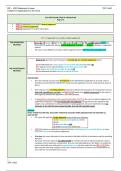
THE MANDATORY - RULE 13.2, the court is obliged to set aside a default judgment that was wrongly entered before the
GROUNDS DEFENDANTS deadline for filing an acknowledgement of service or a defence (whichever is applicable)
expired.
- The court is also obliged to set aside a default judgment entered after the claim was paid in full.
- RULE 13.1(1) gives the court the power to set aside OR vary a default judgement where:
(a) the Defendant has a real prospect of successfully defending the claim; OR
(b) it appears to the court that there is some other good reason why –
THE DISCRETIONARY (i) the judgement should be set aside, or vaired; OR
GROUNDS (ii) the defendant should be allowed to defend the claim.
PROMPTNESS:
- The court will take account of the promptness of the DEFENDANTS application to set aside, and it is
therefore essential that the DEFENDANT should issue the application as soon as they become aware of
the DJ.
- This is because, the overriding objective expressly recognises the importance of ensuring that cases are
dealt with expeditiously and fairly, and RULE 13.3(2) makes it an explicit requirement for the court to
have regard to whether the application was made promptly.
- In Tideland Ltd v Westminster City Council [2015] EWHC 2710 (TCC) the court set aside a judgment, the
application having been made two months after the judgment. During that time the defendant had
sought a stay and disclosure of documentation. In giving judgment, the court stated that it was not
necessary to act with the utmost speed possible, just with all reasonable speed.
DENTON:
WHAT OTHER FACTORS WILL THE COURT TAKE INTO ACCOUNT WHEN ADJUDICATING ON GROUNDS (a)
AND/OR 9B)?
- The Court will apply the 3-stage approach set out in the case of Denton.
(1) the seriousness and significance of the
default
(2) the reason for it; AND
(3) all the circumstances of the case
- CPR 13.3 requires an applicant to show that he has a real prospect of a successful defence or some
other good reason to set aside the judgement.
- If he does, the courts discretion is to be exercised in the light of all the circumstances and the overriding
objective.
The Court must have regard to ALL THE FACTORS it considers relevant of which promptness is both a
mandatory and an important consideration. Since the overriding objective of the Rules is to enable the
court to deal with cases justly and at proportionate cost, and since under the new CPR 1.1 (2) (f) the
latter includes enforcing compliance with rules, practice directions and orders, the considerations set
out in CPR 3.9 are to be taken into account.
1
TIFF LIAO
Chapter 10 Applications to the Court
10.5 PARTICULAR TYPES OF APPLICATION
Page 175
PART 13 Application to set aside a default judgement.
PART 24 Summary judgement.
PART 18 Application for further information.
PART 13 Application to set aside a default judgement
THE MANDATORY - RULE 13.2, the court is obliged to set aside a default judgment that was wrongly entered before the
GROUNDS DEFENDANTS deadline for filing an acknowledgement of service or a defence (whichever is applicable)
expired.
- The court is also obliged to set aside a default judgment entered after the claim was paid in full.
- RULE 13.1(1) gives the court the power to set aside OR vary a default judgement where:
(a) the Defendant has a real prospect of successfully defending the claim; OR
(b) it appears to the court that there is some other good reason why –
THE DISCRETIONARY (i) the judgement should be set aside, or vaired; OR
GROUNDS (ii) the defendant should be allowed to defend the claim.
PROMPTNESS:
- The court will take account of the promptness of the DEFENDANTS application to set aside, and it is
therefore essential that the DEFENDANT should issue the application as soon as they become aware of
the DJ.
- This is because, the overriding objective expressly recognises the importance of ensuring that cases are
dealt with expeditiously and fairly, and RULE 13.3(2) makes it an explicit requirement for the court to
have regard to whether the application was made promptly.
- In Tideland Ltd v Westminster City Council [2015] EWHC 2710 (TCC) the court set aside a judgment, the
application having been made two months after the judgment. During that time the defendant had
sought a stay and disclosure of documentation. In giving judgment, the court stated that it was not
necessary to act with the utmost speed possible, just with all reasonable speed.
DENTON:
WHAT OTHER FACTORS WILL THE COURT TAKE INTO ACCOUNT WHEN ADJUDICATING ON GROUNDS (a)
AND/OR 9B)?
- The Court will apply the 3-stage approach set out in the case of Denton.
(1) the seriousness and significance of the
default
(2) the reason for it; AND
(3) all the circumstances of the case
- CPR 13.3 requires an applicant to show that he has a real prospect of a successful defence or some
other good reason to set aside the judgement.
- If he does, the courts discretion is to be exercised in the light of all the circumstances and the overriding
objective.
The Court must have regard to ALL THE FACTORS it considers relevant of which promptness is both a
mandatory and an important consideration. Since the overriding objective of the Rules is to enable the
court to deal with cases justly and at proportionate cost, and since under the new CPR 1.1 (2) (f) the
latter includes enforcing compliance with rules, practice directions and orders, the considerations set
out in CPR 3.9 are to be taken into account.
1
TIFF LIAO