DR – WS2 Advising the Client TIFF LIAO
Chapter 3 – Early Action Page 3.8 and 3.8 Page 50
3.8 PRE-ACTION
CORRESPONDANCE
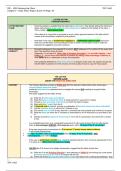
LETTER BEFORE - Once the solicitor is satisfied that the client has a valid claim, they should advise the client and
CLAIM obtain instructions to send a letter to the prospective D setting out full details of the claim. =
This is called a 'letter before claim'.
- If the claim is of a type that is governed by a pre- action approved protocol, the letter should
contain all the information required by the protocol.
- Note that in the case of professional negligence, a preliminary notice of claim should be
sent first, and the letter communicating the claim is known as the 'letter of claim' under the
professional negligence pre-action protocol.
PROFESSIONAL - Normally addressed to the potential D in person, BUT addresse to D’s solicitors if the aware that
CONDUCT the D has solicitors acting for them,
- Otherwise, it is a breach of SRA Code of Conduct (Principle 5 – to act with integrity – and
PARA 1.2 – not to abuse the solicitor’s position by taking unfair advantage of others) to
write DIRECTLY to a defendant in those circumstances.
- If the potential defendant is likely to be insured in respect of the claim, the solicitor should ask
that the letter is passed on to the insurers and will usually enclose a copy for that purpose.
THE LETTER
BEFORE CLAIM
UNDER THE PRACTICE DIRECTION
CONTENT - The Practice Direction provides at PARA 6(A) that the claimant’s letter before claim should give
concise details about the matter.
- enable the defendant to understand and investigate the issues W/O needing to request further
information.
- We would suggest that the letter should:
(a) State the C’s full name and address
(b) State the basis on which the claim is made (why the C says the D is liable)
(c) Provide a clear summary of the facts on which the claim is based
(d) State what the C wants from the D
(e) If financial cost is claimed, provide an explanation of how the amount has been calculated
(f) List the essential docs on which the C intends to rely
(g) Set out the form of ADR (if any) that the C considers the most suitable and invite the D to agree
(h) State the dates by which the C considers is reasonable for a full response to be provided by the
D
(i) Identify and ask for copies of relevant docs not in the C’s possession and which the C wishes
to see
- In a straightforward claim (e.g. undisputed business D) C will usually demand that the letter before
claim is acknowledged AND/OR a full response given within 14 days of the D’ receiving it
- If the case requires the involvement of a D’s insurer/ 3rd party/ issues about evidence
C will usually demand that:
the letter of before claim is acknowledged within 14 days of the D receiving it AND
a full response given within 30 days .
- if the case is particularly complex (e.g. requiring specialist advice), then it may be appropriate for the
C to allow up to 3M for the D to respond in FULL
- UNLESS the D is known to be legally represented, suggest that the letter should also:
(a) Refer the D to the Practice Direction + draw attention to PARA 16 concerning the courts power
to impose sanctions for failure to comply with the PD
(b) Inform the D that ignoring the letter before claim may lead to the C starting proceedings + may
1
TIFF LIAO
Chapter 3 – Early Action Page 3.8 and 3.8 Page 50
3.8 PRE-ACTION
CORRESPONDANCE
LETTER BEFORE - Once the solicitor is satisfied that the client has a valid claim, they should advise the client and
CLAIM obtain instructions to send a letter to the prospective D setting out full details of the claim. =
This is called a 'letter before claim'.
- If the claim is of a type that is governed by a pre- action approved protocol, the letter should
contain all the information required by the protocol.
- Note that in the case of professional negligence, a preliminary notice of claim should be
sent first, and the letter communicating the claim is known as the 'letter of claim' under the
professional negligence pre-action protocol.
PROFESSIONAL - Normally addressed to the potential D in person, BUT addresse to D’s solicitors if the aware that
CONDUCT the D has solicitors acting for them,
- Otherwise, it is a breach of SRA Code of Conduct (Principle 5 – to act with integrity – and
PARA 1.2 – not to abuse the solicitor’s position by taking unfair advantage of others) to
write DIRECTLY to a defendant in those circumstances.
- If the potential defendant is likely to be insured in respect of the claim, the solicitor should ask
that the letter is passed on to the insurers and will usually enclose a copy for that purpose.
THE LETTER
BEFORE CLAIM
UNDER THE PRACTICE DIRECTION
CONTENT - The Practice Direction provides at PARA 6(A) that the claimant’s letter before claim should give
concise details about the matter.
- enable the defendant to understand and investigate the issues W/O needing to request further
information.
- We would suggest that the letter should:
(a) State the C’s full name and address
(b) State the basis on which the claim is made (why the C says the D is liable)
(c) Provide a clear summary of the facts on which the claim is based
(d) State what the C wants from the D
(e) If financial cost is claimed, provide an explanation of how the amount has been calculated
(f) List the essential docs on which the C intends to rely
(g) Set out the form of ADR (if any) that the C considers the most suitable and invite the D to agree
(h) State the dates by which the C considers is reasonable for a full response to be provided by the
D
(i) Identify and ask for copies of relevant docs not in the C’s possession and which the C wishes
to see
- In a straightforward claim (e.g. undisputed business D) C will usually demand that the letter before
claim is acknowledged AND/OR a full response given within 14 days of the D’ receiving it
- If the case requires the involvement of a D’s insurer/ 3rd party/ issues about evidence
C will usually demand that:
the letter of before claim is acknowledged within 14 days of the D receiving it AND
a full response given within 30 days .
- if the case is particularly complex (e.g. requiring specialist advice), then it may be appropriate for the
C to allow up to 3M for the D to respond in FULL
- UNLESS the D is known to be legally represented, suggest that the letter should also:
(a) Refer the D to the Practice Direction + draw attention to PARA 16 concerning the courts power
to impose sanctions for failure to comply with the PD
(b) Inform the D that ignoring the letter before claim may lead to the C starting proceedings + may
1
TIFF LIAO