RD EXAM PREP QUESTIONS AND ANSWERS 100% CORRECT
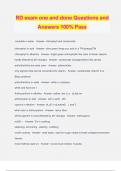
RD EXAM PREP QUESTIONS AND ANSWERS 100% CORRECT Chemotherapy that included antimetabolites, like methotrexate, can reduce availability of: - Answer- Folic Acid A client with blood clotting disorder started an anticoagulant. The RD would be concerned if the client reports using which of the following herbs? A. St. John's Wort B. Echinacea C. Garlic D. Chromium Picolinate - Answer- Garlic A 79 year old female resides in an extended care facility. Given the following information, calculate her fluid needs. Ht: 66" wt: 146#, small frame size. A. 1900 ml/day B. 2000 ml/day C. 2400 ml/day D. 3000 ml/day - Answer- B. 2000 Which of the following is classified as a nonessential amino acid, which may be essential for the metabolically stressed patient? A. Tyrosine B. Arginine C. Leucine D. Lysine - Answer- B.Arginine (only nonessential A.A. are Tyrosine and arginine) A severely malnourished patient receives TPN at a rate of 125 cc/hr. What could result? A. Hyperphosphatemia B. Hypermagnesemia C. Hypophosphatemia D. Hyponatremia - Answer- C. Hypophosphatemia The management of a burn pt includes the following nonprotein kilocalorie: nitrogen ratio. A. 300:1 B. 250:1 C. 200:1 D. 150:1 - Answer- D. A patient has been admitted to the hospital following a CVA, and the RD is informed that a swallowing evaluation indicates that the patient has dysphagia. The RD's first step should be: A. interview the patient's family to find out if there were any swallowing difficulties or eating problems prior to admission B. recommend a level 1 Pureed Dysphagia diet to be advanced as tolerated C. review the results and recommendations of the swallowing evaluation to determine the degree of dysphagia present D. inform the food service staff that the patient will need thickened liquids - Answer- C. review the results and recommendations of the swallowing evaluation to determine the degree of dysphagia present A patient has been on an enteral feeding for 5 days without complications, and then develops diarrhea. What would be the most likely cause? A. concentration of the tube feeding B. rate of the tube feeding C. amount of free water flush D. new medication - Answer- D. Metabolic alterations of Systemic Inflammatory Response Syndrome (SIRS) or sepsis include all of the following except: A. hypermetabolism B. hypoglycemia C. accelerated lipolysis D. protein catabolism - Answer- B. hypoglycemia A nutrition care plan recommendation of 30-35 kcal/kg and 1.0-1.2 g protein/kg per day would be appropriate for which type of liver disease? A. hepatitis B. fatty liver C. encephalopathy D. liver failure - Answer- A. hepatitis A patient is admitted to the ICU with: cachexia, ascites, nausea, vomiting, normal mental status, serum albumin of 2.5 g/dl, and elevated liver function tests. The MNT recommendations would include: A. high protein, low kcal, 4 gram Na B. fluid restriction, 2 gram Na, moderate protein C. fluid restriction, low protein, 2 gram Na D. high protein, high sodium, push fluids - Answer- B. fluid restriction, 2 gram Na, moderate protein A patient with Type I diabetes presents to the ER with dehydration and Kussmaul respirations. Urinalysis reveals ketonuria, lab results show a blood glucose of 525 and pCO2 of 59. This patient is experiencing: A. respiratory acidosis B. respiratory alkalosis C. metabolic acidosis D. metabolic alkalosis - Answer- C. metabolic acidosis When pCO2 is 28, bicarbonate is 32, and pH is >7.45, how do the kidneys compensate to assure acid-base balance?
Written for
- Institution
- CDR RD
- Course
- CDR RD
Document information
- Uploaded on
- March 16, 2024
- Number of pages
- 43
- Written in
- 2023/2024
- Type
- Exam (elaborations)
- Contains
- Questions & answers
Subjects
-
rd exam prep questions and answers 100 correct

Document also available in package deal