Biology Of The Mind
Biological Perspective - To understand behaviour we have to understand the brain and examine the
nervous system.
Parts of the brain:
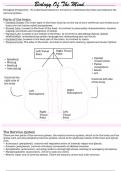
• Cerebral Cortex: The outer layer of the brain that lies on the top of your cerebrum and divides your
brain into two halves called hemispheres.
• Frontal Lobe: Located in the front of the head. Is involved in personality characteristics, decision
making, movement and recognition of smells.
• Parietal Lobe: Located in the middle of the Brain. Is involved in identifying objects, spatial
relationships, understanding spoken language and interpreting pain and touch.
• Occipital Lobe: Located in the back part of the brain. Is involved in vision.
• Temporal Lobe: The sides of the brain. Involved in short term memory, speech and music rhythm.
Left Visual Right Visual
Field Field
• Spatial
• Speaking
construction
• Writing
• Facial
• Reading
recognition
• Calculating
• Music
• art
Controls the
Controls left side
right side of
of the body
the body
Left Right
Hemisphere Hemisphere
Right Left
Visual Visual
Field Field
The Nervous system
There are two parts of the nervous system, the central nervous system, which is for the brain and the
spinal cord, and the peripheral nervous system, which is for anything outside of the brain and spinal
cord.
• Autonomic (peripheral): controls self regulated action of internal organs and glands.
• Somatic (peripheral): controls voluntary movements of skeletal muscles.
• Sympathetic (autonomic): arousing, kicks in during high stress, exciting or emergency situations.
• Parasympathetic (autonomic): Job is to calm you down.
• Neuron: basic unit of nervous system. There are sensory, motor and inter neurons.
Biological Perspective - To understand behaviour we have to understand the brain and examine the
nervous system.
Parts of the brain:
• Cerebral Cortex: The outer layer of the brain that lies on the top of your cerebrum and divides your
brain into two halves called hemispheres.
• Frontal Lobe: Located in the front of the head. Is involved in personality characteristics, decision
making, movement and recognition of smells.
• Parietal Lobe: Located in the middle of the Brain. Is involved in identifying objects, spatial
relationships, understanding spoken language and interpreting pain and touch.
• Occipital Lobe: Located in the back part of the brain. Is involved in vision.
• Temporal Lobe: The sides of the brain. Involved in short term memory, speech and music rhythm.
Left Visual Right Visual
Field Field
• Spatial
• Speaking
construction
• Writing
• Facial
• Reading
recognition
• Calculating
• Music
• art
Controls the
Controls left side
right side of
of the body
the body
Left Right
Hemisphere Hemisphere
Right Left
Visual Visual
Field Field
The Nervous system
There are two parts of the nervous system, the central nervous system, which is for the brain and the
spinal cord, and the peripheral nervous system, which is for anything outside of the brain and spinal
cord.
• Autonomic (peripheral): controls self regulated action of internal organs and glands.
• Somatic (peripheral): controls voluntary movements of skeletal muscles.
• Sympathetic (autonomic): arousing, kicks in during high stress, exciting or emergency situations.
• Parasympathetic (autonomic): Job is to calm you down.
• Neuron: basic unit of nervous system. There are sensory, motor and inter neurons.