Practice Questions for SLK 220 Exam
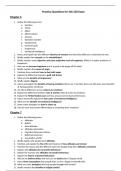
Chapter 6
1. Define the following terms:
a. Emotion
b. Mood
c. Affect
d. Affect balance
e. Arousal
f. Excitation transfer
g. Emodiversity
h. Survivors guilt
i. Forgiveness
j. Emotional Intelligence
2. Name and explain the two different theories of emotion and what the difference is between the two.
3. Briefly explain how arousal can be misattributed.
4. Briefly mention some objective and some subjective roots of happiness. Which is a better predictor of
happiness?
5. How can we increase happiness and is it good to be happy all the time?
6. Briefly mention the causes of anger.
7. Mention three methods how to deal with anger.
8. Explain the differences between guilt and shame.
9. What are the benefits of forgiveness?
10. Briefly explain disgust.
11. Name and explain the benefits of having emotions (there are 7 and then there are still some more benefits
of having positive emotions).
12. Are there differences across cultures in emotions?
13. Explain the difference between men & women when it comes to emotions.
14. Explain the Yerkes-Dodson Law and how arousal can increase performance.
15. Name and briefly explain the four parts of emotional intelligence.
16. What are the benefits of emotional intelligence?
17. Name some strategies on how to cheer up.
18. How do men and women differentiate in controlling their emotions?
Chapter 7
1. Define the following terms:
a. Attitudes
b. Beliefs
c. Dual attitudes
d. Attitude polarisation
e. Cognitive dissonance theory
f. Belief perseverance
g. Assumptive worlds
2. Briefly explain why people have attitudes.
3. Mention and explain the five different theories of how attitudes are formed.
4. Mention the reason and the different ways how people keep their attitudes consistent.
5. Explain why attitudes do not predict behaviour?
6. Explain the reasons why attitudes can predict behaviour.
7. Explain the theory of planned behaviour.
8. Why do we believe others and how can we doubt them? (Duplex mind)
9. Name three assumptions that people have, to live a happy and healthy life.
10. What are some strategies that help people to cope with trauma?
11. Briefly mention the benefits of religious belief.
Chapter 6
1. Define the following terms:
a. Emotion
b. Mood
c. Affect
d. Affect balance
e. Arousal
f. Excitation transfer
g. Emodiversity
h. Survivors guilt
i. Forgiveness
j. Emotional Intelligence
2. Name and explain the two different theories of emotion and what the difference is between the two.
3. Briefly explain how arousal can be misattributed.
4. Briefly mention some objective and some subjective roots of happiness. Which is a better predictor of
happiness?
5. How can we increase happiness and is it good to be happy all the time?
6. Briefly mention the causes of anger.
7. Mention three methods how to deal with anger.
8. Explain the differences between guilt and shame.
9. What are the benefits of forgiveness?
10. Briefly explain disgust.
11. Name and explain the benefits of having emotions (there are 7 and then there are still some more benefits
of having positive emotions).
12. Are there differences across cultures in emotions?
13. Explain the difference between men & women when it comes to emotions.
14. Explain the Yerkes-Dodson Law and how arousal can increase performance.
15. Name and briefly explain the four parts of emotional intelligence.
16. What are the benefits of emotional intelligence?
17. Name some strategies on how to cheer up.
18. How do men and women differentiate in controlling their emotions?
Chapter 7
1. Define the following terms:
a. Attitudes
b. Beliefs
c. Dual attitudes
d. Attitude polarisation
e. Cognitive dissonance theory
f. Belief perseverance
g. Assumptive worlds
2. Briefly explain why people have attitudes.
3. Mention and explain the five different theories of how attitudes are formed.
4. Mention the reason and the different ways how people keep their attitudes consistent.
5. Explain why attitudes do not predict behaviour?
6. Explain the reasons why attitudes can predict behaviour.
7. Explain the theory of planned behaviour.
8. Why do we believe others and how can we doubt them? (Duplex mind)
9. Name three assumptions that people have, to live a happy and healthy life.
10. What are some strategies that help people to cope with trauma?
11. Briefly mention the benefits of religious belief.