

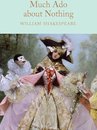
Title: Much Ado About Nothing: A Timeless Comedy
Introduction:
Shakespeare's play "Much Ado About Nothing" is a captivating comedy that
explores themes of love, deception, and the power of gossip. Set in Messina,
Italy, during the Renaissance, the play serves as a mirror to contemporary
societal norms while also providing a profound commentary on human nature.
This essay delves into the historical context of the play, its key figures, its
impact on literature and theatre, influential individuals in the field, and offers a
comprehensive analysis of the various perspectives and developments related
to "Much Ado About Nothing."
Part 1: Historical Context and Key Figures
The historical context in which "Much Ado About Nothing" was written and
performed provides important insights into its themes and characters. Written
around 1598, during the reign of Queen Elizabeth I in England, the play
reflects the cultural and social milieu of that period. The Elizabethan era saw a
flourishing of arts, literature, exploration, and political intrigue, all of which
influenced the play.
One of the key figures in "Much Ado About Nothing" is Don Pedro, the Prince
of Aragon. His military and political prowess contribute to the play's intrigue
and central conflict. Another central character is Beatrice, a quick-witted and
sharp-tongued woman who challenges societal norms of subservience.
Beatrice's foil, Benedick, embodies the laughable male ego, providing comic
relief through his reluctance to fall in love.
Part 2: The Impact of "Much Ado About Nothing"
"Much Ado About Nothing" has left an indelible mark on literature and
theatres. The play's exploration of themes like deceit, gender dynamics, and
the power of words continues to resonate with audiences to this day. Its witty
dialogue, plot twists, and intricate characters have made it a staple in the
theatrical canon.
Influential individuals who have contributed to the field of "Much Ado About
Nothing" include renowned actors and directors who have breathed life into
the play's characters on stage and screen. Notable film adaptations, such as
Kenneth Branagh's 1993 version and Joss Whedon's 2012 contemporary
interpretation, have introduced new generations to the play's timeless
brilliance and further solidified its significance.
Part 3: Perspectives and Analysis
"Much Ado About Nothing" enjoys a range of perspectives, both positive and
Introduction:
Shakespeare's play "Much Ado About Nothing" is a captivating comedy that
explores themes of love, deception, and the power of gossip. Set in Messina,
Italy, during the Renaissance, the play serves as a mirror to contemporary
societal norms while also providing a profound commentary on human nature.
This essay delves into the historical context of the play, its key figures, its
impact on literature and theatre, influential individuals in the field, and offers a
comprehensive analysis of the various perspectives and developments related
to "Much Ado About Nothing."
Part 1: Historical Context and Key Figures
The historical context in which "Much Ado About Nothing" was written and
performed provides important insights into its themes and characters. Written
around 1598, during the reign of Queen Elizabeth I in England, the play
reflects the cultural and social milieu of that period. The Elizabethan era saw a
flourishing of arts, literature, exploration, and political intrigue, all of which
influenced the play.
One of the key figures in "Much Ado About Nothing" is Don Pedro, the Prince
of Aragon. His military and political prowess contribute to the play's intrigue
and central conflict. Another central character is Beatrice, a quick-witted and
sharp-tongued woman who challenges societal norms of subservience.
Beatrice's foil, Benedick, embodies the laughable male ego, providing comic
relief through his reluctance to fall in love.
Part 2: The Impact of "Much Ado About Nothing"
"Much Ado About Nothing" has left an indelible mark on literature and
theatres. The play's exploration of themes like deceit, gender dynamics, and
the power of words continues to resonate with audiences to this day. Its witty
dialogue, plot twists, and intricate characters have made it a staple in the
theatrical canon.
Influential individuals who have contributed to the field of "Much Ado About
Nothing" include renowned actors and directors who have breathed life into
the play's characters on stage and screen. Notable film adaptations, such as
Kenneth Branagh's 1993 version and Joss Whedon's 2012 contemporary
interpretation, have introduced new generations to the play's timeless
brilliance and further solidified its significance.
Part 3: Perspectives and Analysis
"Much Ado About Nothing" enjoys a range of perspectives, both positive and

