CLC Exam 1 Questions & Complete Answers(SCORED A)
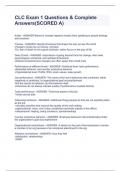
Kotter - ANSWER Behavior change happens mostly when speaking to people feelings and emotions Frames - ANSWER -Mental structures that shape the way we see the world -People's minds rely on frames, not facts -Ex: fear of death is not a good motivator, rather focus on the joys of life Dean Ornish - ANSWER -Importance of going beyond facts for change. Also need psychological, emotional, and spiritual dimensions. -Radical comprehensive changes are often easier than small ones Performance at different levels - ANSWER -Individual level: task performance, citizenship behavior, and counter productive behavior -Organizational level: Profits, ROA, stock values, sales growth Job performance - ANSWER -The value of the set of behaviors that contribute, either negatively or positively, to organizational goal accomplishment -Not the results of behavior, but the behavior itself -Outcomes do not always indicate quality of performance (outside factors) Task performance - ANSWER -Technical aspect of the job -Varies across jobs Citizenship behavior - ANSWER -Additional things people do that are not explicitly listed as the job -voluntary activities that improve the quality of the work setting -organizational: voice, civic virtue, boosterism (promote outside of the office) -Interpersonal: helping, being courteous, sportsmanshipp Counter productive behavior - ANSWER -Employee behaviors that intentionally hinder the organization's goal accomplishment Organizational commitment - ANSWER -A desire on the part of the employee to remain a member of an org because of an emotional attachment to the org Affective commitment - ANSWER -How they feel -satisfaction, relationships -WANT Continuance commitment - ANSWER -A desire to remain a member of an organization because of an awareness of the costs associated with leaving -job location, hours, benefits, money, may feel stressed or uncertain -NEED Normative commitment - ANSWER -A desire to remain a member because of feeling of obligation -Feel like you should stay, just got a promotion, guilt -OUGHT Withdraw - ANSWER -A set of actions that employees perform to avoid a work situation -Opposite of commitment -Tends to be a progression, notice the signs (psychological precedes physical) Resource based view of the firm - ANSWER -Rare, inimitable, non-substitutable resources that give a company competitive advantage -It's hard to copy good leaders Leadership from the past - ANSWER -There was no systematic scholarly scientific research -Focus on world class leaders that all share the same outstanding characteristics -Ex: Kings, queens, rulers, dictators Leadership from the present - ANSWER -Marked by the start of systematic scholarly scientific leadership research -focus within the group and to multiple leader follower dyadic relationships in each group -Levels: Persons, dyads, groups/teams, and collectives -All leaders are born and made Leadership - ANSWER A multi-level leader follower interaction process that occurs in a particular situation where a leader and followers share a purpose and jointly accomplish things willingly Antecedents - ANSWER -Precursors of leadership -Individual level: affective processes (rapid formation of general liking or disliking of leaders/followers). Cognitive processes (how we think). Personality (big 5) -Dyad level: mutual interaction and exchange -team/group level: climate and norms Performance - ANSWER -The most crucial dependent outcome or variable in leadership research Lea
Written for
- Institution
- CLC
- Course
- CLC
Document information
- Uploaded on
- January 4, 2024
- Number of pages
- 10
- Written in
- 2023/2024
- Type
- Exam (elaborations)
- Contains
- Questions & answers
Subjects
-
clc exam 1 stuvia
-
clc exam 1 questions complete answersscored a
-
kotter answer behavior change happens mostly whe
-
frames answer mental structures that shape the

Document also available in package deal