Act 3 Scene 1
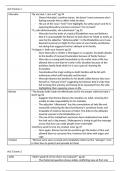
Mercutio “By my heel, I care not!” pg 34
- Shows Mercutio’s carefree nature. He doesn’t want someone else’s
feeling towards him to affect what he does.
- His use of the noun “heel” here highlights his witty nature and he is
opposing Benvolio’s previous comment “by my head”
“O, calm dishonourable, vile submission!” pg 35
- Mercutio has the traits of a typical Elizabethan man and believes
that it is unacceptable for Romeo to back down to Tybalt so easily, as
seen by the adjective “dishonourable”. In the Elizabethan era it was
deemed necessary to fight for the name of your family and Romeo
not doing that suggests that he’s disloyal to his family
“A plague o’ both your houses! pg 36
- Since Mercutio is neither a Montague or a Capulet, his death alludes
to the deaths of innocent bystanders because of family honour
- Mercutio is cursing both households as his realist view of life has
allowed him to see that he’s only in this situation because of the
pointless family feud which he is not a part of, showing his
frustration
- Foreshadows the tragic ending as both families will be hit with
misfortune which will ironically end the feud
- Mercutio blames the families for his death unlike Romeo who sees
himself as “fortune’s fool” suggesting he believes that it’s fate that
led to being him unlucky and having to be separated from his wife,
highlighting their opposing views on life
Romeo “Thy beauty hath made me effeminate and in my temper softened valor’s
steel! pg 36
- Suggests that Romeo blames the situation on Juliet, showing he’s
unable to take responsibility for his mistakes
- The adjective “effeminate” has the connotations of lady like and
womanish enforcing the idea that Romeo is somehow lesser and
incapable of violence because of Juliet. This links to the attitudes
towards woman in the Elizabethan era. *
- The use of the metaphoric oxymoron here emphasizes how Juliet
has had such a big impact. Shakespeare is trying to get the message
across that love can make people more vulnerable
“And fiery-eyed fury be my conduct now! pg 37
- Once again, Romeo has let his emotions get the better of him and
allowed them to consume him, however this time with anger and
rage
Context *Women were seen as weak and completely reliant on the “stronger” men
in their lives to protect and provide for them
Act 3 Scene 2
Juliet “Shall I speak ill of him that’s my husband?” pg 40
- The rhetorical question shows Juliets conflicting view at first: she
Mercutio “By my heel, I care not!” pg 34
- Shows Mercutio’s carefree nature. He doesn’t want someone else’s
feeling towards him to affect what he does.
- His use of the noun “heel” here highlights his witty nature and he is
opposing Benvolio’s previous comment “by my head”
“O, calm dishonourable, vile submission!” pg 35
- Mercutio has the traits of a typical Elizabethan man and believes
that it is unacceptable for Romeo to back down to Tybalt so easily, as
seen by the adjective “dishonourable”. In the Elizabethan era it was
deemed necessary to fight for the name of your family and Romeo
not doing that suggests that he’s disloyal to his family
“A plague o’ both your houses! pg 36
- Since Mercutio is neither a Montague or a Capulet, his death alludes
to the deaths of innocent bystanders because of family honour
- Mercutio is cursing both households as his realist view of life has
allowed him to see that he’s only in this situation because of the
pointless family feud which he is not a part of, showing his
frustration
- Foreshadows the tragic ending as both families will be hit with
misfortune which will ironically end the feud
- Mercutio blames the families for his death unlike Romeo who sees
himself as “fortune’s fool” suggesting he believes that it’s fate that
led to being him unlucky and having to be separated from his wife,
highlighting their opposing views on life
Romeo “Thy beauty hath made me effeminate and in my temper softened valor’s
steel! pg 36
- Suggests that Romeo blames the situation on Juliet, showing he’s
unable to take responsibility for his mistakes
- The adjective “effeminate” has the connotations of lady like and
womanish enforcing the idea that Romeo is somehow lesser and
incapable of violence because of Juliet. This links to the attitudes
towards woman in the Elizabethan era. *
- The use of the metaphoric oxymoron here emphasizes how Juliet
has had such a big impact. Shakespeare is trying to get the message
across that love can make people more vulnerable
“And fiery-eyed fury be my conduct now! pg 37
- Once again, Romeo has let his emotions get the better of him and
allowed them to consume him, however this time with anger and
rage
Context *Women were seen as weak and completely reliant on the “stronger” men
in their lives to protect and provide for them
Act 3 Scene 2
Juliet “Shall I speak ill of him that’s my husband?” pg 40
- The rhetorical question shows Juliets conflicting view at first: she