Phys.theory: PD: intro+ assessment of gait & balance
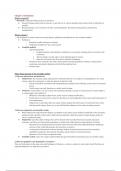
INTRODUCTION
Parkinson’s disease ≠ Parkinsonism
- Parkinsonism= umbrella term
Symptomen gerelateerd aa PD
Niet ziekte zelf
Ook atypical symptoms/ aand.
PSP means?
- Progressive supranuclear palsy
- Parkinson plus syndrome
MSA means?
- Multiple system atrofie
- Parkinson plus syndrome
Camptocormia means?
- Kunnen niet rechtzitten tegen Fz
- ≠stooped position
- flexed stooped posture, bend over position of the trunk
-> postural deficit that effects functioning
Pisa syndrome means?
- ZW inclinatie
- lean to one side, type of camptocormia
MMSE means?
- Mini mental state examination
- Cogn screening test
<24 = kan op dementie aanwezigheid
Largest barriers for rehab in PD?
- Motor learning deficits
- Motor symptoms
- no automaticity
PD-SAFE: FALL PREVENTION PROGRAM
multiple center randomized controlled trail of PDSAFE, a physiotherapist delivered fall prevention programme for
people with parkinson’s (Seymour et al)
- hierop gebasseerd
Concentrate on understanding the general framework for clinical reasoning in PD, i.e for problem analysis and
designing progressive exercise → for the trainable components that are contributing to the problems identified.
Not only relevant for fall prevention but also for other problems in PD. PROGRESSION!
There is the document Draaiboek or Course contents which gives instructions on how to negotiate through the
course. -> guideline to go through the PD-safe document
How
- STEP 1. Assessment (i.e. balance, cognition, strength, …)
- STEP 2. Identify most likely strategy to address the cause of falling episodes (e.g. tripping or freezing)
- STEP 3. Identify the modifiable risk factors (e.g. reduced muscle strength)
- STEP 4. Set up training strategy
Exercises to improve risk factors
Select corresponding category
Implement progression and variation
1. Why PDSAFE included in this course?
PD= fallin disease
Early stage PD
- Op moment diagnose krijgen gaan al veel gevallen zijn
- Axial disease
Primaire outcomes (tabel1) Baseline
- Val=4.5 en na 6-12M=2.7
- Controle heeft ook ↓
- Geen sign verschil (p=08824)
Nala Melis Pagina 1
, Phys.theory: PD: intro+ assessment of gait & balance
Near fall rates wel sign ≠ (o=0.001)
- Kunnen zich nog tegenhouden aan object
A unidimensional model, which only targets an individual risk factor for falls à Not effective
A multidemensional and individually tailored training model for improving body function and structure in a task-
specific manner that is aimed at multiple modifyable risk factors for falls is necessary
This training should be done in a variety of contexts
- Variatie in training
Transfer naar ADL
Model is applicable for other symptoms also
2. Target population
fig forest plotwie meer vallen
- cogn. Impairment (MOCA)
- freezing of gait
- UPDRS
Nala Melis Pagina 2
, Phys.theory: PD: intro+ assessment of gait & balance
3. Key ingredients of PDSAFE
3.1. Warm-up
Hand-outs
Daily exercises, building self-confidence à 5-6 minutes
6 exercises:
- Marching,
- Turning of the trunk,
- Sidebending trunk,
- ankle mobilisation,
- dynamic hamstrings stretches,
- elongation/stretching of the trunk
Sitting or in stance
- Zitten= bij zeer slechte balans
Dynamic (patients should learn to correct themselves)
3.2. Balance exercises
hand-outs
4 static balance exercises to choose from
6 dynamic walking exercises
Make sure that the level is adapted to the patients abilities.
- 6/7 levels beschikbaar
Repetition & progression/regression!
3.3. Strengthening exercises
hand-outs
4 exercises à Select most appropriate level
5-10 repetitions, 3 sets
Make sure the quality of movement is preserved
Weighted vest to use in advanced levels
3.4. Task oriented movement and strategy training
Adapt to patient
Is oriented at the activity and participation level of ICF.
Make the exercises task oriented:
- making cup of tea;
- putting on pants, socks, shoes
- getting in and out of the car with groceries
- lying on the floor, crawling around, and getting back up
eens gevallen moeten wij ze leren terug recht te geraken
Nala Melis Pagina 3
INTRODUCTION
Parkinson’s disease ≠ Parkinsonism
- Parkinsonism= umbrella term
Symptomen gerelateerd aa PD
Niet ziekte zelf
Ook atypical symptoms/ aand.
PSP means?
- Progressive supranuclear palsy
- Parkinson plus syndrome
MSA means?
- Multiple system atrofie
- Parkinson plus syndrome
Camptocormia means?
- Kunnen niet rechtzitten tegen Fz
- ≠stooped position
- flexed stooped posture, bend over position of the trunk
-> postural deficit that effects functioning
Pisa syndrome means?
- ZW inclinatie
- lean to one side, type of camptocormia
MMSE means?
- Mini mental state examination
- Cogn screening test
<24 = kan op dementie aanwezigheid
Largest barriers for rehab in PD?
- Motor learning deficits
- Motor symptoms
- no automaticity
PD-SAFE: FALL PREVENTION PROGRAM
multiple center randomized controlled trail of PDSAFE, a physiotherapist delivered fall prevention programme for
people with parkinson’s (Seymour et al)
- hierop gebasseerd
Concentrate on understanding the general framework for clinical reasoning in PD, i.e for problem analysis and
designing progressive exercise → for the trainable components that are contributing to the problems identified.
Not only relevant for fall prevention but also for other problems in PD. PROGRESSION!
There is the document Draaiboek or Course contents which gives instructions on how to negotiate through the
course. -> guideline to go through the PD-safe document
How
- STEP 1. Assessment (i.e. balance, cognition, strength, …)
- STEP 2. Identify most likely strategy to address the cause of falling episodes (e.g. tripping or freezing)
- STEP 3. Identify the modifiable risk factors (e.g. reduced muscle strength)
- STEP 4. Set up training strategy
Exercises to improve risk factors
Select corresponding category
Implement progression and variation
1. Why PDSAFE included in this course?
PD= fallin disease
Early stage PD
- Op moment diagnose krijgen gaan al veel gevallen zijn
- Axial disease
Primaire outcomes (tabel1) Baseline
- Val=4.5 en na 6-12M=2.7
- Controle heeft ook ↓
- Geen sign verschil (p=08824)
Nala Melis Pagina 1
, Phys.theory: PD: intro+ assessment of gait & balance
Near fall rates wel sign ≠ (o=0.001)
- Kunnen zich nog tegenhouden aan object
A unidimensional model, which only targets an individual risk factor for falls à Not effective
A multidemensional and individually tailored training model for improving body function and structure in a task-
specific manner that is aimed at multiple modifyable risk factors for falls is necessary
This training should be done in a variety of contexts
- Variatie in training
Transfer naar ADL
Model is applicable for other symptoms also
2. Target population
fig forest plotwie meer vallen
- cogn. Impairment (MOCA)
- freezing of gait
- UPDRS
Nala Melis Pagina 2
, Phys.theory: PD: intro+ assessment of gait & balance
3. Key ingredients of PDSAFE
3.1. Warm-up
Hand-outs
Daily exercises, building self-confidence à 5-6 minutes
6 exercises:
- Marching,
- Turning of the trunk,
- Sidebending trunk,
- ankle mobilisation,
- dynamic hamstrings stretches,
- elongation/stretching of the trunk
Sitting or in stance
- Zitten= bij zeer slechte balans
Dynamic (patients should learn to correct themselves)
3.2. Balance exercises
hand-outs
4 static balance exercises to choose from
6 dynamic walking exercises
Make sure that the level is adapted to the patients abilities.
- 6/7 levels beschikbaar
Repetition & progression/regression!
3.3. Strengthening exercises
hand-outs
4 exercises à Select most appropriate level
5-10 repetitions, 3 sets
Make sure the quality of movement is preserved
Weighted vest to use in advanced levels
3.4. Task oriented movement and strategy training
Adapt to patient
Is oriented at the activity and participation level of ICF.
Make the exercises task oriented:
- making cup of tea;
- putting on pants, socks, shoes
- getting in and out of the car with groceries
- lying on the floor, crawling around, and getting back up
eens gevallen moeten wij ze leren terug recht te geraken
Nala Melis Pagina 3