CRISIS COMMUNICATION – THEME SESSION 1
NDLELA, M.N. (2019). INTRODUCTION. CRISIS COMMUNICATION: A STAKEHOLDER
APPROACH. PALGRAVE, LONDON.
The main argument advanced in this chapter is that organizations should be guided by a
stakeholder-oriented culture that values the involve- ment of stakeholders in most of the
activities throughout the crisis management cycle.
Charles F. Hermann (1963) identifies three characteristics separating crises from other
unpleasant situations:
1. Threat—threatens the high-priority values of an organization
2. Surprise—is unexpected or unanticipated
3. Short response time—presents a restricted time in which to respond
Expounding on these characteristics, Lerbinger (1997) identifies three characteristics of
crisis:
1. Suddenness
2. Uncertainty
3. Time compression
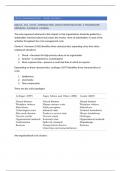
There are also crisis typologies:
And organizational crisis clusters:
,The crisis management process is often divided into three phases:
1. Pre-crisis
2. Crisis response
3. Post-crisis
Jaques’ model presents four major phases in crisis management, with each building around a
cluster of activities:
1. Crisis preparedness
2. Crisis prevention
3. Crisis incident management
4. Post-crisis management
, This chapter has argued that organi- zations should be guided by a stakeholder-oriented
culture that values the involvement of stakeholders in most of the activities throughout the
crisis management cycle.
NDLELA, M.N. (2019). STAKEHOLDER APPROACHES IN CRISIS MANAGEMENT. CRISIS
COMMUNICATION:A STAKEHOLDER APPROACH. PALGRAVE, LONDON.
Crises are complex processes that directly or indirectly affect organizations and their stakeholders. Crisis
management involves a set of processes, pro- cedures and techniques aimed at preventing and alleviating the
impact of the situation, along with containment and resolution of the crisis. The aim
of crisis management is to find the best ways in which to avoid crisis, be well prepared for any eventualities and
cope with the crisis. There are many approaches to the practice of crisis management. However, most of these
approaches are organization-centric, concerned mostly with how best an organization can prepare for, respond
to and contain crisis. These organization-centric approaches negate the view that when organizations are
affected by a crisis, so too are their stakeholders. This chapter seeks to show how having a stakeholder
approach can optimize crisis management. Success in crisis management depends largely on how timely and
appropri- ately an organization communicates with its stakeholders during the dif- ferent phases of the crisis
management cycle. How can organizations work systematically with stakeholders before, during and after a
crisis? What methods or tools can be used in identifying, mapping, analysing, engag- ing, interacting with and
managing stakeholder groups in different con- texts? I argue in this chapter that adopting a stakeholder
approach and understanding stakeholder constellations and characteristics would undoubtedly boost an
organization’s communication efforts throughout the crisis management cycle.
In most literature, stakeholder mapping involves four steps: identifying, analysing, planning and engagement.
Polonsky (1996), for example, advances a step-by-step plan to identify stakeholders and their interests:
1. Identifying stakeholders
2. Identifying the interests of each stakeholder group
3. Assessing the extent to which the company meets the expectations of each stakeholder group
4. Adjusting the corporate strategy accordingly (Polonsky, 1996).
Incorporating a communication dimension, Rawlins (2006) also pro- poses a model that prioritizes stakeholders
through a four-step process.
1. Identifying stakeholders
2. Prioritizing stakeholders according to attributes
3. Prioritizing stakeholders by relationship to the situation
4. Prioritizing publics by communication strategy
Identifying stakeholders:
NDLELA, M.N. (2019). INTRODUCTION. CRISIS COMMUNICATION: A STAKEHOLDER
APPROACH. PALGRAVE, LONDON.
The main argument advanced in this chapter is that organizations should be guided by a
stakeholder-oriented culture that values the involve- ment of stakeholders in most of the
activities throughout the crisis management cycle.
Charles F. Hermann (1963) identifies three characteristics separating crises from other
unpleasant situations:
1. Threat—threatens the high-priority values of an organization
2. Surprise—is unexpected or unanticipated
3. Short response time—presents a restricted time in which to respond
Expounding on these characteristics, Lerbinger (1997) identifies three characteristics of
crisis:
1. Suddenness
2. Uncertainty
3. Time compression
There are also crisis typologies:
And organizational crisis clusters:
,The crisis management process is often divided into three phases:
1. Pre-crisis
2. Crisis response
3. Post-crisis
Jaques’ model presents four major phases in crisis management, with each building around a
cluster of activities:
1. Crisis preparedness
2. Crisis prevention
3. Crisis incident management
4. Post-crisis management
, This chapter has argued that organi- zations should be guided by a stakeholder-oriented
culture that values the involvement of stakeholders in most of the activities throughout the
crisis management cycle.
NDLELA, M.N. (2019). STAKEHOLDER APPROACHES IN CRISIS MANAGEMENT. CRISIS
COMMUNICATION:A STAKEHOLDER APPROACH. PALGRAVE, LONDON.
Crises are complex processes that directly or indirectly affect organizations and their stakeholders. Crisis
management involves a set of processes, pro- cedures and techniques aimed at preventing and alleviating the
impact of the situation, along with containment and resolution of the crisis. The aim
of crisis management is to find the best ways in which to avoid crisis, be well prepared for any eventualities and
cope with the crisis. There are many approaches to the practice of crisis management. However, most of these
approaches are organization-centric, concerned mostly with how best an organization can prepare for, respond
to and contain crisis. These organization-centric approaches negate the view that when organizations are
affected by a crisis, so too are their stakeholders. This chapter seeks to show how having a stakeholder
approach can optimize crisis management. Success in crisis management depends largely on how timely and
appropri- ately an organization communicates with its stakeholders during the dif- ferent phases of the crisis
management cycle. How can organizations work systematically with stakeholders before, during and after a
crisis? What methods or tools can be used in identifying, mapping, analysing, engag- ing, interacting with and
managing stakeholder groups in different con- texts? I argue in this chapter that adopting a stakeholder
approach and understanding stakeholder constellations and characteristics would undoubtedly boost an
organization’s communication efforts throughout the crisis management cycle.
In most literature, stakeholder mapping involves four steps: identifying, analysing, planning and engagement.
Polonsky (1996), for example, advances a step-by-step plan to identify stakeholders and their interests:
1. Identifying stakeholders
2. Identifying the interests of each stakeholder group
3. Assessing the extent to which the company meets the expectations of each stakeholder group
4. Adjusting the corporate strategy accordingly (Polonsky, 1996).
Incorporating a communication dimension, Rawlins (2006) also pro- poses a model that prioritizes stakeholders
through a four-step process.
1. Identifying stakeholders
2. Prioritizing stakeholders according to attributes
3. Prioritizing stakeholders by relationship to the situation
4. Prioritizing publics by communication strategy
Identifying stakeholders: