1.1- Assignment (Unit 3): Summarise 2 recognised learning theories and explain their
relevance to a forest school programme
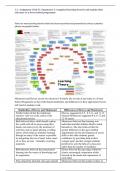
There are many learning theories that have been researched and presented by various academics
(please see graphic below):
Montessori and Dewey are the two theorists I’d briefly like to look at and relate to a Forest
School Programme as they both shared similarities and differences in their approaches but are
still cited in students work.
Similarities of Dewey and Montessori Differences of Dewey and Montessori
Neither believed that the traditional (Dewey suggested 4-8.5 , 8.5-11, and 11-15
teachers’ role was at the centre of the whereas Montessori suggested 0-6, 6-12 and
educational process. 12-18 years)
Both believed that a child should explore Montessori believed that learning was
the world with all its senses using their individual and that children liked to teach
hands, ears and eyes by the inclusion of themselves. She also believed that the
activities such as game playing or telling greater difference in the ages enabled
stories which helps to stimulate learning opportunities for the development of social
through as many of the senses as possible skills as the older students gained
by integrating the use of sand, water, mud… confidence by providing help to their
etc as they are real / naturally occurring younger peers and the younger students
materials. preferred to seek the help of a class peer
rather than the teacher or facilitator.
Both theorists believed that experiential Dewey believed the age range within his
learning was the source of knowledge and classes encouraged cooperation which
its acquisition. focused on the needs and experiences of
each child.
They shared the idea that class ages should Montessori believed the teacher is there to
relevance to a forest school programme
There are many learning theories that have been researched and presented by various academics
(please see graphic below):
Montessori and Dewey are the two theorists I’d briefly like to look at and relate to a Forest
School Programme as they both shared similarities and differences in their approaches but are
still cited in students work.
Similarities of Dewey and Montessori Differences of Dewey and Montessori
Neither believed that the traditional (Dewey suggested 4-8.5 , 8.5-11, and 11-15
teachers’ role was at the centre of the whereas Montessori suggested 0-6, 6-12 and
educational process. 12-18 years)
Both believed that a child should explore Montessori believed that learning was
the world with all its senses using their individual and that children liked to teach
hands, ears and eyes by the inclusion of themselves. She also believed that the
activities such as game playing or telling greater difference in the ages enabled
stories which helps to stimulate learning opportunities for the development of social
through as many of the senses as possible skills as the older students gained
by integrating the use of sand, water, mud… confidence by providing help to their
etc as they are real / naturally occurring younger peers and the younger students
materials. preferred to seek the help of a class peer
rather than the teacher or facilitator.
Both theorists believed that experiential Dewey believed the age range within his
learning was the source of knowledge and classes encouraged cooperation which
its acquisition. focused on the needs and experiences of
each child.
They shared the idea that class ages should Montessori believed the teacher is there to