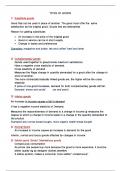
TYPES OF GOODS
1) Substitute goods
Good that can be used in place of another. The good must offer the same
satisfaction as the original good. Goods that are alternatives
Reason for getting substitutes
• An increase in the price of the original good
• Good or service can be in short supply
• Change in tastes and preferences
Examples: margarine and butter; tea and coffee’ beef and lamb
2) Complementary goods
Goods used together to give/provide maximum satisfaction.
Have a negative cross elasticity of demand.
Cross elasticity of demand
Measures the %age change in quantity demanded for a good after the change in
price of another.
The more intrinsically/naturally linked goods are, the higher will be the cross
elasticity
If price of one good increases, demand for both complementary goods will fall.
Example: shoes and socks’ car and petrol
3) Inferior goods
An increase in income causes a fall in demand
It has a negative Income elasticity of Demand.
Measures the responsiveness of demand to a change in income ie measures the
degree to which a change in income leads to a change in the quantity demanded of
the product
Example:Less normal bread bought, more organic health bread bought
4) Normal Good
An increase in income causes an increase in demand for the good
Inferior, normal and luxury goods affected by changes in income
5) Veblen good /Snob/ Ostentatious goods
Conspicuous consumption
As prices rise people buy more because the good is more expensive, it must be
better quality eg by designer clothes jewellery
A status symbol, makes a consumer more visible” conspicuous”
1) Substitute goods
Good that can be used in place of another. The good must offer the same
satisfaction as the original good. Goods that are alternatives
Reason for getting substitutes
• An increase in the price of the original good
• Good or service can be in short supply
• Change in tastes and preferences
Examples: margarine and butter; tea and coffee’ beef and lamb
2) Complementary goods
Goods used together to give/provide maximum satisfaction.
Have a negative cross elasticity of demand.
Cross elasticity of demand
Measures the %age change in quantity demanded for a good after the change in
price of another.
The more intrinsically/naturally linked goods are, the higher will be the cross
elasticity
If price of one good increases, demand for both complementary goods will fall.
Example: shoes and socks’ car and petrol
3) Inferior goods
An increase in income causes a fall in demand
It has a negative Income elasticity of Demand.
Measures the responsiveness of demand to a change in income ie measures the
degree to which a change in income leads to a change in the quantity demanded of
the product
Example:Less normal bread bought, more organic health bread bought
4) Normal Good
An increase in income causes an increase in demand for the good
Inferior, normal and luxury goods affected by changes in income
5) Veblen good /Snob/ Ostentatious goods
Conspicuous consumption
As prices rise people buy more because the good is more expensive, it must be
better quality eg by designer clothes jewellery
A status symbol, makes a consumer more visible” conspicuous”