lOMoAR cPSD| 27753314
LEV3701 Assignment 1 2021
Law of evidence (university of south africa)
)
, lOMoAR cPSD| 27753314
LEV3701 Assignment 1
Question 1
The privilege against self-incrimination is established in various rights which are
contained in the Bill of Rights, including the rights of an arrested person to remain
silent as stated in Section 35 35(1)(a)) of the Constitution, or not to be compelled to
make any confession or admission that could be used in evidence against that
person as stated in Section 35(1)(c)) of the Constitution, and the right of an accused
person to be presumed innocent, and not to testify at trial as stated in Section 35(3)
(h) of the Constitution.
The court stated that not only did the record of the bail proceedings form part of the
subsequent trial record, but any evidence which the accused elected to give at the
bail hearing was admissible against him or her at the trial, provided that the court
which heard the bail application had warned the accused of the risk of making such
statements. The court accepted that the testimony at the bail application may cause
prejudice to the accused later on, if it were incriminating for the purposes of the trial.
That it may be a hard choice does not affect the question, as long as the choice
remained that of the accused, and that it was made with a proper appreciation of
what it entailed. An uninformed choice is no choice.
Although the statement in the given question is stated in the negative, the court in S
v Dlamini came to the same conclusion, but then again stated the judgement in
positive terms, namely that self-incriminating evidence will be admissible if the
accused was properly advised or warned by the judicial officer of the consequences
of testifying, specifically that such testimony could be used against the witness. If Mr
Shakes was properly advised of the consequences of testifying, the evidence will be
admissible in court for the main trial. If, therefore, Mr Shakes was not advised of his
right against self-incrimination during the pre-trial stages of the criminal process,
including bail proceedings, and evidence was obtained because of this violation, the
evidence will generally be excluded in terms of section 35(5) of the Constitution.
Nevertheless, before this takes place, the test contained in section 35(5) will have to
be applied, taking the facts of the case into account. Question 2
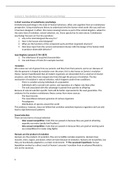
The following requirements must be met before legal professional privilege will apply:
i. The legal adviser must act in a professional capacity
This is a question of fact and a strong indication would be the payment
of a fee, even though the absence of such would not necessarily be
conclusive evidence of the opposite. The grounds for following the
approach of the English courts were set out in Mohamed v President of
the Republic of South Africa 2001 2 SA 1145 (C) in that salaried legal
advisers are recognised as acting in a professional capacity for the
purposes of this privilege.
LEV3701 Assignment 1 2021
Law of evidence (university of south africa)
)
, lOMoAR cPSD| 27753314
LEV3701 Assignment 1
Question 1
The privilege against self-incrimination is established in various rights which are
contained in the Bill of Rights, including the rights of an arrested person to remain
silent as stated in Section 35 35(1)(a)) of the Constitution, or not to be compelled to
make any confession or admission that could be used in evidence against that
person as stated in Section 35(1)(c)) of the Constitution, and the right of an accused
person to be presumed innocent, and not to testify at trial as stated in Section 35(3)
(h) of the Constitution.
The court stated that not only did the record of the bail proceedings form part of the
subsequent trial record, but any evidence which the accused elected to give at the
bail hearing was admissible against him or her at the trial, provided that the court
which heard the bail application had warned the accused of the risk of making such
statements. The court accepted that the testimony at the bail application may cause
prejudice to the accused later on, if it were incriminating for the purposes of the trial.
That it may be a hard choice does not affect the question, as long as the choice
remained that of the accused, and that it was made with a proper appreciation of
what it entailed. An uninformed choice is no choice.
Although the statement in the given question is stated in the negative, the court in S
v Dlamini came to the same conclusion, but then again stated the judgement in
positive terms, namely that self-incriminating evidence will be admissible if the
accused was properly advised or warned by the judicial officer of the consequences
of testifying, specifically that such testimony could be used against the witness. If Mr
Shakes was properly advised of the consequences of testifying, the evidence will be
admissible in court for the main trial. If, therefore, Mr Shakes was not advised of his
right against self-incrimination during the pre-trial stages of the criminal process,
including bail proceedings, and evidence was obtained because of this violation, the
evidence will generally be excluded in terms of section 35(5) of the Constitution.
Nevertheless, before this takes place, the test contained in section 35(5) will have to
be applied, taking the facts of the case into account. Question 2
The following requirements must be met before legal professional privilege will apply:
i. The legal adviser must act in a professional capacity
This is a question of fact and a strong indication would be the payment
of a fee, even though the absence of such would not necessarily be
conclusive evidence of the opposite. The grounds for following the
approach of the English courts were set out in Mohamed v President of
the Republic of South Africa 2001 2 SA 1145 (C) in that salaried legal
advisers are recognised as acting in a professional capacity for the
purposes of this privilege.