
BDO 329 M1 SU1
Unit 1.1 – Basic concepts in performance management and appraisal
Performance Management (PM)- process which significantly affects organisational success by having
managers and ee work together to set expectations, review results and reward performance
Performance appraisal (PA) – process of evaluating how well ee perform their jobs when compared to
a set of standards and then communicating that information to ee
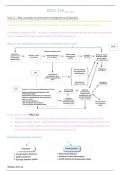
Model of the organizational performance management cycle & why?
ORG
HR
EE
Performance criteria PRAC EG
▪ Trait-based criteria- focus on personal characteristics of an ee (problem solving skills)
▪ Behaviour-based criteria- specific behaviours that lead to job success (ability to safely use..)
▪ Results or outcome-based criteria- focus on what was accomplished or produced rather than
how it was accomplished or produced. (produced 2 tons of..)
Performance Appraisal objectives
©Megan Meiring
,Possible sources of ineffective performance KNOW 5 & SOL
▪ Organisational policies and practices
1. Ineffective job placement
2. Insufficient job training
3. Lack of attention to ee needs/ concerns
4. Inadequate com within org
5. Unclear reporting relationships
▪ Personal problems
1. Marital prob
2. Financial worries
3. Emotional disorders (depression, anxiety)
4. Low work ethic
5. Lack of effort
▪ Job concerns
1. Boredom with job
2. Lack of growth/ advancement opportunities
3. Management-ee conflict
4. Prob with fellow ee
5. Unsafe working conditions
▪ External factors
1. Industry decline or extreme competition
2. Legal constraints
3. Conflict between ethical standards and job demands
4. Union–management conflict
Definition Performance Management SABPP
- Planned process of directing. Developing, supporting, aligning and improving individual and
team performance in enabling the sustained achievement of organisational objectives
©Megan Meiring
, Unit 1.2 - The appraisal process (development of a PA system)
1. Determine 2. Choose 5. Appraise
4. Discuss 6. Discuss 7. Determine
perf req appropriate 3. Train according to
methods appraisal future perf
(JD,JS, appraisal supervisors job
with ee with ee goals
competency) method standards
Possible causes of performance problems > Perf analysis:
1. Define expectations
2. Identifying causes:
• Lack of skills
• Lack of motivation
• Lack of respect for rules
• Personal problems
3. Select a corrective approach
Legal considerations & guidelines to protect an org from problems related to perf appraisals:
➢ Written appraisals conducted regularly for all ee – should be –never back dated.
➢ Supervisors should be trained. Keep evidence. Part of Policies & Procedures..
➢ Apply consistent, explicit and objective job-related standards judge work.
➢ Audit system on PA;s – - Internal audits. Do you have…. See textbook.
➢ Problem areas detailed & documented – clear and communicated.
➢ Problems identified establish goals and timelines for improvement
➢ Give ee clear opportunity to respond.
➢ Er should be able to prove that ee received the appraisal
➢ Circulation of PA should be restricted
➢ Check past Pas
➢ Problems directed to the Performance Appraisal process indicated in Lecture! (7 problems)
Performance appraisal methods
©Megan Meiring
, Category rating methods
- Graphic rating scale – rates the ee (ratee) on some standard or attribute of work (work
behaviours) using a scale of 1-3 or 1-5. 1 = very unsatisfactory and 3 or 5 = excellent.
- Non-graphic rating scales= contains a brief description of each point on the scale; not only
lowest & highest
- Checklist of Critical incidents – checklist of critical behaviours related to an ee perf (20-30
items for one specific job). Tick off if ee perf in superior manner
- Outstanding ee- many ticks
- Average ee- few ticks
- Poor perf- lim no of ticks
Comparative methods
- Ranking- listing all ee from highest to lowest ito perf. Compare perf of ee to other ee
- Eliminate central tendency as you force raters to evaluate ee in a predetermined range
- Ee don’t receive feedback
- Paired comparison- perf of each ee is compared with another ee in the particular group
- Raters pair ee and choose one as superior in overall job perf forced distribution > bell-shaped
- Compared on overall job, not specific criteria curve
Narrative methods
- Critical incidents
Uses specific ex of job behaviour that have been collected from supervisors or ee or both
Several ee and supervisors compile a list of actual job experiences involving very good or
bad perf
Outstandingly good or bad perf separate good ee from those that are average and poor
After list of critical incidents; method is chosen to use these incidents
- Annual review/ calendar
Supervisor/ appraiser keeps ongoing record of critical incidents during the period of
appraisal
Supervisor reviews file just before appraisal
Ee with no record during the period of perf are doing their jobs satisfactorily
Method is very job specific with dates and incidents
Difficult to keep accurate record
Maintaining records is often neglected
Difficult to compare perf of different employees using this method
- Essay method
Created primarily for ee development
Supervisor writes a narrative essay describing the ee perf with specific examples of
strengths and weaknesses
©Megan Meiring
Unit 1.1 – Basic concepts in performance management and appraisal
Performance Management (PM)- process which significantly affects organisational success by having
managers and ee work together to set expectations, review results and reward performance
Performance appraisal (PA) – process of evaluating how well ee perform their jobs when compared to
a set of standards and then communicating that information to ee
Model of the organizational performance management cycle & why?
ORG
HR
EE
Performance criteria PRAC EG
▪ Trait-based criteria- focus on personal characteristics of an ee (problem solving skills)
▪ Behaviour-based criteria- specific behaviours that lead to job success (ability to safely use..)
▪ Results or outcome-based criteria- focus on what was accomplished or produced rather than
how it was accomplished or produced. (produced 2 tons of..)
Performance Appraisal objectives
©Megan Meiring
,Possible sources of ineffective performance KNOW 5 & SOL
▪ Organisational policies and practices
1. Ineffective job placement
2. Insufficient job training
3. Lack of attention to ee needs/ concerns
4. Inadequate com within org
5. Unclear reporting relationships
▪ Personal problems
1. Marital prob
2. Financial worries
3. Emotional disorders (depression, anxiety)
4. Low work ethic
5. Lack of effort
▪ Job concerns
1. Boredom with job
2. Lack of growth/ advancement opportunities
3. Management-ee conflict
4. Prob with fellow ee
5. Unsafe working conditions
▪ External factors
1. Industry decline or extreme competition
2. Legal constraints
3. Conflict between ethical standards and job demands
4. Union–management conflict
Definition Performance Management SABPP
- Planned process of directing. Developing, supporting, aligning and improving individual and
team performance in enabling the sustained achievement of organisational objectives
©Megan Meiring
, Unit 1.2 - The appraisal process (development of a PA system)
1. Determine 2. Choose 5. Appraise
4. Discuss 6. Discuss 7. Determine
perf req appropriate 3. Train according to
methods appraisal future perf
(JD,JS, appraisal supervisors job
with ee with ee goals
competency) method standards
Possible causes of performance problems > Perf analysis:
1. Define expectations
2. Identifying causes:
• Lack of skills
• Lack of motivation
• Lack of respect for rules
• Personal problems
3. Select a corrective approach
Legal considerations & guidelines to protect an org from problems related to perf appraisals:
➢ Written appraisals conducted regularly for all ee – should be –never back dated.
➢ Supervisors should be trained. Keep evidence. Part of Policies & Procedures..
➢ Apply consistent, explicit and objective job-related standards judge work.
➢ Audit system on PA;s – - Internal audits. Do you have…. See textbook.
➢ Problem areas detailed & documented – clear and communicated.
➢ Problems identified establish goals and timelines for improvement
➢ Give ee clear opportunity to respond.
➢ Er should be able to prove that ee received the appraisal
➢ Circulation of PA should be restricted
➢ Check past Pas
➢ Problems directed to the Performance Appraisal process indicated in Lecture! (7 problems)
Performance appraisal methods
©Megan Meiring
, Category rating methods
- Graphic rating scale – rates the ee (ratee) on some standard or attribute of work (work
behaviours) using a scale of 1-3 or 1-5. 1 = very unsatisfactory and 3 or 5 = excellent.
- Non-graphic rating scales= contains a brief description of each point on the scale; not only
lowest & highest
- Checklist of Critical incidents – checklist of critical behaviours related to an ee perf (20-30
items for one specific job). Tick off if ee perf in superior manner
- Outstanding ee- many ticks
- Average ee- few ticks
- Poor perf- lim no of ticks
Comparative methods
- Ranking- listing all ee from highest to lowest ito perf. Compare perf of ee to other ee
- Eliminate central tendency as you force raters to evaluate ee in a predetermined range
- Ee don’t receive feedback
- Paired comparison- perf of each ee is compared with another ee in the particular group
- Raters pair ee and choose one as superior in overall job perf forced distribution > bell-shaped
- Compared on overall job, not specific criteria curve
Narrative methods
- Critical incidents
Uses specific ex of job behaviour that have been collected from supervisors or ee or both
Several ee and supervisors compile a list of actual job experiences involving very good or
bad perf
Outstandingly good or bad perf separate good ee from those that are average and poor
After list of critical incidents; method is chosen to use these incidents
- Annual review/ calendar
Supervisor/ appraiser keeps ongoing record of critical incidents during the period of
appraisal
Supervisor reviews file just before appraisal
Ee with no record during the period of perf are doing their jobs satisfactorily
Method is very job specific with dates and incidents
Difficult to keep accurate record
Maintaining records is often neglected
Difficult to compare perf of different employees using this method
- Essay method
Created primarily for ee development
Supervisor writes a narrative essay describing the ee perf with specific examples of
strengths and weaknesses
©Megan Meiring


