100% satisfaction guarantee Immediately available after payment Both online and in PDF No strings attached 4.2 TrustPilot
logo-home
Exam (elaborations)

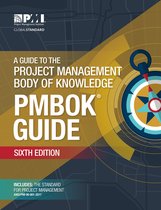
PMBOK GUIDE 6TH EDITION TESTBANK QUESTIONS AND ANSWERS 100% CORRECT 9781628251845

Rating
3,0
(1)
Sold
1
Pages
208
Grade
A+
Uploaded on
23-10-2023
Written in
2023/2024

1. A project is: A. A set of sequential activities performed in a process orsystem. B. A revenue-generating activity that needs to be accomplished while achieving customer satisfaction. C. An ongoing endeavor undertaken to meet customer or marketrequirements. D. A temporary endeavor undertaken to create a unique product, service, or result. 2. Project management is : A. The integration of the critical path method and the Earned Value Managementsystem. B. The application of knowledge, skills, tools, and techniques to project activities to meet the project requirements. C. The application of knowledge,skills, wisdom,science, and art to organizational activities to achieve operational excellence. D. A subset of most engineering and other technical disciplines. 3. Portfolio management refers to: A. Managing various contents of the project file. B. Managing the levels of the levels of financial authority to facilitate C. project decision making D. The centralized management of one or more portfolios to achieve strategic objectives. E. Applying resource leveling heuristics across all the organization’s strategic objectives. 4.All of the following are questions that the key stakeholders and project managers should answer to develop the project success measures EXCEPT : A. What does success look like for the project? B. How will success be measured? C. What are the communication requirements? D. What factors may impactsuccess? 5. A. program is a : A. Group of related tasks lasting one year or less. B. Group of related projects, subsidiary programs, and program activities managed in a coordinated manner. C. Large projects with significant cost and resource requirements. D. Sequence of activities constituting a major project. 6. All of the following are true about projects and operations EXCEPT : A. Operations are ongoing endeavors that produce repetitive outputs, with resources assigned to do basically the same set of tasks according to the standards institutionalized in a product life cycle, whereas projects are temporary endeavors. B. Projects require project management activities and skill sets, whereas operations require business process management, operations management activities, and skill sets. C. Projects can intersect with operations at various points during the product life cycle. At each point, deliverables and knowledge are transferred between the project and operations for implementation of the delivered work. D. Because of their temporary nature, projects cannot help achieve an organization’s long-term goals. Therefore, strategic activities in the organization can be generally addressed within the organization's normal operations. 7. Your job responsibility is to align components (projects, programs, or related operations) to the organizational strategy, organized into portfolios orsubsidiary portfolios to optimize project or program objectives, dependencies,costs, timelines, benefits, resources, and risks. This is known as: A. Components management. B. Process management. C. Program management. D. Portfolio management. 8. The PMBOK® Guide is the standard for : A. Managing all projects all of the time, B. Managing all projects most of the time. C. Managing most projects most of the time. D. Managing some projects some of the time. 9.The collection of generally sequential and sometimes overlapping project phases, whose name and number are determined by the management and control needs of the organization or organizations involved in the project, is known as the : A. Project waterfall. B. Project life cycle. C. Project life stages. D. Project Management Process Groups. 10.All of the following are true about project phases and the project life cycle EXCEPT: A. Stakeholder influences, risk, and uncertainty are greatest at the start of the project. These factors decrease over the life of the project. B. The ability to influence the final characteristics of the project's product, without significantly impacting cost, is highest at the start of the project and decreases as the project progresses toward completion. C. The cost of changes and correcting errors typically increases substantially as the project approaches completion. D. Cost and staffing levels are generally steady throughout the project life cycle . 11.All of the following statements about the project life cycle and the product life cycle are true EXCEPT: A. In the project predictive life cycle, the project scope and the time and cost required to deliver that scope are determined as early in the project life cycle as practically possible. B. In the project iterative and incremental life cycles, project phasesintentionally repeat one or more project activities as the project team’s understanding of the product increases. C. The product life cycle is the series of phases that represent the evolution of a product, from concept through delivery, growth, maturity, and to retirement D. The product life cycle is contained within the predictive project life cycle. 12.You are managing a project in which you intend to respond to high levels of change and ongoing stakeholder involvement. The most suitable project life cycle for your project is the : A. Predictive life cycle. B. Adaptive life cycle. C. Waterfall life cycle. D. Configuration management life cycle. 13. The five Project Management Process Groups are A. Planning, Checking, Directing, Monitoring, and Recording. B. Initiating, Planning, Executing, Monitoring and Controlling, and Closing. C. Planning, Executing, Directing, Closing, and Commissioning. D. Initiating, Executing, Monitoring, Evaluating, and Closing. 14. Project Management Processes A. May be overlapping activities that occur throughout the project. A. B. May be overlapping activities that generally occur at the same level of intensity within each phase of the project. B. Are generally discrete, one-time events. C. Are discrete, repetitive eventsthat occur generally at the same level of intensity throughout each phase of the project. 15.The linkages between project management processes are best described by the following A. Thework breakdown structure links processes. B. Processes are linked by their planned objectives- the summary objective of one often becomes the detailed action plan for another within the project, subproject, or project phase. C. Processes are linked by the outpu

Show more Read less
Institution
PMBOK GUID 6TH ED TBANK
Course
PMBOK GUID 6TH ED TBANK


Whoops! We can’t load your doc right now. Try again or contact support.

Connected book

Written for

Institution
PMBOK GUID 6TH ED TBANK
Course
PMBOK GUID 6TH ED TBANK

Document information

Uploaded on
October 23, 2023
Number of pages
208
Written in
2023/2024
Type
Exam (elaborations)
Contains
Questions & answers

Subjects

Content preview

PMBOK GUIDE 6 EDITION TESTBANK TH


QUESTIONS AND ANSWERS 100% CORRECT
(00966563444456)


360+ Qs & As
For The PMBOK GUIDE SIXTH 6 EDITION
Gift from PE company


www.alsenosy.com | www.professionalengineers.us

, PMBOK GUIDE 6 EDITION TESTBANK
TH


QUESTIONS AND ANSWERS 100% CORRECT


(00966563444456)

,Table of Content

Preface 1

Questions Section 1: Introduction 2

Section 2: The Environment in Which Projects Operate 7

Section 3: The Role of the Project Manager 11

Section 4: Project Integration Management 15

Section 5: Project Scope Management 20

Section 6: Project Schedule Management 23

Section 7: Project Cost Management 30

Section 8: Project Quality Management. 37

Section 9: Project Resource Management 42

Section 10: Project Communications Management 47

Section 11: Project Risk Management 51

Section 12: Project Procurement Management 56

Section 13: Project Stakeholder Management 60

Appendix X3 Agile, Iterative, Adaptive, and Hybrid Project Environments 64
Appendix X4 Summary of Key Concepts for Knowledge Areas 66

Appendix X5 Summary of Tailoring Considerations for Knowledge Areas 71

Answers Section 1: Introduction 79
Section 2: The Environment in Which Projects Operate 87

Section 3: The Role of the Project Manager 94
Section 5: Project Scope Management 109

Section 6: Project Schedule Management 116

Section 7: Project Cost Management 126

Section 8: Project Quality Management. 138

, Section 9: Project Resource Management 145

Section 10: Project Communications Management 154

Section 11: Project Risk Management 161

Section 12: Project Procurement Management 171

Section 13: Project Stakeholder Management 178

Appendix X3 Agile, Iterative, Adaptive, and Hybrid Project Environments 185

Appendix X4 Summary of Key Concepts for Knowledge Areas 188
Appendix X5 Summary of Tailoring Considerations for Knowledge Areas 194
Glossary 198

R534,31
Get access to the full document:

100% satisfaction guarantee
Immediately available after payment
Both online and in PDF
No strings attached


Document also available in package deal

Reviews from verified buyers

Showing all reviews
1 year ago

3,0

1 reviews

5
0
4
0
3
1
2
0
1
0
Trustworthy reviews on Stuvia

All reviews are made by real Stuvia users after verified purchases.

Get to know the seller

Seller avatar
Reputation scores are based on the amount of documents a seller has sold for a fee and the reviews they have received for those documents. There are three levels: Bronze, Silver and Gold. The better the reputation, the more your can rely on the quality of the sellers work.
TestBankcenter NURSING
Follow You need to be logged in order to follow users or courses
Sold
96
Member since
2 year
Number of followers
21
Documents
1239
Last sold
1 month ago
TestbankCenter

We offer a wide selection of exams and study guides from a variety of courses and subjects, all created by experts. Our notes are comprehensive, well-organized, and easy to understand, so you can focus on learning and achieving your academic goals.

3,8

24 reviews

5
9
4
7
3
3
2
5
1
0

Recently viewed by you

Why students choose Stuvia

Created by fellow students, verified by reviews

Quality you can trust: written by students who passed their exams and reviewed by others who've used these notes.

Didn't get what you expected? Choose another document

No worries! You can immediately select a different document that better matches what you need.

Pay how you prefer, start learning right away

No subscription, no commitments. Pay the way you're used to via credit card or EFT and download your PDF document instantly.

Student with book image

“Bought, downloaded, and aced it. It really can be that simple.”

Alisha Student

Frequently asked questions