SCHIZOPHRENIA & VIOLENCE
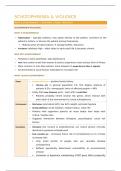
WHAT IS SCHIZOPHRENIA? – SYMPTOMS, CAUSES, TREATMENT
SCHIZOPHRENIA (PICCHIONI)
WHAT IS SCHIZOPHRENIA?
Hallucinations – typically auditory, may speak directly to the patient, comment on the
patient’s actions, or discuss the patient among themselves
Making sense of hallucinations strange beliefs / delusions
Prevalence relatively high – often starts in early adult life & becomes chronic
WHO GETS SCHIZOPHRENIA?
Presents in early adulthood / late adolescence
Men have earlier onset than women & tend to experience more serious form of illness
More common in men than women, more frequent in people born in cities & migrants
Environmental & social factors implicated in increased risk
WHAT CAUSES SCHIZOPHRENIA?
Genes Greatest risk factor – positive family history
Life-time risk: in general population 1%; first degree relatives of
patients 6.5%; monozygotic twins of affected people > 40%
Likely that many risk genes exist – each with a small effect
Patients probably inherit several risk genes, which interact with
each other & the environment to cause schizophrenia
Environment Risk factors: premature birth, low birth weight, perinatal hypoxia
During adulthood: social isolation, migrant status, urban life
Patients with supportive parents do much better than those with
critical / hostile ones
Suggests interaction between biological, psychological, social risk
factors
Drug abuse Stimulants like cocaine & amphetamines can induce picture clinically
identical to paranoid schizophrenia
Early cannabis use – increases future risk of schizophrenia (2 to 4 times
increased risk)
Only small portion of people who use cannabis develop
schizophrenia
Reflects genetically determined vulnerability to environmental
stressor
Variations in dopamine metabolising COMT gene affect propensity
, to develop psychosis in people who use cannabis
EARLY DIAGNOSIS & MANAGEMENT IN PRIMARY CARE
Initially most patients have symptoms such as anxiety, depression, social problems,
changes in behaviour, difficulties concentrating, becoming withdrawn from normal
social life
Onset of psychosis suspected referral to secondary care (e.g., local early intervention
team)
Assessment of risk that patients post to themselves & others
Presence of psychotic symptoms confirmed prescription of antipsychotic by GP
o Usually oral atypical antipsychotic e.g., risperidone, olanzapine in low doses
Importance of The longer mean duration of untreated psychosis the worse the
early recognition outcome
Patients with psychotic symptoms should be identified & treated
ASAP
Long term Recovery from acute episode of schizophrenia remain on prophylactic
management in doses of antipsychotic for 1-2 years & continue to be supervised by
primary care specialist services
Well & symptom free after that time gradual reduction of drug dose
& careful monitoring to detect any signs of relapse
Referral back to secondary care due to: (1) poor treatment
compliance, (2) poor treatment response, (3) ongoing substance
misuse, (4) increase in risk profile
TREATMENTS IN SECONDARY CARE
Pharmacologica First line drug – oral atypical antipsychotic
l Except for clozapine they are no more effective than older
typical drugs
Change from typical to atypical drug if patients exhibits many
side effects
Lowest effective dose should be used
Anticholinergic drugs shouldn’t be routinely prescribed due to adverse
effects on cognition & memory
Clozapine – best drug for 20-30% of treatment resistant patients
Only drug that can reduce positive & negative symptoms in
these patients
Psychological Availability often limited – lack of trained therapists
CBT can reduce persistent symptoms & improve insight: ≥ 10
WHAT IS SCHIZOPHRENIA? – SYMPTOMS, CAUSES, TREATMENT
SCHIZOPHRENIA (PICCHIONI)
WHAT IS SCHIZOPHRENIA?
Hallucinations – typically auditory, may speak directly to the patient, comment on the
patient’s actions, or discuss the patient among themselves
Making sense of hallucinations strange beliefs / delusions
Prevalence relatively high – often starts in early adult life & becomes chronic
WHO GETS SCHIZOPHRENIA?
Presents in early adulthood / late adolescence
Men have earlier onset than women & tend to experience more serious form of illness
More common in men than women, more frequent in people born in cities & migrants
Environmental & social factors implicated in increased risk
WHAT CAUSES SCHIZOPHRENIA?
Genes Greatest risk factor – positive family history
Life-time risk: in general population 1%; first degree relatives of
patients 6.5%; monozygotic twins of affected people > 40%
Likely that many risk genes exist – each with a small effect
Patients probably inherit several risk genes, which interact with
each other & the environment to cause schizophrenia
Environment Risk factors: premature birth, low birth weight, perinatal hypoxia
During adulthood: social isolation, migrant status, urban life
Patients with supportive parents do much better than those with
critical / hostile ones
Suggests interaction between biological, psychological, social risk
factors
Drug abuse Stimulants like cocaine & amphetamines can induce picture clinically
identical to paranoid schizophrenia
Early cannabis use – increases future risk of schizophrenia (2 to 4 times
increased risk)
Only small portion of people who use cannabis develop
schizophrenia
Reflects genetically determined vulnerability to environmental
stressor
Variations in dopamine metabolising COMT gene affect propensity
, to develop psychosis in people who use cannabis
EARLY DIAGNOSIS & MANAGEMENT IN PRIMARY CARE
Initially most patients have symptoms such as anxiety, depression, social problems,
changes in behaviour, difficulties concentrating, becoming withdrawn from normal
social life
Onset of psychosis suspected referral to secondary care (e.g., local early intervention
team)
Assessment of risk that patients post to themselves & others
Presence of psychotic symptoms confirmed prescription of antipsychotic by GP
o Usually oral atypical antipsychotic e.g., risperidone, olanzapine in low doses
Importance of The longer mean duration of untreated psychosis the worse the
early recognition outcome
Patients with psychotic symptoms should be identified & treated
ASAP
Long term Recovery from acute episode of schizophrenia remain on prophylactic
management in doses of antipsychotic for 1-2 years & continue to be supervised by
primary care specialist services
Well & symptom free after that time gradual reduction of drug dose
& careful monitoring to detect any signs of relapse
Referral back to secondary care due to: (1) poor treatment
compliance, (2) poor treatment response, (3) ongoing substance
misuse, (4) increase in risk profile
TREATMENTS IN SECONDARY CARE
Pharmacologica First line drug – oral atypical antipsychotic
l Except for clozapine they are no more effective than older
typical drugs
Change from typical to atypical drug if patients exhibits many
side effects
Lowest effective dose should be used
Anticholinergic drugs shouldn’t be routinely prescribed due to adverse
effects on cognition & memory
Clozapine – best drug for 20-30% of treatment resistant patients
Only drug that can reduce positive & negative symptoms in
these patients
Psychological Availability often limited – lack of trained therapists
CBT can reduce persistent symptoms & improve insight: ≥ 10