PATHO D236 Main_Patho_Study_Guide very correct
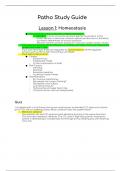
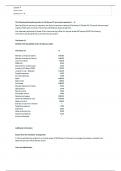
Lesson 1: Homeostasis ● Pressure that is due to albumin in the bloodstream? - Oncotic - a form of osmotic pressure exerted by proteins. In the blood, albumin is the most common plasma protein and is, therefore, a primary determinant of oncotic pressure. - Albumin controls osmotic pressure in vascular system, builds volume - One question was about the difference in children and adult immunity, I believe the answer was naive T cells. - Fluid and electrolyte levels are regulated by osmoreceptors, which regulates actions such as thirst, ADH, the kidneys, and RAAS. - Fluid Deficit/Dehydration ● Causes: - Excessive loss - Inadequate intake - Or the combination of both ● Risk Factors: - Vomiting - Diarrhea - Excessive sweating - Insufficient water intake ● Manifestations: - Dry mucous membranes - Decreased skin turgor (“tenting”) - Decreased urine output - Low blood pressure - Tachycardia and weak heart rate - Confusion (brain cells are dehydrated) - Quiz 1. A patient with a viral illness and severe vomiting has an elevated CO2 level and a blood pH of 7.53. She is breathing slowly. What condition does the patient have? - Metabolic alkalosis - The patient's pH and CO2 level are both elevating (moving in the same direction). This indicates metabolic alkalosis. The CO2 level is high because her respiratory system is attempting to compensate for the high pH by exhaling less and retaining more CO2 - If pH and PCO2 are moving in opposite directions, then it is the pCO2 levels that are causing the imbalance and it is respiratory in nature. - If PCO2 is normal or is moving in the same direction as the pH, then the imbalance is metabolic in nature. ● ROME- ● Respiratory opposite, metabolic equal - Buffers, renal compensation, and respiratory compensation help to maintain a blood pH of 7.35–7.45. - To prevent such changes in pH, the body employs buffer systems. The body utilizes three buffer systems: proteins, phosphates, and the carbonic acid–bicarbonate system. Although all of these systems are important, the majority of this chapter focuses on the carbonic acid–bicarbonate buffer system. - First line of defense is respirations. Second line of defense is kidney's
Written for
- Institution
- Western Governors University
- Course
- WGU PATHO D236
Document information
- Uploaded on
- September 26, 2023
- Number of pages
- 31
- Written in
- 2023/2024
- Type
- Exam (elaborations)
- Contains
- Questions & answers
Subjects
-
mainpathostudyguide

Document also available in package deal