Chapter 12 Electrophysiology of the Heart
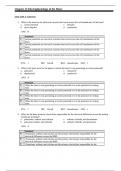
Chapter 12 Electrophysiology of the Heart MULTIPLE CHOICE 1. What is the term for the electrical currents that travel across the cell membranes of the heart? a. action potential c. stimulus b. nerve impulse d. conduction ANS: B Feedback A B C D Action potentials are electrical currents that travel across the cell membranes of the heart. Action potentials are electrical currents that travel across the cell membranes of the heart. Action potentials are electrical currents that travel across the cell membranes of the heart. Action potentials are electrical currents that travel across the cell membranes of the heart. PTS: 1 DIF: Recall REF: Introduction OBJ: 1 2. What is the basic term for the phase in which the heart is not generating an action potential? a. polarized c. contractile b. depolarized d. conductive ANS: A Feedback A B C D When the heart is not generating an action potential it is in the polarized or resting state. When the heart is not generating an action potential it is in the polarized or resting state. When the heart is not generating an action potential it is in the polarized or resting state. When the heart is not generating an action potential it is in the polarized or resting state. PTS: 1 DIF: Recall REF: Introduction OBJ: 1 3. What are the three promary electrolytes responsible for the electrical difference across the resting membrane potential? a. potassium, sodium, and calcium c. sodium, chloride, and bicarbonate b. potassium sodiun, and chloride d. sodium, chloride, and potassium ANS: A Feedback A B C Potassium, sodium, and calcium are the primary electrolytes responsible for the electrical difference across the RMP. Potassium, sodium, and calcium are the primary electrolytes responsible for the electrical difference across the RMP. Potassium, sodium, and calcium are the primary electrolytes responsible for the D electrical difference across the RMP. Potassium, sodium, and calcium are the primary electrolytes responsible for the electrical difference across the RMP. PTS: 1 DIF: Recall REF: Introduction OBJ: 1 4. What does the RMP of the myocardial cells equal? a. -90 mV c. -30 mV b. -50 mV d. -15 mV ANS: A Feedback A B C D The RMP of myocardial cells equals -90 mV. The RMP of myocardial cells equals -90 mV. The RMP of myocardial cells equals -90 mV. The RMP of myocardial cells equals -90 mV. PTS: 1 DIF: Recall REF: Introduction OBJ: 1 5. At the end of Phase 0, what does the voltage inside the myocardial cell equal? a. +30 mV c. -30 mV b. +15 mV d. -90 mV ANS: A Feedback A B C D The voltage inside the cell at the end of Phase 0 is +30 mV. The voltage inside the cell at the end of Phase 0 is +30 mV. The voltage inside the cell at the end of Phase 0 is +30 mV. The voltage inside the cell at the end of Phase 0 is +30 mV. PTS: 1 DIF: Recall REF: Depolarization OBJ: 1 6. Of the phases of the action potential, which phase represents rapid depolarization of the myocardial cells? a. Phase 0 c. Phase 4 b. Phase 1 d. Phase 5 ANS: A Feedback A B C D Phase 0 represents rapid depolarization of the myocardial cells. Phase 0 represents rapid depolarization of the myocardial cells. Phase 0 represents rapid depolarization of the myocardial cells. Phase 0 represents rapid depolarization of the myocardial cells. PTS: 1 DIF: Recall REF: Depolarization OBJ: 1 7. Which phase of the action potential represents initial repolarization of hte myocardial cells? a. Phase 1 c. Phase 3 b. Phase 2 d. Phase 0 ANS: A Feedback A B C D Initial repolarization of the myocardial cells occurs during Phase I of the action potential. Initial repolarization of the myocardial cells occurs during Phase I of the action potential. Initial repolarization of the myocardial cells occurs during Phase I of the action potential. Initial repolarization of the myocardial cells occurs during Phase I of the action potential. PTS: 1 DIF: Recall REF: Repolarization OBJ: 1 8. Which phase of the action potential prolongs the contraction of the myocardial cells? a. Phase 2 c. Phase 4 b. Phase 3 d. Phase 5 ANS: A Feedback A B C D Phase 2, the plateau state, prolongs the contraction of the myocardial cells. Phase 2, the plateau state, prolongs the contraction of the myocardial cells. Phase 2, the plateau state, prolongs the contraction of the myocardial cells. Phase 2, the plateau state, prolongs the contraction of the myocardial cells. PTS: 1 DIF: Recall REF: Repolarization OBJ: 1 9. During which phase of the action potential do the voltage-sensitive ion channels return to their predepolarization permeability? a. Phase 4 c. Phase 5 b. Phase 3 d. Phase 0 ANS: A Feedback A B C D The voltage-sensitive ion channels return to their pre-depolarization permeability during Phase 4. The voltage-sensitive ion channels return to their pre-depolarization permeability during Phase 4. The voltage-sensitive ion channels return to their pre-depolarization permeability during Phase 4. The voltage-sensitive ion channels return to their pre-depolarization permeability during Phase 4. PTS: 1 DIF: Recall REF: Repolarization OBJ: 1 10. Approximately what percentage of the heart is composed of autorhythmic cells? a. 1% c. 18% b. 12% d. 24% ANS: A Feedback A B C D Approximately 1% of the heart is composed of autorhythmic cells. Approximately 1% of the heart is composed of autorhythmic cells. Approximately 1% of the heart is composed of autorhythmic cells. Approximately 1% of the heart is composed of autorhythmic cells. PTS: 1 DIF: Recall REF: Properties of the Cardiac Muscle OBJ: 2 11. What is the term for the unique ability of cells in the SA node to generate an action potential without being stimulated? a. automaticity c. contractility b. excitability d. conductivity ANS: A Feedback A B C D Automaticity is the unique ability of cells in the SA node to generate an action potential without being stimulated.. Automaticity is the unique ability of cells in the SA node to generate an action potential without being stimulated.. Automaticity is the unique ability of cells in the SA node to generate an action potential without being stimulated.. Automaticity is the unique ability of cells in the SA node to generate an action potential without being stimulated.. PTS: 1 DIF: Recall REF: Automaticity OBJ: 2 12. What is the term for the ability of a cell to reach its threshold potential and respond to a stimulus? a. excitability c. contractility b. conductivity d. automaticity ANS: A Feedback A B C D The ability of a cell to reach its threshold potential and respond to a stimulus is called excitability. The ability of a cell to reach its threshold potential and respond to a stimulus is called excitability. The ability of a cell to reach its threshold potential and respond to a stimulus is called excitability. The ability of a cell to reach its threshold potential and respond to a stimulus is called excitability. PTS: 1 DIF: Recall REF: Excitability OBJ: 2 13. What is the term for the ability of the heart cells to transmit electrical current from cell to cell? a. conductivity c. automaticity b. contractility d. irritability ANS: A Feedback A B C D The ability of the heart cells to transmit electrical current from cell to cell throughout the conduction system is called conductivity. The ability of the heart cells to transmit electrical current from cell to cell throughout the conduction system is called conductivity. The ability of the heart cells to transmit electrical current from cell to cell throughout the conduction system is called conductivity. The ability of the heart cells to transmit electrical current from cell to cell throughout the conduction system is called conductivity. PTS: 1 DIF: Recall REF: Conductivity OBJ: 2 14. What is the term for the ability of cardiac muscle fibers to shorten in response to an electrical stimulus? a. contractility c. automaticity b. conductivity d. excitability ANS: A Feedback A B C D The ability of cardiac muscle fibers to shorten in response to an electrical stimulus is called contractility. The ability of cardiac muscle fibers to shorten in response to an electrical stimulus is called contractility. The ability of cardiac muscle fibers to shorten in response to an electrical stimulus is called contractility. The ability of cardiac muscle fibers to shorten in response to an electrical stimulus is called contractility. PTS: 1 DIF: Recall REF: Contractility OBJ: 2 15. What is the term for the time in which cells cannot respond to a stimulus? a. absolute refractory period c. nonrefractory period b. relative refractory period d. partial resistance period ANS: A Feedback A B C D The absolute refractory period is the time during which cells cannot respond to a stimulus. The absolute refractory period is the time during which cells cannot respond to a stimulus. The absolute refractory period is the time during which cells cannot respond to a stimulus. The absolute refractory period is the time during which cells cannot respond to a stimulus. PTS: 1 DIF: Recall REF: Refractory Periods OBJ: 3 16. Which phases of the action potential represent the absolute refractory period? I. Phase 0 II. Phase 1 III. Phase 2 IV. First half of Phase 3 V. First half of Phase 4 a. I, II, III, and IV only c. IV and V only b. I, II, and III only d. II, III, and IV only ANS: A Feedback A B C D The absolute refractory period is represented by Phase 0, 1, 2, and the first half of Phase 3. The absolute refractory period is represented by Phase 0, 1, 2, and the first half of Phase 3. The absolute refractory period is represented by Phase 0, 1, 2, and the first half of Phase 3. The absolute refractory period is represented by Phase 0, 1, 2, and the first half of Phase 3. PTS: 1 DIF: Recall REF: Refractory Periods OBJ: 3 17. Which phase of the action potential represents the relative refractory period? a. Last half of Phase 3 c. Last half of Phase 4 b. First half of Phase 3 d. First half of Phase 4 ANS: A Feedback A B C D The last half of Phase 3 of the action potential represents the relative refractory period. The last half of Phase 3 of the action potential represents the relative refractory period. The last half of Phase 3 of the action potential represents the relative refractory period. The last half of Phase 3 of the action potential represents the relative refractory period. PTS: 1 DIF: Recall REF: Refractory Periods OBJ: 3 18. Which phase of the action potential represents the nonrefractory period? a. Phase 4 c. first half of Phase 3 b. last half of Phase 3 d. Phase 5 ANS: A Feedback A B C D Phase 4 of the action potential represents the nonrefractory period. Phase 4 of the action potential represents the nonrefractory period. Phase 4 of the action potential represents the nonrefractory period. Phase 4 of the action potential represents the nonrefractory period. PTS: 1 DIF: Recall REF: Refractory Periods OBJ: 3 19. Which portion of the conductive system is considered to be the pacemaker of the heart? a. sinoatrial node c. atrioventricular node b. sinoarterial node d. arteriovalvular node ANS: A Feedback A B C D The pacemaker of the heart is the sinoatrial node. The pacemaker of the heart is the sinoatrial node. The pacemaker of the heart is the sinoatrial node. The pacemaker of the heart is the sinoatrial node. PTS: 1 DIF: Recall REF: The Conductive System OBJ: 4 20. After the electrical impulse leaves the atrioventricular junction, where does it travel next? a. bundle of His c. Purkinje fibers b. bundle branches d. Bachmann’s bundle ANS: A Feedback A B C D From the AV node, the electrical impulse moves to the bundle of His. From the AV node, the electrical impulse moves to the bundle of His. From the AV node, the electrical impulse moves to the bundle of His. From the AV node, the electrical impulse moves to the bundle of His. PTS: 1 DIF: Recall REF: The Conductive System OBJ: 4 21. At what point do the internodal tracts of the right atrium merge? a. AV junction c. Bachmann’s bundle b. SA junction d. Purkinje fibers ANS: A Feedback A B C D The internodal tracts of the right atrium merge at the AV junction. The internodal tracts of the right atrium merge at the AV junction. The internodal tracts of the right atrium merge at the AV junction. The internodal tracts of the right atrium merge at the AV junction. PTS: 1 DIF: Recall REF: The Conductive System OBJ: 4 22. Which structure transmits the electrical impulse from the SA node to the left atrium? a. Bachmann’s bundle c. bundle of His b. AV junction d. Purkinje fibers ANS: A Feedback A B C D Bachmann’s bundle transmits electrical impulses from the SA node to the left atrium. Bachmann’s bundle transmits electrical impulses from the SA node to the left atrium. Bachmann’s bundle transmits electrical impulses from the SA node to the left atrium. Bachmann’s bundle transmits electrical impulses from the SA node to the left atrium. PTS: 1 DIF: Recall REF: The Conductive System OBJ: 4 23. Where does the electrical impulse travel after leaving the AV bundle? a. left and right bundle branches c. Purkinje fibers b. bundle of His d. SA node ANS: A Feedback A B C D After leaving the AV bundle, the electrical impulse travels to the right and left bundle branches. After leaving the AV bundle, the electrical impulse travels to the right and left bundle branches. After leaving the AV bundle, the electrical impulse travels to the right and left bundle branches. After leaving the AV bundle, the electrical impulse travels to the right and left bundle branches. PTS: 1 DIF: Recall REF: The Conductive System OBJ: 4 24. In a healthy adult at rest, approximately how much time is required for the entire heart to depolarize? a. 0.22 seconds c. 2.2 seconds b. 0.02 seconds d. 0.002 seconds ANS: B Feedback A B C D In a healthy adult at rest, 0.22 seconds is required for the entire heart to depolarize. In a healthy adult at rest, 0.22 seconds is required for the entire heart to depolarize. In a healthy adult at rest, 0.22 seconds is required for the entire heart to depolarize. In a healthy adult at rest, 0.22 seconds is required for the entire heart to depolarize. PTS: 1 DIF: Recall REF: The Conductive System OBJ: 4 25. What are indications for synchronized cardioversion? I. Unstable atrial fibrillation II. Atrial flutter III. Atrial Tachycardia IV. ventricular fibrillation a. I, II, and III only c. IV only b. I, II, II, and IV only d. I and III only ANS: A Feedback A B C D Synchronized cardioversion is indicated when unstable atrial fib, atrial flutter, or atrial tachycardia occur. Synchronized cardioversion is indicated when unstable atrial fib, atrial flutter, or atrial tachycardia occur. Synchronized cardioversion is indicated when unstable atrial fib, atrial flutter, or atrial tachycardia occur. Synchronized cardioversion is indicated when unstable atrial fib, atrial flutter, or atrial tachycardia occur. PTS: 1 DIF: Recall REF: The Conductive System|Clinical Connection 12-1: Synchronized vs Unsynchronized Cardioversion Defibrillation OBJ: 5 26. What effect will stimulation of sympathetic neural fibers have on heart rate and excitability? a. both will be increased b. both will be decreased c. heart rate will increase and excitability will decrease d. heart rate will increase and excitability will be unaffected ANS: A Feedback A B C D When the sympathetic neural fibers of the heart are stimulated, the heart rate and excitability increase. When the sympathetic neural fibers of the heart are stimulated, the heart rate and excitability increase. When the sympathetic neural fibers of the heart are stimulated, the heart rate and excitability increase. When the sympathetic neural fibers of the heart are stimulated, the heart rate and excitability increase. PTS: 1 DIF: Recall REF: Autonomic Nervous System OBJ: 6 27. What effect does stimulation of the parasympathetic neural fibers have on the contactility and AV conduction of the heart? a. Both contractility and AV conduction would decrease b. Both contractility and AV conduction would increase c. Contractility would increase and AV conduction would decrease d. AV conduction would decrease and contractility would not be affected ANS: A Feedback A B C D Stimulation of the parasympathetic neural fibers would decrease contactility and decrease AV conduction Stimulation of the parasympathetic neural fibers would decrease contactility and decrease AV conduction Stimulation of the parasympathetic neural fibers would decrease contactility and decrease AV conduction Stimulation of the parasympathetic neural fibers would decrease contactility and decrease AV conduction PTS: 1 DIF: Recall REF: Autonomic Nervous System OBJ: 6
Written for
- Institution
- American Academy
- Course
- Nursing
Document information
- Uploaded on
- September 2, 2023
- Number of pages
- 10
- Written in
- 2023/2024
- Type
- Exam (elaborations)
- Contains
- Questions & answers
Subjects
-
chapter 12 electrophysiology of the heart

Document also available in package deal