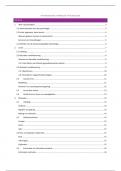
1 Establishing a Framework for Business
Communication
In this chapter you will find:
LEARNING OBJECTIVES
KEY CONCEPTS
KEY TERMS
CHAPTER OUTLINE
LECTURE SLIDES
TEACHING SUGGESTIONS
CLASSROOM ACTIVITIES
REVIEW QUESTIONS & SUGGESTED ANSWERS
FEATURED ASSIGNMENTS
ADDITIONAL ASSIGNMENTS
CASE ASSIGNMENTS
LEARNING Objectives
1 Define communication and describe the value of communication in business.
,2 Explain the communication process model and the ultimate objective of the
communication process.
3 Discuss how information flows in an organization.
4 Explain how legal and ethical constraints, diversity challenges, changing technology, and
team environment act as contextual forces that influence the process of business
communication.
Key Concepts
Understanding what communication is and how it occurs is central to successful
transactions in the workplace. Business communication does not take place in a vacuum but
is impacted by various external forces, including legal and ethical constraints, diversity
challenges, team environment, and changing technology.
Key terms
Term Page Term Page
Chronemics 14 Internal messages 8
Diversity skills 13 Kinesics 14
Downward communication 6 Organizational communication 4
Ethics 10 Proxemics 14
Ethnocentrism 13 Stakeholders 9
External messages 8 Stereotypes 13
Formal communication network 5 Synergy 16
Horizontal (or lateral) 8 Team 16
communication
Informal communication network 5 Telecommuting 15
Interferences 4 Upward communication 7
,Chapter Outline
1-1 Value of Communication 3
1-2 The Communication Process 3
1-3 Communicating within Organizations 4
1-3a Communication Flow in Organizations 4
1-3b Levels of Communication 8
1-4 Contextual Forces Influencing Business Communication 9
1-4a Legal and Ethical Constraints 9
1-4b Diversity Challenges 12
1-4c Changing Technology 15
1-4d Team Environment 16
Lecture Slides
1. Chapter 1 Establishing a Framework for Business Communication
2. Learning Objectives
3. What is Communication?
4. Types of Workplace Communication
5. Communication Channels
6. Communication Process Model
7. Communication Process Barriers
8. Flow of Information
9. Directions for Communication Flow
10. Communication Systems
11. Levels of Communication
12. Contextual Forces Influencing Business Communication
, 13. Causes of Illegal and Unethical Behavior
14. Examples of Illegal and Unethical Behavior
15. Four Dimensions of Business Behavior
16. Barriers to Intercultural Communication
17. Diversity Challenges
18. Key Terms
19. Legal and Ethical Implications of Technology
20. Impacts of Technology
21. Team Environment Leads to Synergy
22. Important Team Skills
23. Communication Patterns for Successful Teams
teaching suggestions
Learning objective 1
Define communication and describe the main purpose for value of communication in business.
Value of Communication
Communication is critical to satisfy needs in an individual’s private and professional life.
Students need to be impressed with the importance of communication to be successful
in business. Managers spend up to 80 percent of their time communicating—working in
small groups, writing reports, and speaking with employees and clients. Students can
talk with working business professionals to get a realistic sense of how many
communication activities occur within a given day.
Companies are successful, in part, only when they communicate effectively—both
internally within the company and externally to outside customers and stakeholders.
With students, list the many communication-related activities an organization is
involved in.
Learning Objective 2
Explain the communication process model and the ultimate objective of the communication
process.
Communication
In this chapter you will find:
LEARNING OBJECTIVES
KEY CONCEPTS
KEY TERMS
CHAPTER OUTLINE
LECTURE SLIDES
TEACHING SUGGESTIONS
CLASSROOM ACTIVITIES
REVIEW QUESTIONS & SUGGESTED ANSWERS
FEATURED ASSIGNMENTS
ADDITIONAL ASSIGNMENTS
CASE ASSIGNMENTS
LEARNING Objectives
1 Define communication and describe the value of communication in business.
,2 Explain the communication process model and the ultimate objective of the
communication process.
3 Discuss how information flows in an organization.
4 Explain how legal and ethical constraints, diversity challenges, changing technology, and
team environment act as contextual forces that influence the process of business
communication.
Key Concepts
Understanding what communication is and how it occurs is central to successful
transactions in the workplace. Business communication does not take place in a vacuum but
is impacted by various external forces, including legal and ethical constraints, diversity
challenges, team environment, and changing technology.
Key terms
Term Page Term Page
Chronemics 14 Internal messages 8
Diversity skills 13 Kinesics 14
Downward communication 6 Organizational communication 4
Ethics 10 Proxemics 14
Ethnocentrism 13 Stakeholders 9
External messages 8 Stereotypes 13
Formal communication network 5 Synergy 16
Horizontal (or lateral) 8 Team 16
communication
Informal communication network 5 Telecommuting 15
Interferences 4 Upward communication 7
,Chapter Outline
1-1 Value of Communication 3
1-2 The Communication Process 3
1-3 Communicating within Organizations 4
1-3a Communication Flow in Organizations 4
1-3b Levels of Communication 8
1-4 Contextual Forces Influencing Business Communication 9
1-4a Legal and Ethical Constraints 9
1-4b Diversity Challenges 12
1-4c Changing Technology 15
1-4d Team Environment 16
Lecture Slides
1. Chapter 1 Establishing a Framework for Business Communication
2. Learning Objectives
3. What is Communication?
4. Types of Workplace Communication
5. Communication Channels
6. Communication Process Model
7. Communication Process Barriers
8. Flow of Information
9. Directions for Communication Flow
10. Communication Systems
11. Levels of Communication
12. Contextual Forces Influencing Business Communication
, 13. Causes of Illegal and Unethical Behavior
14. Examples of Illegal and Unethical Behavior
15. Four Dimensions of Business Behavior
16. Barriers to Intercultural Communication
17. Diversity Challenges
18. Key Terms
19. Legal and Ethical Implications of Technology
20. Impacts of Technology
21. Team Environment Leads to Synergy
22. Important Team Skills
23. Communication Patterns for Successful Teams
teaching suggestions
Learning objective 1
Define communication and describe the main purpose for value of communication in business.
Value of Communication
Communication is critical to satisfy needs in an individual’s private and professional life.
Students need to be impressed with the importance of communication to be successful
in business. Managers spend up to 80 percent of their time communicating—working in
small groups, writing reports, and speaking with employees and clients. Students can
talk with working business professionals to get a realistic sense of how many
communication activities occur within a given day.
Companies are successful, in part, only when they communicate effectively—both
internally within the company and externally to outside customers and stakeholders.
With students, list the many communication-related activities an organization is
involved in.
Learning Objective 2
Explain the communication process model and the ultimate objective of the communication
process.