Weblecture 2 – Introduction to International and European Union Law
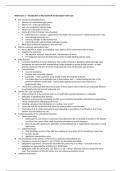
The sources of international law:
Absence of a centralized legal system.
Absence of a universal parliament.
Lack of a compulsory judiciary body.
Absence of a hierarchy of norms.
Article 38 of the ICJ Statute: not exhaustive:
Conventions (i.e. treaties = agreements). The States that are party of it will be bound by the rules.
International customary law.
General principles of international law.
Judicial decisions and teachings (subsidiary means).
What about unilateral statements? And soft law?
What is customary international law?
Not as detailed as treaty, yet regulating many aspects of the interrelationships of States.
Requires two elements:
The objective element: State practice. The behaviour of States.
The subjective element: The belief this practice is legally binding (opinion iuris).
State practice:
Consistent repetition of certain behaviour that is either physical or (publicly) verbal (although mere
statements are controversial): expropriating foreign property or seizing foreign vessels / or legal
practice: prosecute violators of certain (international) crime and domestic law decisions.
Characteristics:
General consistency.
Duration not necessarily relevant.
Generality -> NOT unanimity, yet it should include the majority of States*.
Can States object to an emerging rule of international law? -> understanding the role of the
persistent objector and its limits. Cannot object against peremptory rules, they have a
fundamental value.
*North Sea Continental Shelf (ICJ): the practice of those States whose interests are especially affected
is particularly relevant (yet not exclusively so!).
Opinion iuris sive necessitatis:
State practice has to be accepted as law is not politically expedient behaviour or etiquette.
Difficulties in identifying this element.
Examples: enacting a law, concluding a treaty, even resolutions adopted by international organizations
can be considered as reflecting opinion iuris.
Violating customary international law or creating a new norm?*
Courts will look for the opinion iuris when the state practice is not that clear.
*Nicaragua (ICJ): if a State defends its breach appealing to exceptions or justifications, then it will
confirm and not weaken the rule.
General principles of law and judicial decisions:
General principles:
Relied upon in case treaty or customary international law do not provide an answer to the dispute
(yet the ICJ has never relied solely on general principles to resolve disputes).
General principles guiding the application of international law or regulating the interaction among
legal norms.
Judicial decisions:
Only subsidiary sources of law. Not law creating, but in practice the ICJ sometimes creates law.
No stare decisis.
Significant interpretative value.
The exception(s) to the absence of hierarchy in customary international law:
Peremptory norms (ius cogens) -> art. 53 VCLT: no derogation permitted.
Obligations erga omnes: owed to the international Community as a whole -> a breach of such an
obligation can be invoked by all States (art. 48 ARSIWA).
Obligations under the UN Charter (art. 103 & art. 25) -> limits? All States have to comply with these
rules. The resolutions of the UN Charter may not violate peremptory norms.
Unilateral statements:
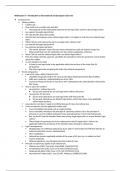
The sources of international law:
Absence of a centralized legal system.
Absence of a universal parliament.
Lack of a compulsory judiciary body.
Absence of a hierarchy of norms.
Article 38 of the ICJ Statute: not exhaustive:
Conventions (i.e. treaties = agreements). The States that are party of it will be bound by the rules.
International customary law.
General principles of international law.
Judicial decisions and teachings (subsidiary means).
What about unilateral statements? And soft law?
What is customary international law?
Not as detailed as treaty, yet regulating many aspects of the interrelationships of States.
Requires two elements:
The objective element: State practice. The behaviour of States.
The subjective element: The belief this practice is legally binding (opinion iuris).
State practice:
Consistent repetition of certain behaviour that is either physical or (publicly) verbal (although mere
statements are controversial): expropriating foreign property or seizing foreign vessels / or legal
practice: prosecute violators of certain (international) crime and domestic law decisions.
Characteristics:
General consistency.
Duration not necessarily relevant.
Generality -> NOT unanimity, yet it should include the majority of States*.
Can States object to an emerging rule of international law? -> understanding the role of the
persistent objector and its limits. Cannot object against peremptory rules, they have a
fundamental value.
*North Sea Continental Shelf (ICJ): the practice of those States whose interests are especially affected
is particularly relevant (yet not exclusively so!).
Opinion iuris sive necessitatis:
State practice has to be accepted as law is not politically expedient behaviour or etiquette.
Difficulties in identifying this element.
Examples: enacting a law, concluding a treaty, even resolutions adopted by international organizations
can be considered as reflecting opinion iuris.
Violating customary international law or creating a new norm?*
Courts will look for the opinion iuris when the state practice is not that clear.
*Nicaragua (ICJ): if a State defends its breach appealing to exceptions or justifications, then it will
confirm and not weaken the rule.
General principles of law and judicial decisions:
General principles:
Relied upon in case treaty or customary international law do not provide an answer to the dispute
(yet the ICJ has never relied solely on general principles to resolve disputes).
General principles guiding the application of international law or regulating the interaction among
legal norms.
Judicial decisions:
Only subsidiary sources of law. Not law creating, but in practice the ICJ sometimes creates law.
No stare decisis.
Significant interpretative value.
The exception(s) to the absence of hierarchy in customary international law:
Peremptory norms (ius cogens) -> art. 53 VCLT: no derogation permitted.
Obligations erga omnes: owed to the international Community as a whole -> a breach of such an
obligation can be invoked by all States (art. 48 ARSIWA).
Obligations under the UN Charter (art. 103 & art. 25) -> limits? All States have to comply with these
rules. The resolutions of the UN Charter may not violate peremptory norms.
Unilateral statements: