Mens Rea
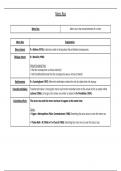
Mens Rea Mens rea is the mental element of a crime.
Mens Rea Explanation
Direct Intent R v Mohan (1976): A decision made to bring about the prohibited consequence.
Oblique Intent R v Woollin (1998):
Virtual Certainty Test:
> Was the consequence a virtual certainty?
> Did the defendant know that the consequence was a virtual certainty?
Recklessness R v Cunningham (1957): Where the defendant realises the risk but takes that risk anyway.
Transferred Malice Transferred malice is ‘moving the mens rea from the intended victim to the actual victim’ as stated in R v
Latimer (1886), ‘so long as the crimes are similar’ as stated in R v Pembliton (1874).
Coincidence Rule The actus reus and the mens rea have to happen at the same time.
Cases:
> Fagan v Metropolitan Police Commissioner (1986): Extending the actus reus to cover the mens rea.
> Thabo Meli v R (1954) or R v Church (1965): Extending the mens rea to cover the actus reus.
Mens Rea Mens rea is the mental element of a crime.
Mens Rea Explanation
Direct Intent R v Mohan (1976): A decision made to bring about the prohibited consequence.
Oblique Intent R v Woollin (1998):
Virtual Certainty Test:
> Was the consequence a virtual certainty?
> Did the defendant know that the consequence was a virtual certainty?
Recklessness R v Cunningham (1957): Where the defendant realises the risk but takes that risk anyway.
Transferred Malice Transferred malice is ‘moving the mens rea from the intended victim to the actual victim’ as stated in R v
Latimer (1886), ‘so long as the crimes are similar’ as stated in R v Pembliton (1874).
Coincidence Rule The actus reus and the mens rea have to happen at the same time.
Cases:
> Fagan v Metropolitan Police Commissioner (1986): Extending the actus reus to cover the mens rea.
> Thabo Meli v R (1954) or R v Church (1965): Extending the mens rea to cover the actus reus.