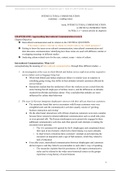
CONSERVATISM
Key Thinkers
, THOMAS HOBBES
(1588-1679)
HUMAN NATURE:
o In Leviathan (1651),took a
THE STATE:
o Man would eventually ag
skeptical view on human nature, ‘contract’, under which i
arguing it was likely to commit would render to a sovere
destructive acts. state) the right to make
o The ‘state of nature’ was a place o This would allow the sort
of scarce resources where and security absent in th
humans would be governed by nature.
ruthless self-interest. o However, the state woul
o Human nature was shaped by a be autocratic. If power w
QUOTES: restless desire for acquisition of dispersed, conflicts woul
goods and a distrust of others. o The state’s purpose is t
• “Life in the
SOCIETY: order
THE and security.
ECONOMY:
state of
o There cannot be a ‘society’ o Again, constructive and
nature is without the creation of a state to economic activity is imp
solitary, poor, bring order and authority to without a state to bring
nasty, brutish human affairs. security,
and short.”
Key Thinkers
, THOMAS HOBBES
(1588-1679)
HUMAN NATURE:
o In Leviathan (1651),took a
THE STATE:
o Man would eventually ag
skeptical view on human nature, ‘contract’, under which i
arguing it was likely to commit would render to a sovere
destructive acts. state) the right to make
o The ‘state of nature’ was a place o This would allow the sort
of scarce resources where and security absent in th
humans would be governed by nature.
ruthless self-interest. o However, the state woul
o Human nature was shaped by a be autocratic. If power w
QUOTES: restless desire for acquisition of dispersed, conflicts woul
goods and a distrust of others. o The state’s purpose is t
• “Life in the
SOCIETY: order
THE and security.
ECONOMY:
state of
o There cannot be a ‘society’ o Again, constructive and
nature is without the creation of a state to economic activity is imp
solitary, poor, bring order and authority to without a state to bring
nasty, brutish human affairs. security,
and short.”